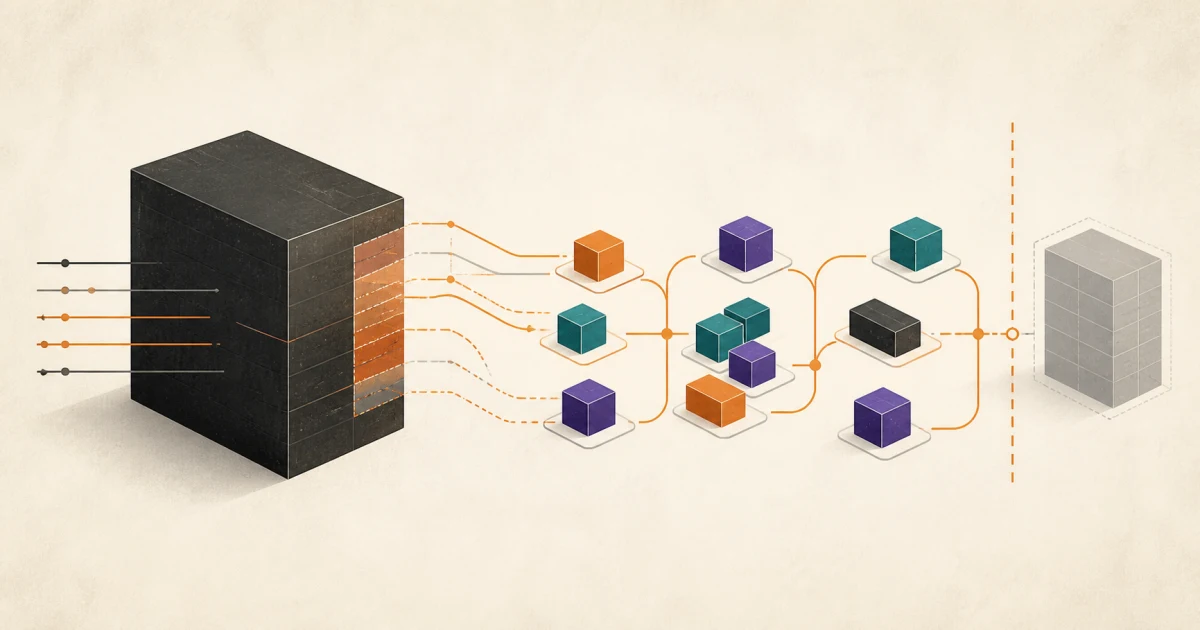
The short answer: modernize a capability, prove it, then retire its old path
A useful legacy application modernization roadmap starts with an evidence-led assessment, divides the application into business capabilities, chooses an approach for each one, and moves the smallest valuable slice through coexistence, validation, cutover, and retirement. Keep the current system operating until the new slice has earned traffic, data authority, support ownership, and a safe removal decision.
Do not begin with “move everything to a modern stack.” Name the constraint that matters: delayed releases, an unsupported runtime, repeated incidents, manual work, a blocked integration, poor operator visibility, or a workflow the existing design cannot change safely. The target architecture is a response to that constraint, not the roadmap's purpose.
Assess
System, business rules, data, dependencies, and risk.
Displace
One bounded capability with comparison and rollback.
Retire
Remove old traffic, data custody, support, and cost.
Assess the application as an operating system, not only a codebase
Inventory the people, workflows, business rules, permissions, integrations, reports, scheduled jobs, files, data stores, deployment process, observability, incidents, support routines, vendors, and planned changes around the application. Separate what must be preserved from what may change or disappear. Undocumented exceptions and manual workarounds are requirements until the business deliberately replaces them.
Microsoft's current application modernization assessment guidance begins with an inventory of applications, data, infrastructure, cost, and organizational readiness. That framing matters even when the destination is not Azure: technical condition alone does not show which system to modernize first or whether the organization can operate the transition.
| Evidence area | Questions | Useful output |
|---|---|---|
| Business | Who depends on it? Which constraint matters now? | Outcome and owner |
| Behaviour | What rules, exceptions, reports, and approvals exist? | Capability map |
| Technology | What is unsupported, fragile, slow, or hard to release? | Measured risk list |
| Operations | How is it deployed, observed, recovered, and supported? | Operating baseline |
Record uncertainty explicitly. “No one knows whether this batch job is still used” is a discovery item, not permission to delete it. Observe calls, interview owners, trace outputs, or disable it behind a reversible control before treating absence of documentation as absence of dependency.
Choose a modernization approach per capability
A single application may need several treatments. Retain a stable module, stabilize deployments, update an unsupported dependency, replatform one runtime, replace a commodity capability, refactor a valuable domain, or rebuild a workflow behind a new boundary. If the team still needs to decide whether the core should be improved or replaced, use the refactor-or-rewrite decision guide first. This roadmap begins once there is enough evidence to sequence work.
Avoid turning microservices, cloud migration, or a framework upgrade into universal goals. A modular monolith may be the most maintainable target for a small team. A managed product may replace a non-differentiating function. A compatibility layer may be temporary but necessary. Choose the smallest structural change that enables the required business and operating result.
Select a first slice that matters without carrying the whole system
The easiest component is not automatically the best pilot. A trivial slice may prove deployment but teach nothing about data, users, or support. The most painful capability may be too entangled for a safe first move. Score candidates by value, boundary clarity, testability, dependency burden, data risk, and reversibility, then review the evidence behind the scores.
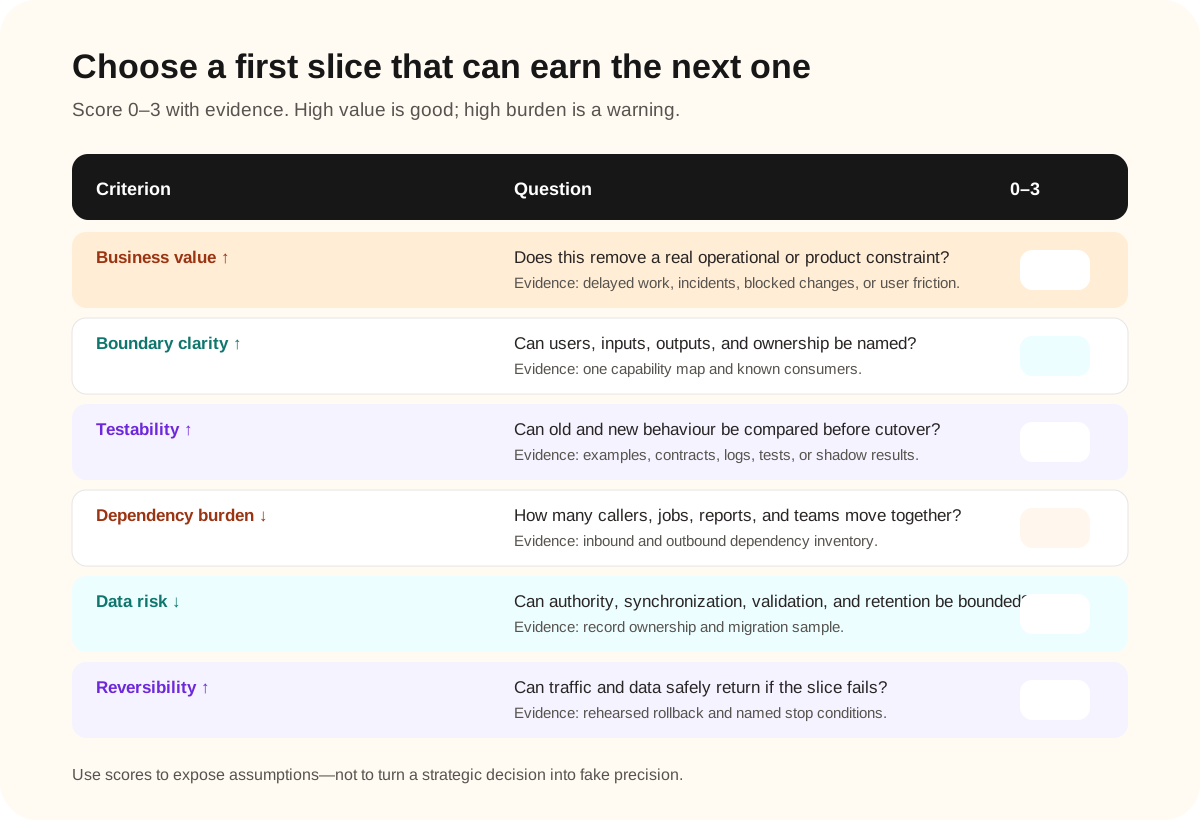
A defensible first slice has one accountable business owner, a visible improvement, known consumers, representative acceptance examples, and a rollback story. It should also exercise the delivery path the organization needs next: environments, observability, security review, support handoff, data validation, and controlled release.
Build the roadmap as six evidence gates
- Baseline: inventory the capability, users, behaviour, dependencies, data, incidents, release constraints, and current operating cost or effort without inventing precision.
- Target: define the measurable outcome, preserved behaviour, changed behaviour, security and compliance constraints, support model, and explicit exclusions.
- Boundary: choose the routing seam, data authority, compatibility needs, and temporary coexistence architecture for one slice.
- Prove: build tests, examples, telemetry, migration rehearsals, operational views, and comparison evidence before moving full traffic.
- Cut over: shift a bounded cohort or capability with named go / no-go ownership, monitoring, communication, and rollback criteria.
- Retire:confirm zero consumers, validate retained data and records, remove old access and jobs, update documentation, and capture the next slice's evidence.
Microsoft's modernization roadmap similarly sequences assessment, business goals, prioritization, phased proof, modern delivery practices, measurement, and iteration. Use the lifecycle, but keep provider-specific tools subordinate to the application's real constraints.
Treat each gate as a decision, not a project phase that passes because time elapsed. If data comparison fails, the next action is to resolve the mapping or migration—not to move the cutover date unchanged. The roadmap should expose learning early enough to alter scope.
Design coexistence, data authority, rollback, and retirement together
The Strangler Fig pattern routes a capability to either the old or new implementation while migration progresses. Azure's architecture guidance describes the façade, incremental routing, cross-system dependencies, shared data concerns, and the need to avoid making the temporary layer a bottleneck. AWS also recommends beginning with a component that has useful test coverage and can build confidence in the incremental path.
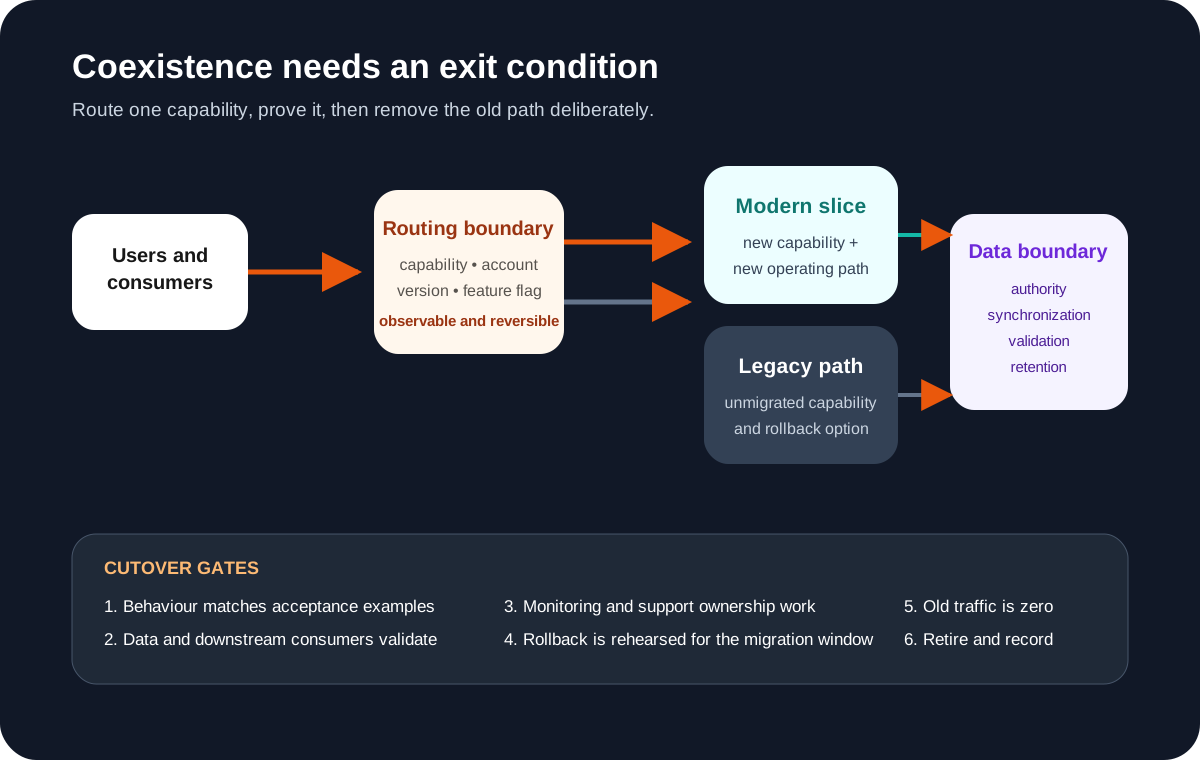
Coexistence can reduce cutover risk while increasing temporary system complexity. Name which implementation owns writes, how reads are routed, whether data is copied or shared, how changes are synchronized, how both versions are compared, and how support identifies the path a user reached. Dual writes without a clear authority and repair mechanism are not a migration plan.
Define rollback before migration changes become irreversible. Early in a slice, rollback may mean routing traffic back. After a data authority shift, it may require reverse synchronization or a restore and replay process. State the point where quick rollback ends, who approves crossing it, and which evidence is retained for recovery.
Write a first-slice brief that engineering and operations can challenge
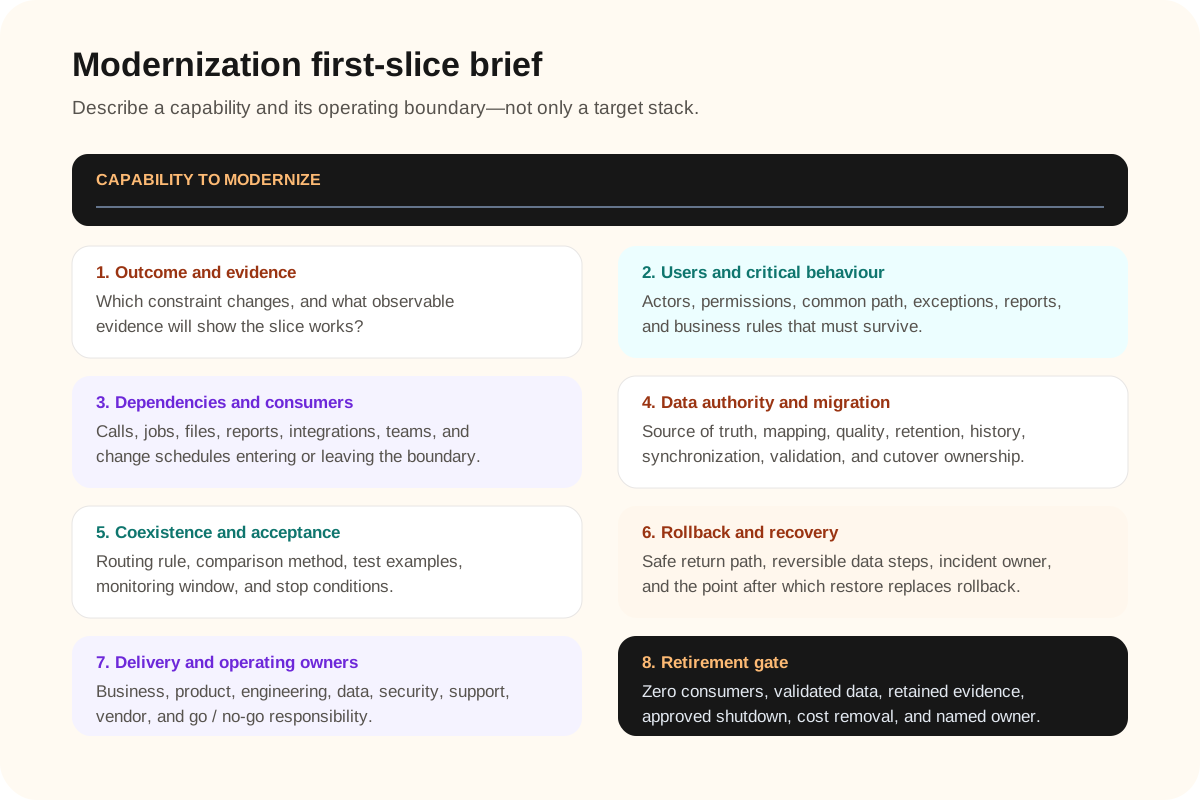
The first-slice brief should fit one capability, but it must show the whole operating boundary: users, rules, dependencies, data, acceptance, coexistence, rollback, ownership, and retirement. This is more useful than a large backlog of “modernize” tasks because reviewers can identify the missing evidence before code and migration work expand.
Bring this evidence to a software project rescue assessment when the current team needs help separating stabilization, modernization, and feature delivery. A useful engagement may begin with observability, test coverage, dependency mapping, or a migration spike rather than a full rebuild commitment.
If a migration is already underway but cannot pass a cutover rehearsal, the stalled legacy migration rescue concept study shows how to protect the live service, classify unfinished work, and make one reversible workflow slice earn the next decision.
The roadmap is complete only when retirement work is funded. Running two implementations indefinitely preserves duplicate support, security, data, vendor, and infrastructure obligations. Give each temporary layer an owner, review date, and removal condition from the day it is introduced.
Legacy application modernization FAQ
What is a legacy application modernization roadmap?
It is a sequence for improving or replacing an existing application while preserving required business capability. A useful roadmap connects business outcomes to an application inventory, prioritizes bounded capabilities, selects an approach per slice, defines coexistence and data ownership, proves each cutover, and retires old paths deliberately.
Should a legacy application be rewritten all at once?
Only when the system is small enough, its behavior is well understood, coexistence is impractical, and the organization can fund and test the full cutover. For large or business-critical systems, incremental replacement often creates smaller evidence and rollback boundaries, though it adds temporary routing, data, and operational complexity.
How do you choose the first modernization slice?
Score candidate capabilities by business value, change pressure, boundary clarity, dependency load, testability, data risk, operational consequence, team ownership, and reversibility. Prefer a slice that solves a real problem and exercises the future delivery path without carrying the hardest shared data or transaction boundary first.
What should be assessed before modernization begins?
Inventory users, workflows, business rules, integrations, scheduled jobs, reports, data stores, permissions, runtime and dependency support, deployment, observability, incidents, compliance needs, costs, owners, and planned product changes. Record what must be preserved, what may change, and what can be retired.
When can the legacy system be decommissioned?
Retire a capability only after traffic and ownership have moved, required data is validated, downstream dependencies no longer rely on the old path, acceptance and recovery checks pass, operational owners agree, retention obligations are met, and rollback is either no longer needed or replaced by a documented restore plan.