Leeonex

Case Studies

Useful case studies can begin before the first client.

Explore Leeonex-owned builds, product decisions, and visible implementation evidence. Every study is labeled by evidence level, and performance claims appear only when the underlying data is ready to verify.

Published studies

Real builds and educational concepts, labeled by evidence.

Each study separates implementation facts from performance claims. Production work uses real screenshots; educational concepts use original diagrams and state clearly what has not been built or measured.

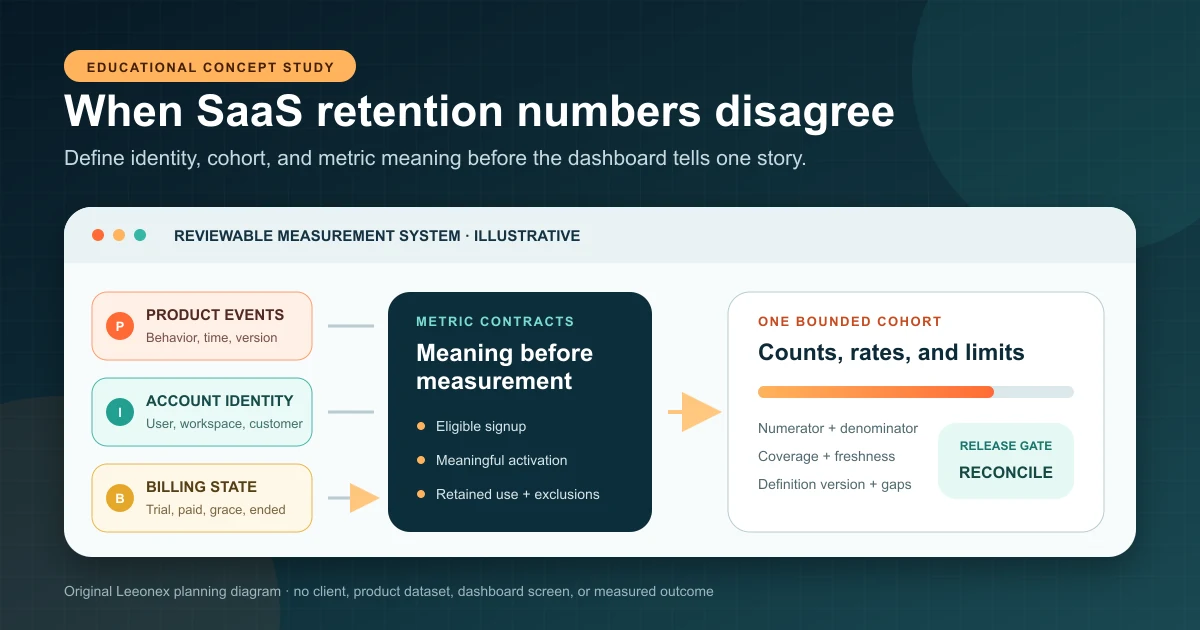
Concept map joining product events, account identity, billing state, and metric contracts into a reviewable SaaS activation and retention dashboard
Educational concept studyAnalytics dashboard development

How to scope a SaaS activation and retention dashboard when the numbers disagree

This educational concept turns competing product, billing, and spreadsheet numbers into one reviewable analytics scope: define activation and retention before drawing charts, join identities without inventing certainty, preserve cohort history, reconcile trusted examples, and show where the data is incomplete.

metric contracts
3
accountable roles
4
bounded cohort
1
Read the case study
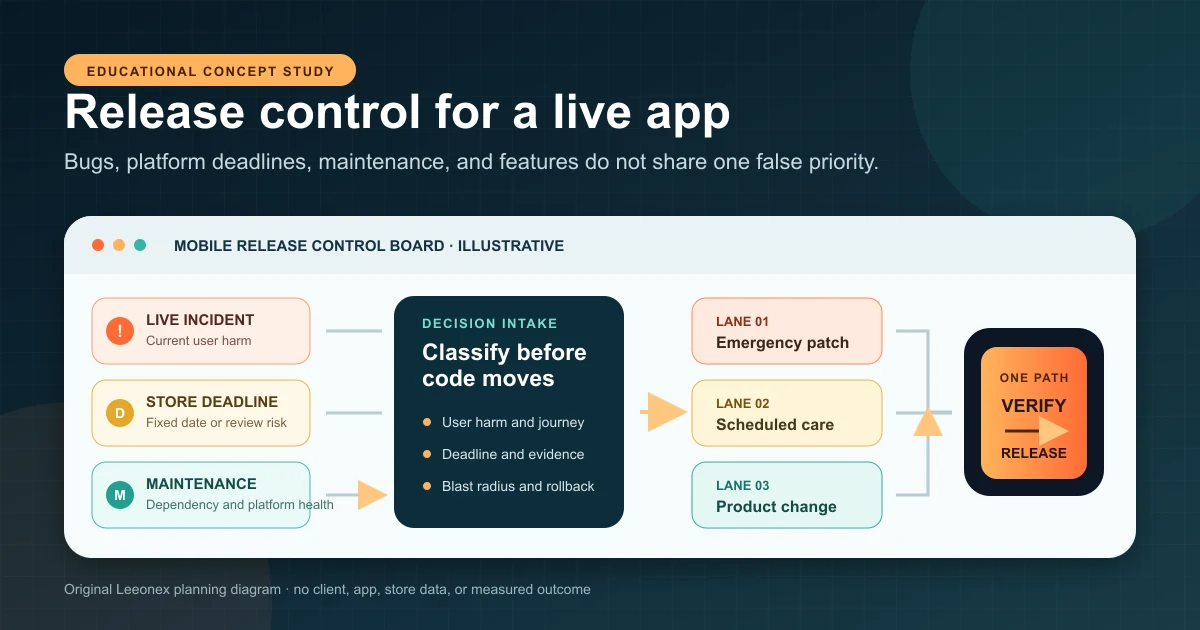
Concept release control board routing a mobile incident, store deadline, dependency update, and product feature through controlled release gates
Educational concept studyMobile app support and maintenance

How to maintain a live mobile app when bugs, store deadlines, and features compete

This educational concept turns an overloaded mobile backlog into a controlled support system: classify live risk, make store and SDK deadlines visible, protect one release path, stage changes to representative users, and keep product work moving without treating every request as equally urgent.

work classes
4
release gates
6
release lanes
3
Read the case study
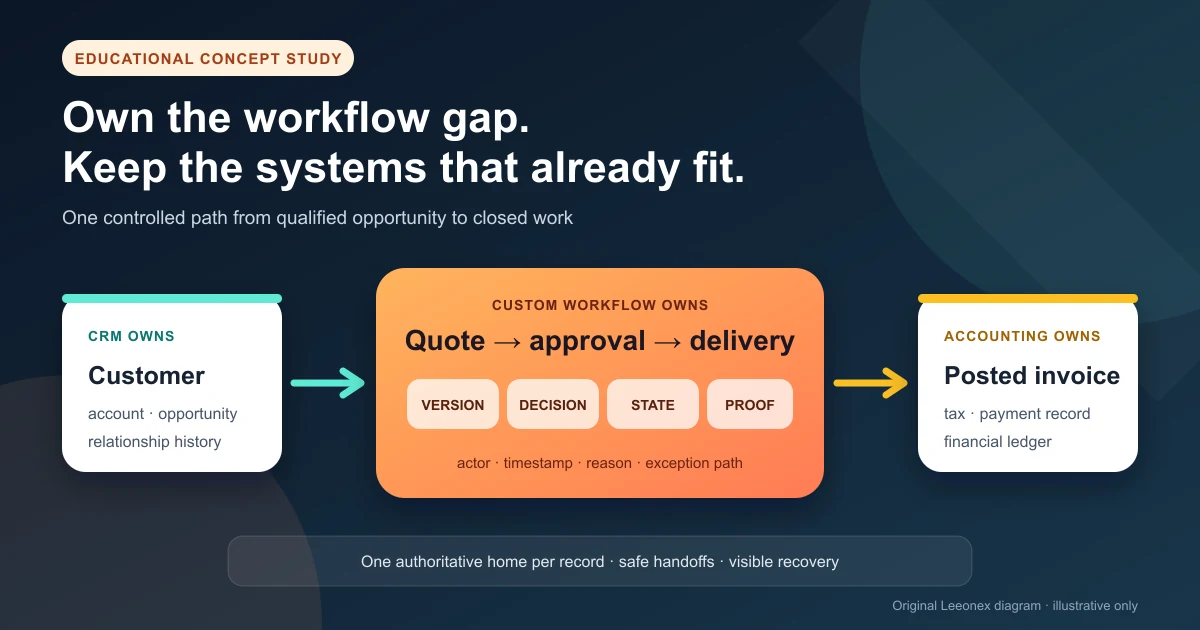
Educational concept diagram showing a custom quote-to-delivery workflow between a CRM and accounting system
Educational concept studyCustom web application development

How to scope a quote-to-delivery web app without rebuilding the CRM

This educational concept turns the spreadsheet-and-email gap between a won opportunity and completed work into one controlled workflow: import the customer reference, create a versioned quote, record approval, open an authorized work order, capture delivery evidence, and return the right status to existing systems without rebuilding CRM or accounting capabilities.

accountable roles
4
explicit workflow states
6
owner per record
1
Read the case study
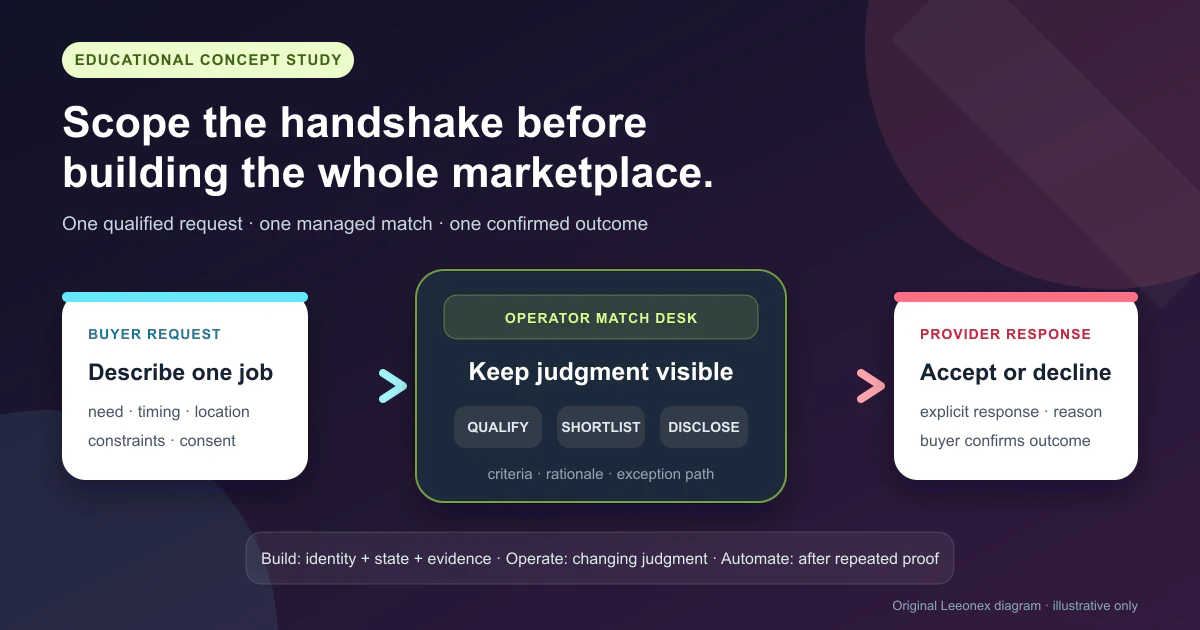
Educational concept diagram showing a buyer request moving through an operator match desk to an approved service provider
Educational concept studyMVP development

How to scope a two-sided service marketplace MVP without building both sides at once

This educational concept turns “build a marketplace” into one controlled learning loop: a buyer submits a qualified request, an operator shortlists approved providers, one provider accepts, both sides confirm the outcome, and the team records where the process breaks before automating matching, payments, or self-serve growth.

accountable roles
3
explicit request states
7
learning loop
1
Read the case study
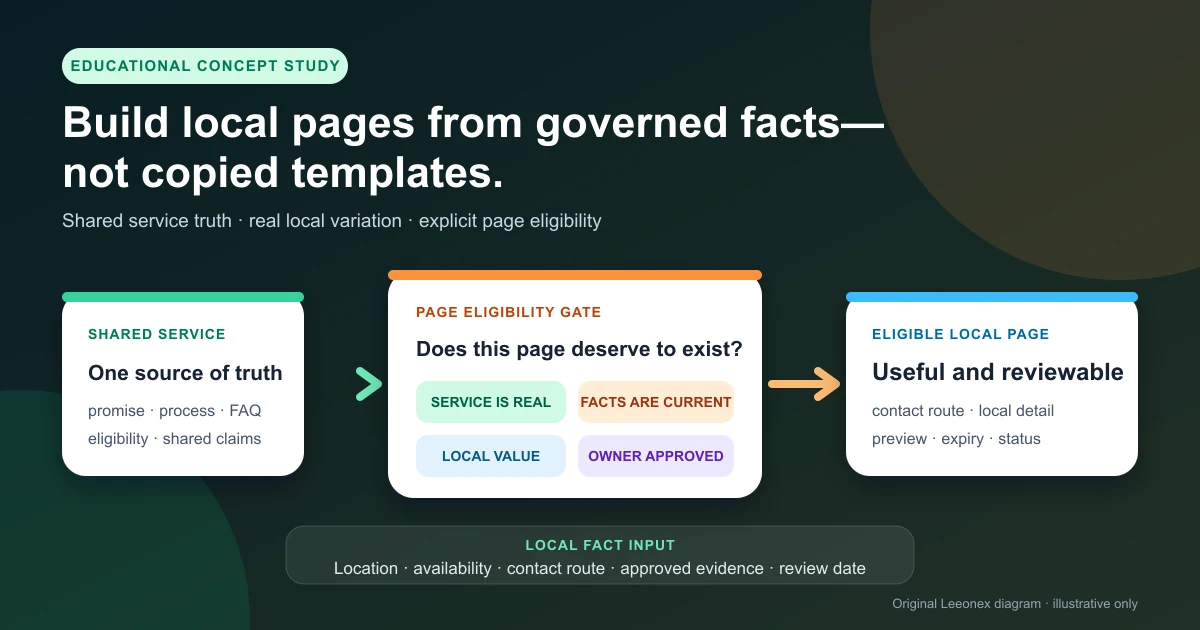
Educational concept diagram showing shared service content and verified local facts combining into eligible multi-location website pages
Educational concept studyCMS website development

How to scope a multi-location CMS website without cloning every location page

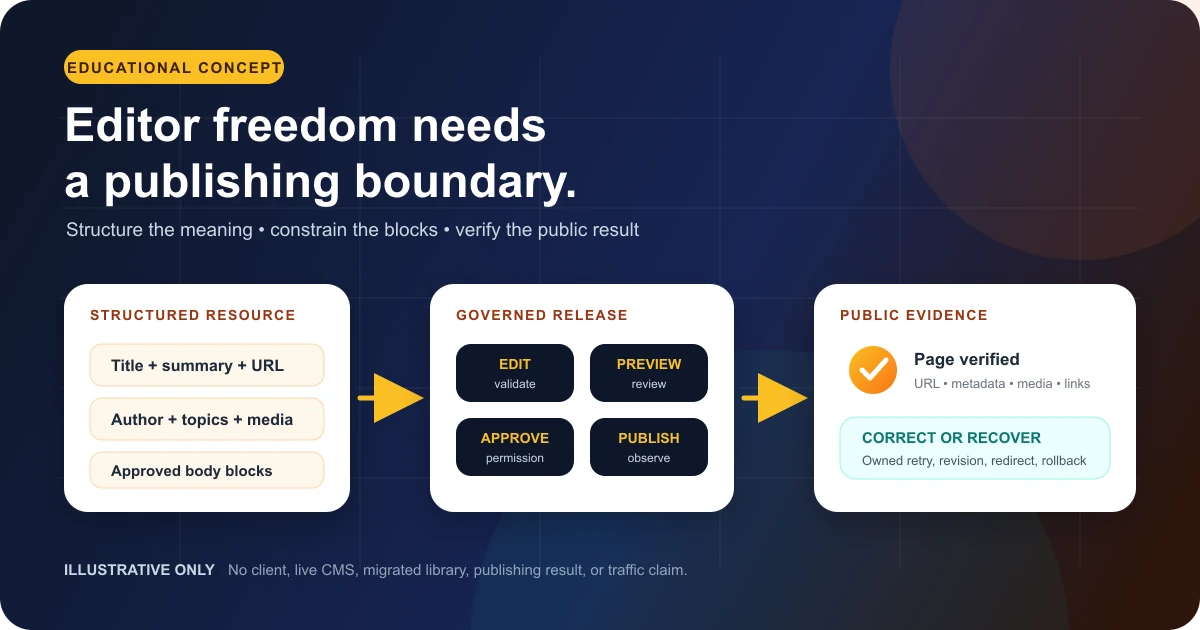
This educational concept turns “make the same service page for every branch” into a governed content system: keep shared service truth in one place, attach only real local differences, require evidence before a location-service page is eligible, and give editors a reviewable route from draft to publish.

core content entities
4
accountable roles
3
first release slice
1
Read the case study
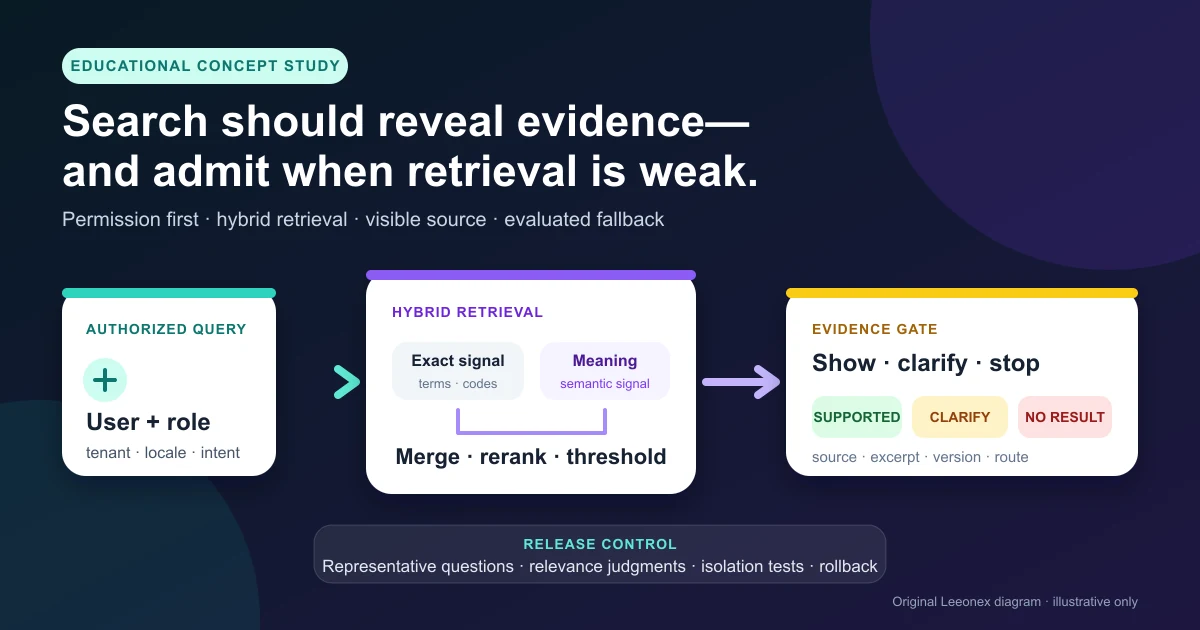
Educational concept diagram showing an authorized B2B search query passing through hybrid retrieval and evidence checks before results are shown
Educational concept studyAI product feature development

How to scope semantic search for a B2B knowledge product without hiding weak retrieval

This educational concept turns “add AI search” into one testable product loop: authorize the query, retrieve from a bounded corpus, combine lexical and semantic signals, show source evidence, admit when retrieval is weak, and evaluate changes against representative questions before release.

accountable roles
4
retrieval stages
7
honest outcomes
3
Read the case study
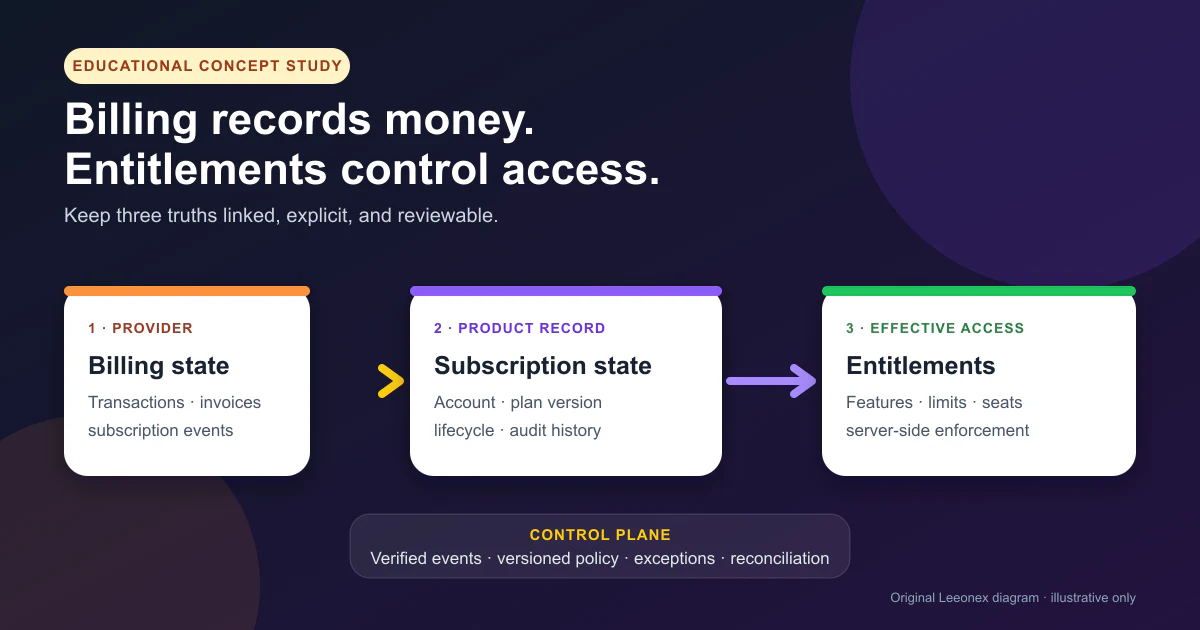
Educational concept diagram separating SaaS billing provider events, internal subscription state, entitlement policy, and product access
Educational concept studySaaS platform development

How to scope SaaS billing and entitlements without access drift

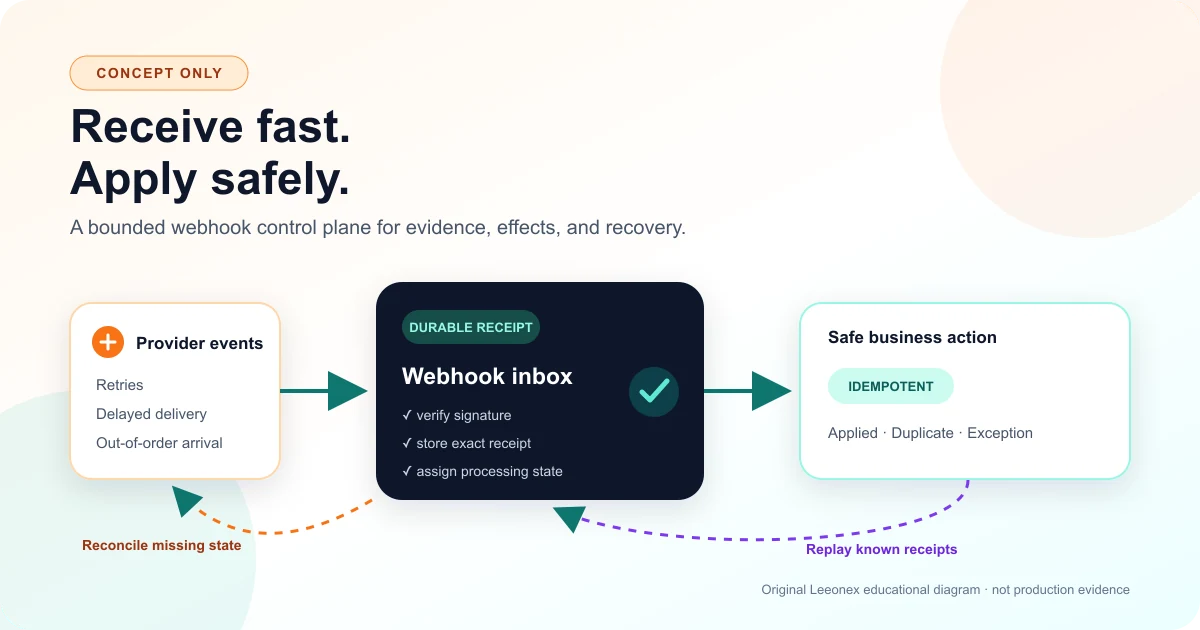
This educational concept separates money movement from product permission: verify billing events, record subscription state once, compute explicit entitlements, preserve a reviewable access history, and reconcile provider and product records before a retry, refund, or missed webhook silently changes what a customer can use.

accountable roles
4
control stages
6
separate truths
3
Read the case study
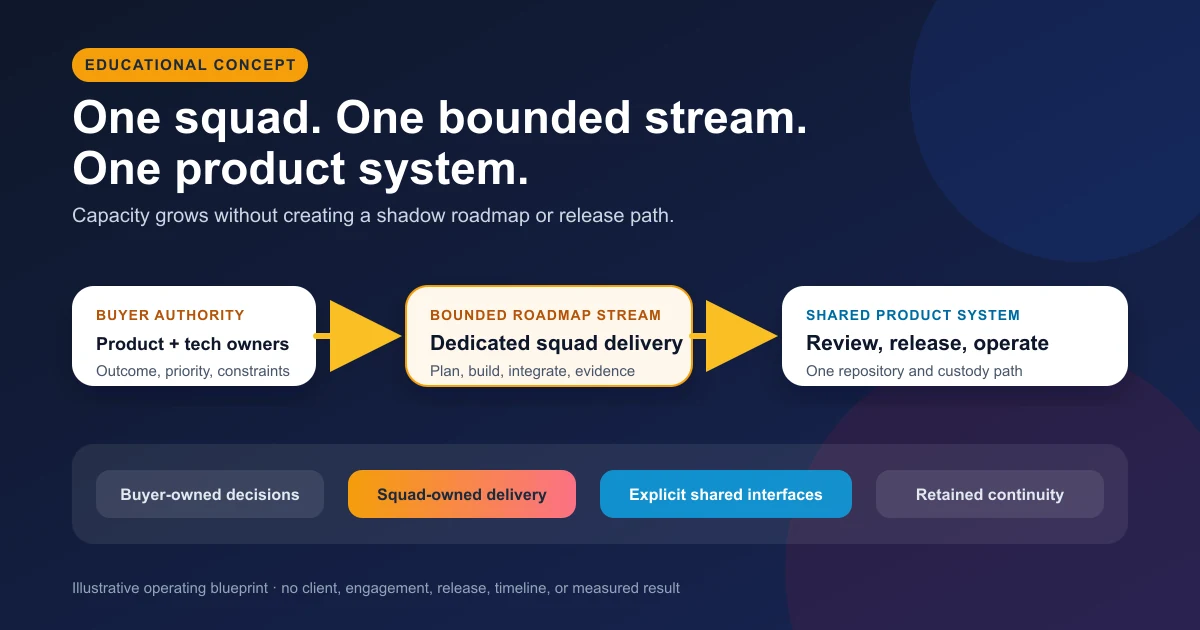
Educational concept diagram showing a dedicated development squad delivering one bounded roadmap stream into a shared product system
Educational concept studyDedicated development squads

How to add a dedicated development squad without splitting product ownership

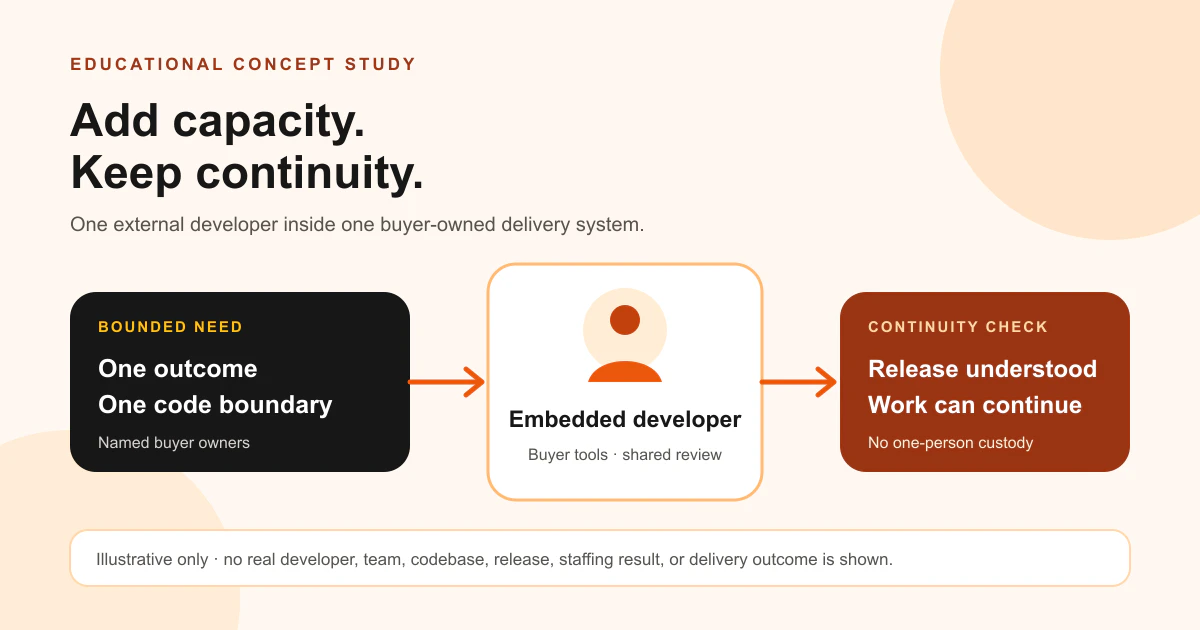
This educational concept turns “we need another squad” into one bounded roadmap stream inside the buyer’s existing product system: one accountable product owner, explicit technical interfaces, shared release evidence, and a continuity path that prevents the external team from becoming a second product organization.

accountable roles
4
delivery gates
6
ownership zones
3
Read the case study
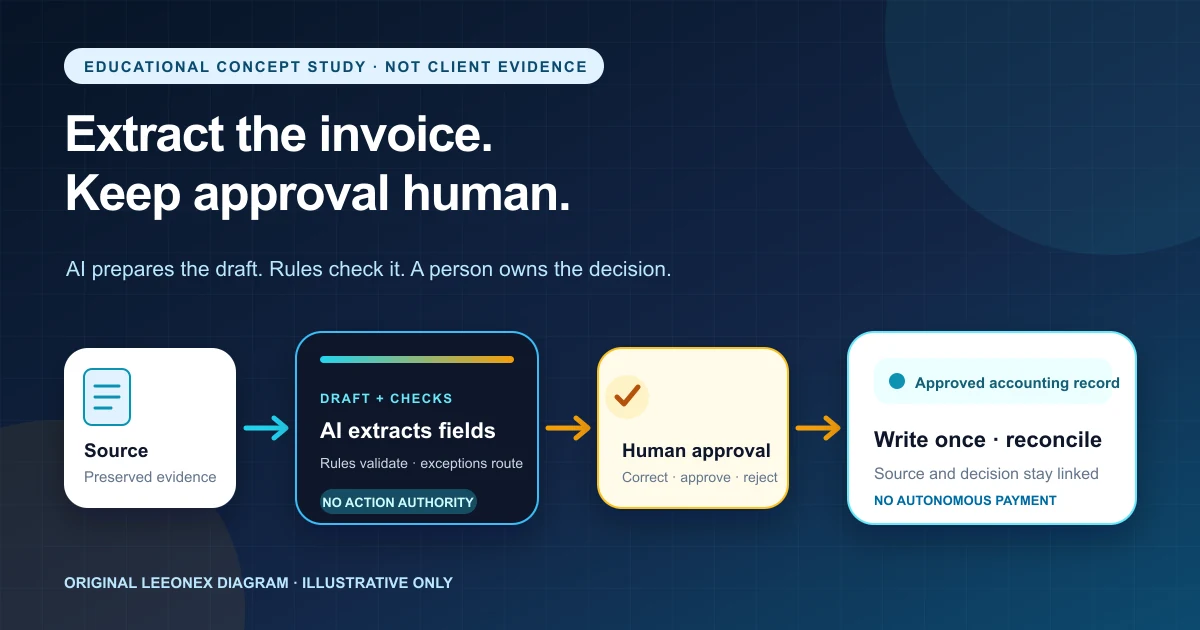
Educational concept diagram showing an invoice moving through AI extraction, deterministic checks, and human approval before an accounting record
Educational concept studyAI workflow automation

How to scope AI invoice intake automation without auto-approving bad data

This educational concept turns “automate invoice processing” into one controlled finance-operations loop: retain the source, extract a draft, validate it with rules, route exceptions to a person, and post only an approved record—without giving AI authority to approve suppliers, accounting treatment, or payment.

accountable roles
4
workflow stages
7
decision routes
3
Read the case study
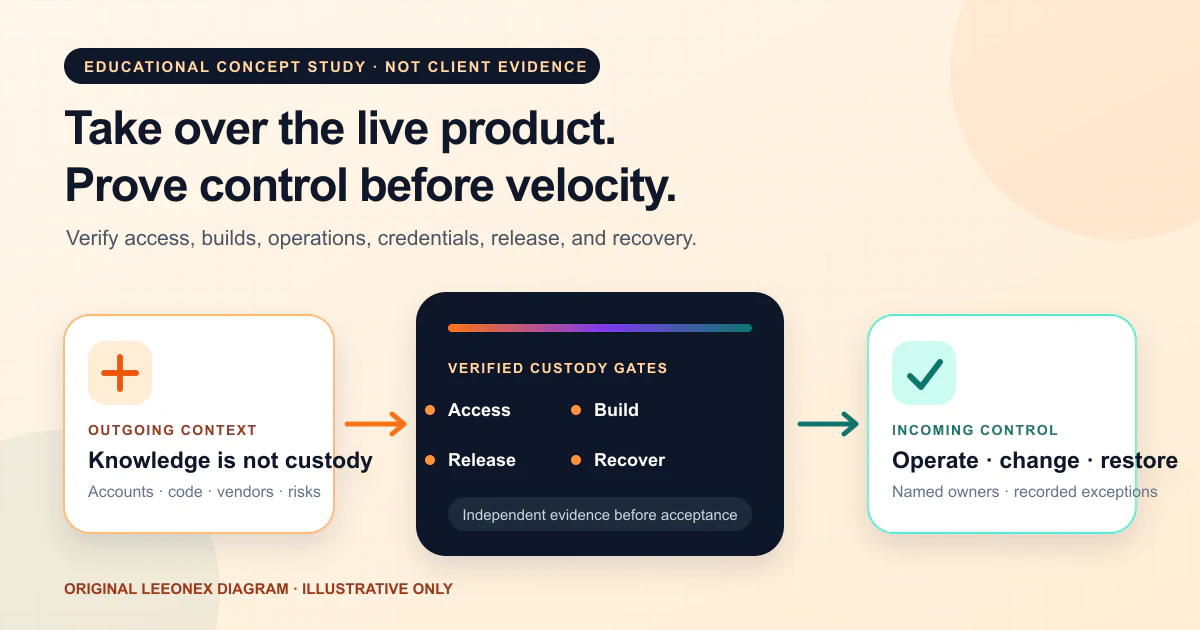
Concept handover path moving a live SaaS product through access, build, release, and operational control gates
Educational concept studySoftware project rescue

How to take over a live SaaS product without losing release control

This educational concept turns “the current development partner is leaving” into a controlled product handover: inventory every operational dependency, prove the build and release path, rotate access safely, verify critical journeys, and ship one reversible change before accepting full custody.

accountable roles
4
control gates
8
evidence bundles
5
Read the case study
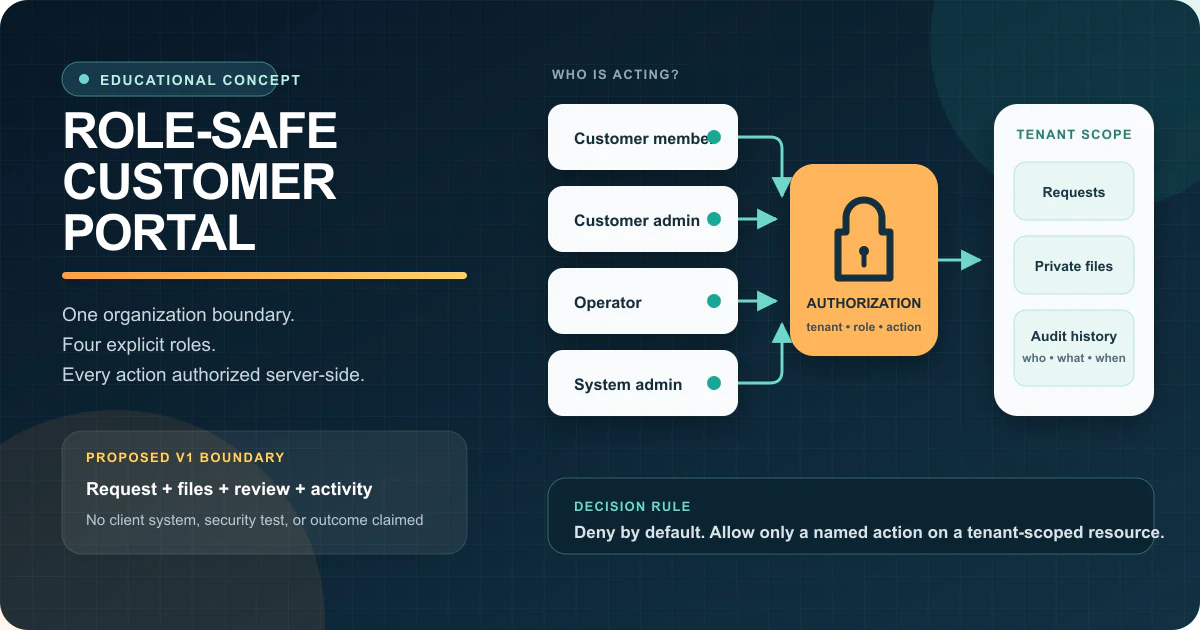
Concept architecture showing customer and operator roles passing through authorization before reaching tenant-scoped portal records
Educational concept studyPortal and admin panel development

How to scope a secure multi-role customer portal without permission leaks

This educational concept turns “give customers a portal” into a controlled first release: one organization boundary, four explicit roles, one request-and-document workflow, server-side authorization, audit history, and a named path for access exceptions.

explicit user roles
4
workflow states
6
v1 guardrails
5
Read the case study
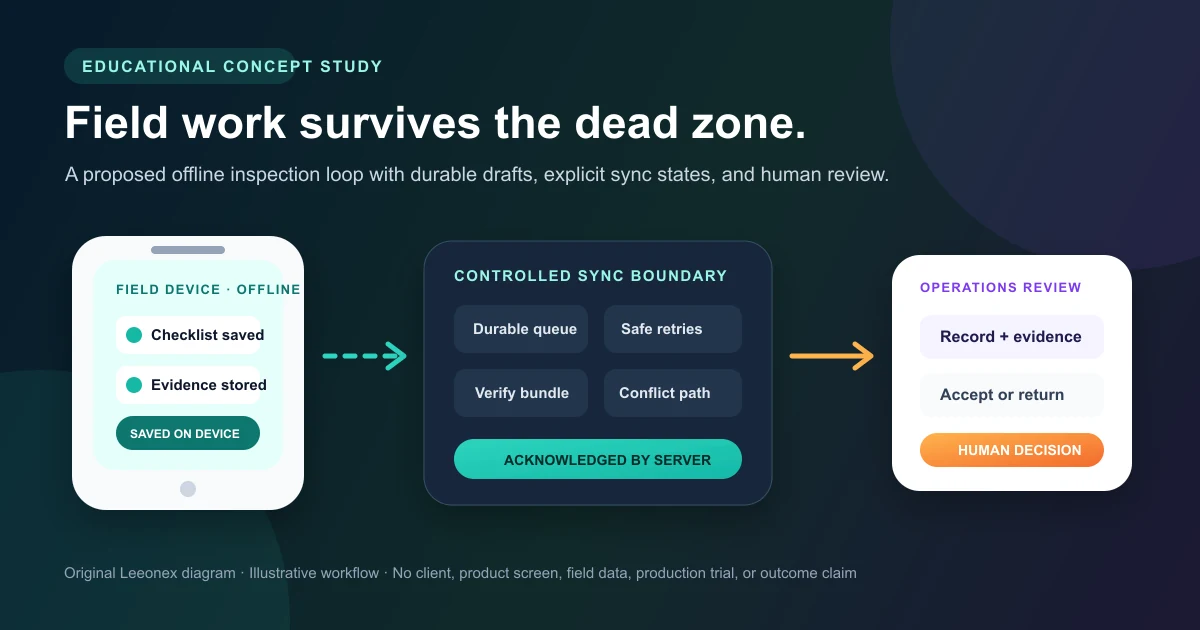
Concept workflow showing a field inspection saved locally before controlled synchronization and human review
Educational concept studyMobile app development

How to scope an offline-first field inspection app that does not lose work

This educational concept turns “replace the paper inspection form” into a dependable mobile workflow: preload one assignment, capture structured findings and evidence without a connection, preserve every draft locally, show sync state clearly, and route conflicts to a person before review.

user roles
3
workflow stages
7
v1 guardrails
5
Read the case study
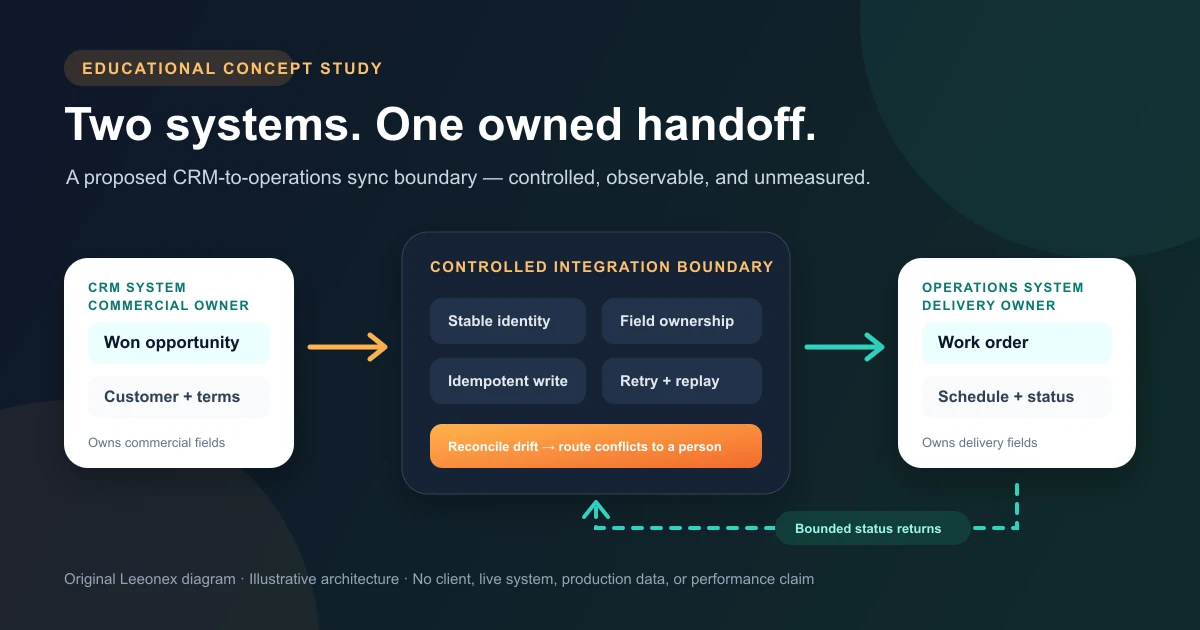
Concept architecture showing a CRM and operations system connected through identity, ownership, retry, and reconciliation controls
Educational concept studyAPI and integration development

How to scope a two-way CRM and operations sync without duplicate records or silent conflicts

This educational concept turns a familiar handoff request—keep sales and operations systems in sync—into one controlled integration loop: identify the same record, decide which system owns each field, make retries safe, return a bounded status, and route conflicts to a person instead of guessing.

user roles
3
sync stages
6
v1 guardrails
4
Read the case study
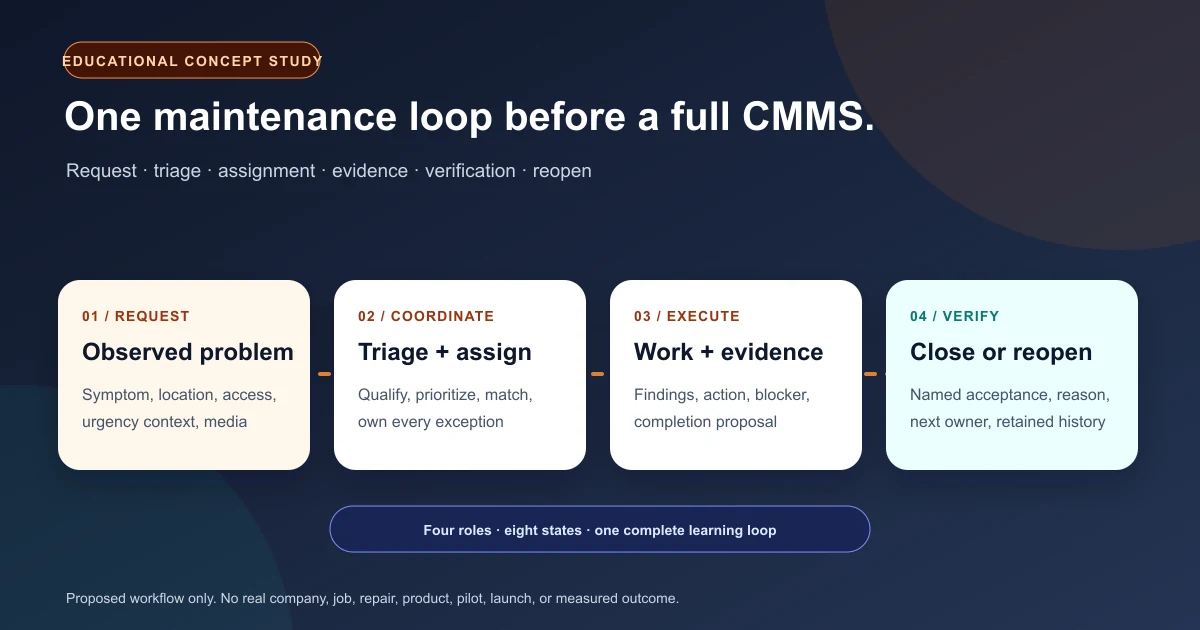
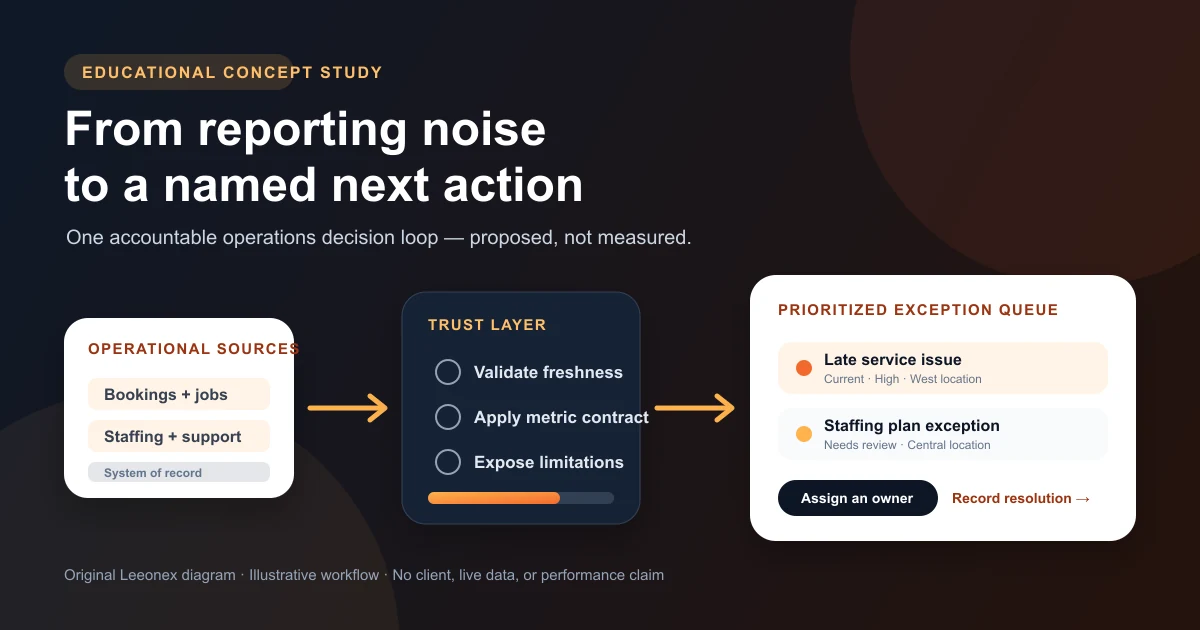
Concept workflow showing operational source records becoming prioritized exceptions with assigned owners
Educational concept studyOperations reporting and dashboard development

How to scope an exception-first operations dashboard that helps teams act

This educational concept turns a familiar request—put every location and KPI on one dashboard—into a smaller operational product: surface the exceptions that need attention, show whether the data is current, assign an owner, and record what happened next.

user roles
3
workflow stages
6
v1 signals
4
Read the case study
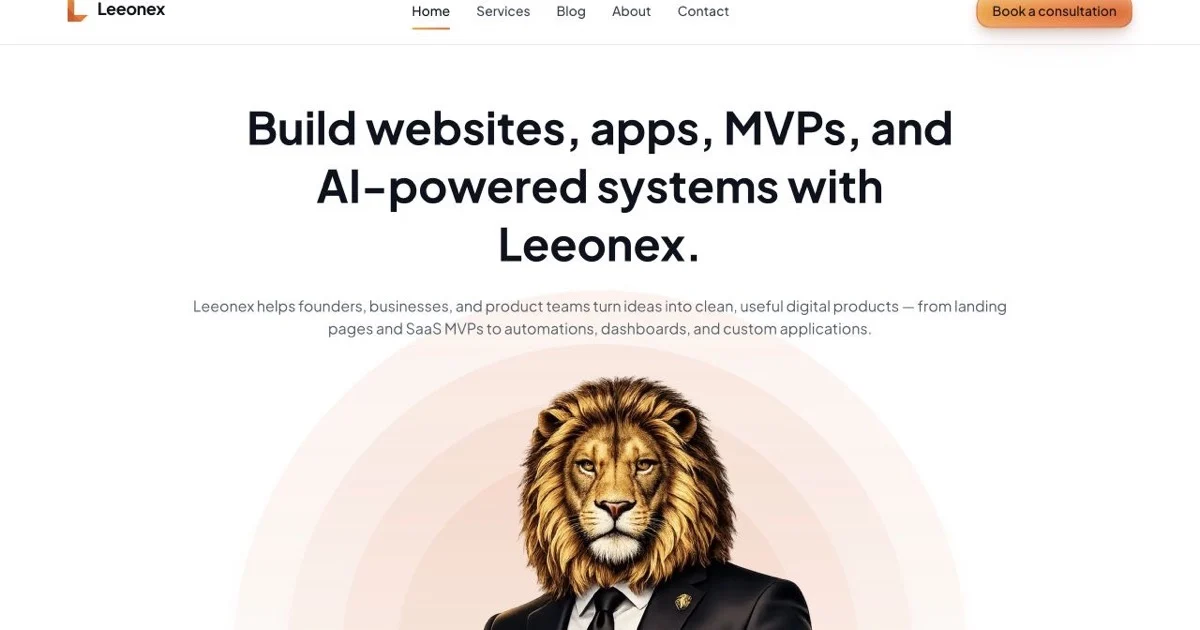
Leeonex homepage introducing websites, apps, MVPs, and AI-powered systems
Leeonex-owned case studyWebsite development

How Leeonex turned a broad software offer into a structured product website

Leeonex needed more than a polished homepage. The site had to explain a broad software offer without becoming vague, give each buyer a relevant path, and stay honest while external case-study evidence was still being assembled.

service categories
7
specialty offerings
21
decision guides
3
Read the case study
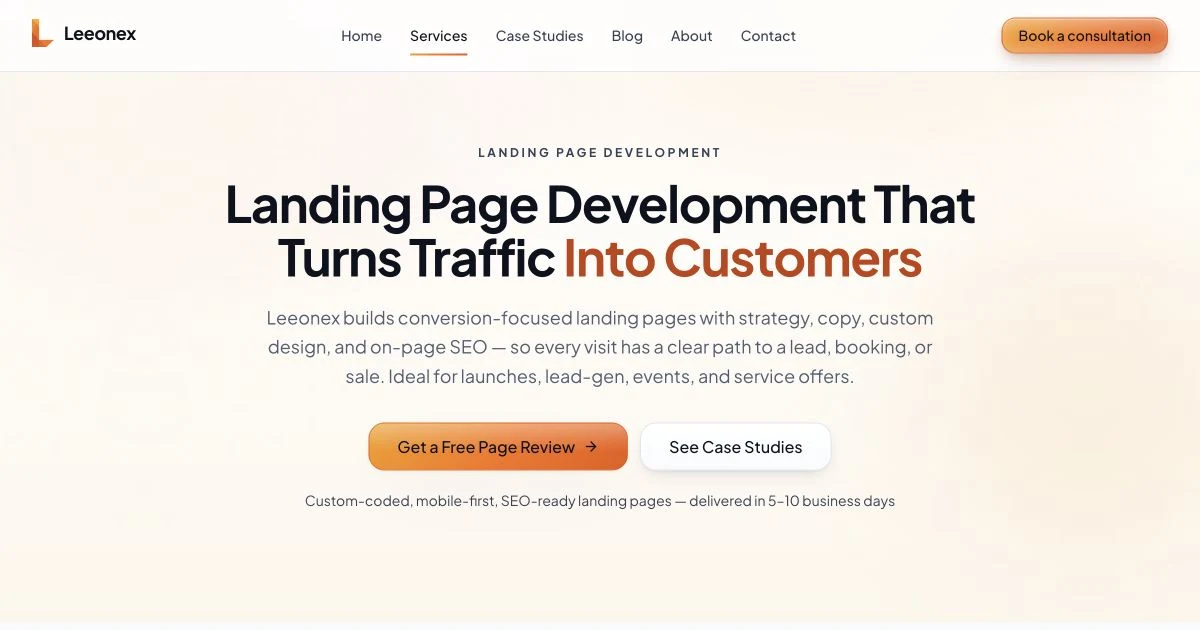
Leeonex landing page development service hero with a focused promise and two calls to action
Leeonex-owned case studyLanding page development

How Leeonex structured a landing-page service around the decisions buyers need to make

Leeonex needed a landing-page service experience that could do more than list design features. It had to help different buyers recognize their use case, understand the complete delivery system, and see how leads move after a form submission—without presenting concepts as client results.

buyer use cases
6
delivery components
10
lead destinations
10
Read the case study
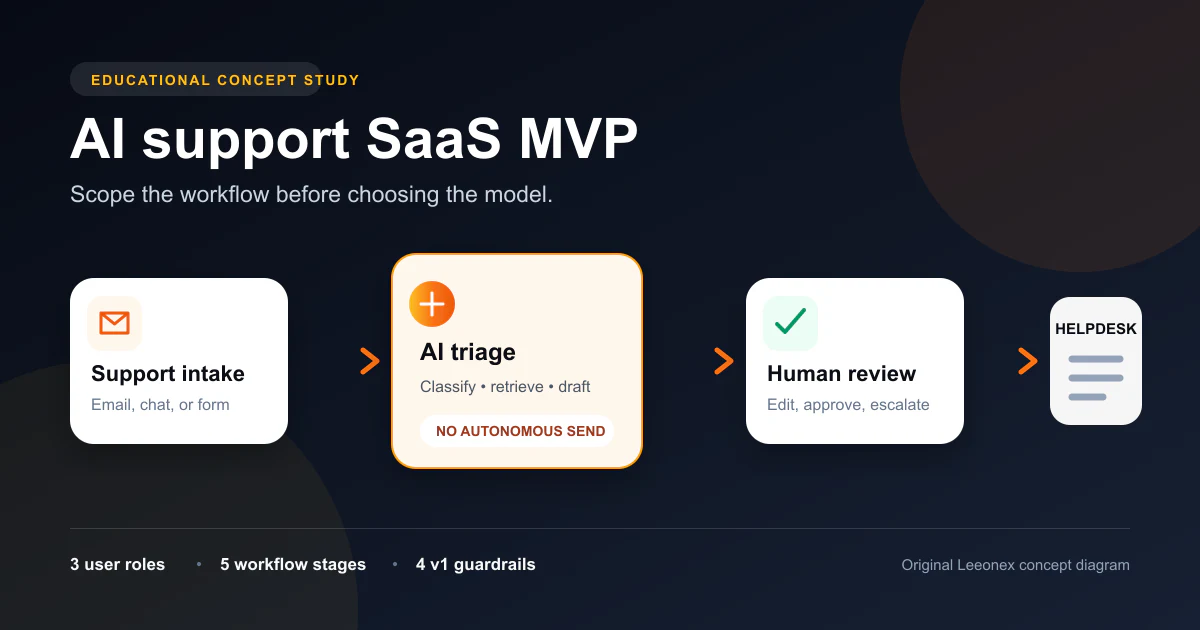
Concept diagram of an AI support SaaS MVP moving requests from support intake through AI triage and human review
Educational concept studyMVP + AI automation

How to scope an AI-assisted support SaaS MVP without automating away human judgment

This educational concept follows a founder-style discovery conversation from “let AI answer support” to a focused SaaS MVP: capture requests, classify them, prepare a source-backed draft, keep a person in control, and record what happened.

user roles
3
workflow stages
5
v1 guardrails
4
Read the case study

Evidence standard

What every Leeonex case study is expected to show.

Each study documents the problem, the decisions, the visible work, and the result that can actually be supported — including limitations and lessons where they matter.

  • Project type
  • Client or business context
  • The problem
  • What Leeonex built
  • Features delivered
  • Tech stack
  • Outcome or learning
  • Screenshots and product visuals
  • Client testimonial, only where approved

Have a project like this?

Tell Leeonex what you are trying to build. You will get a straight answer about scope, sequencing, and whether it is the right first step.

No fake promises. Just clear product and engineering discussion.