The starting point
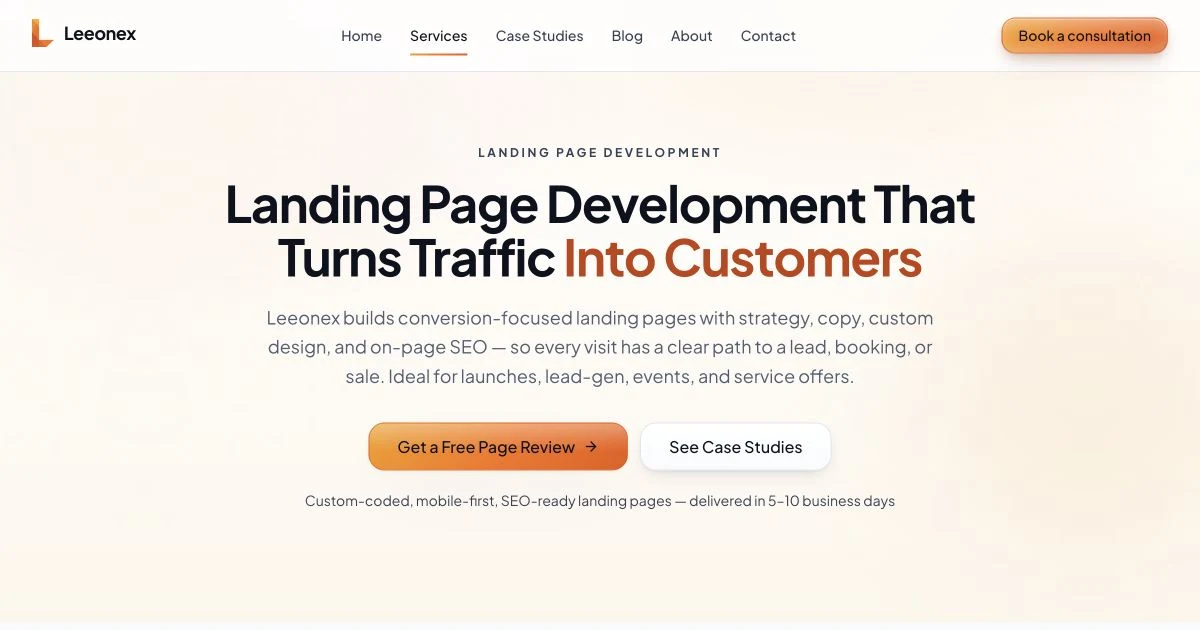
A landing-page service needed to explain the system behind one page.
A landing page may be a single URL, but buyers are rarely buying only a layout. They need an offer framed for a specific audience, a credible message hierarchy, a clear action, responsive implementation, search foundations, tracking, and a reliable way for each lead to reach the team.
Leeonex also serves several landing-page situations: launches, lead generation, services, events, personal brands, and focused product offers. Compressing those needs into one feature list would make the page shorter while making the buying decision less clear.
Organize the page around buyer questions and use cases instead of a generic list of design features.
Show the complete path from research and messaging through lead delivery, analytics, and ownership.
Label illustrative work as concept material and keep implementation facts separate from performance outcomes.
The content system
Typed sections keep scope, proof labels, visuals, and discovery aligned.
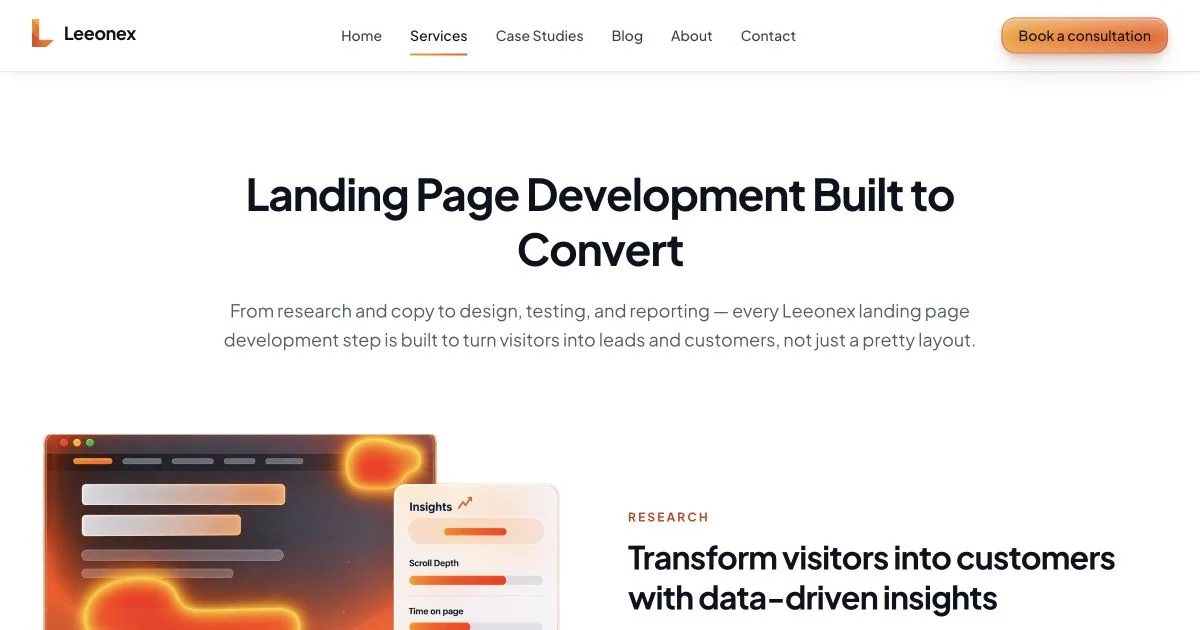
The production page is assembled from typed content groups rather than one long component. Six buyer purposes help visitors self-identify. Ten delivery components define the visible scope, while the conversion sequence connects research, copywriting, branding, testing, intelligence, and reporting.
Concept examples are labeled as concepts. Visual metadata feeds the image sitemap, and the same service definitions support page metadata, structured discovery, related offerings, and calls to action. This keeps updates focused without separating the page promise from the implementation model.
The useful outcome
The page now makes the post-click and post-submit journey inspectable.
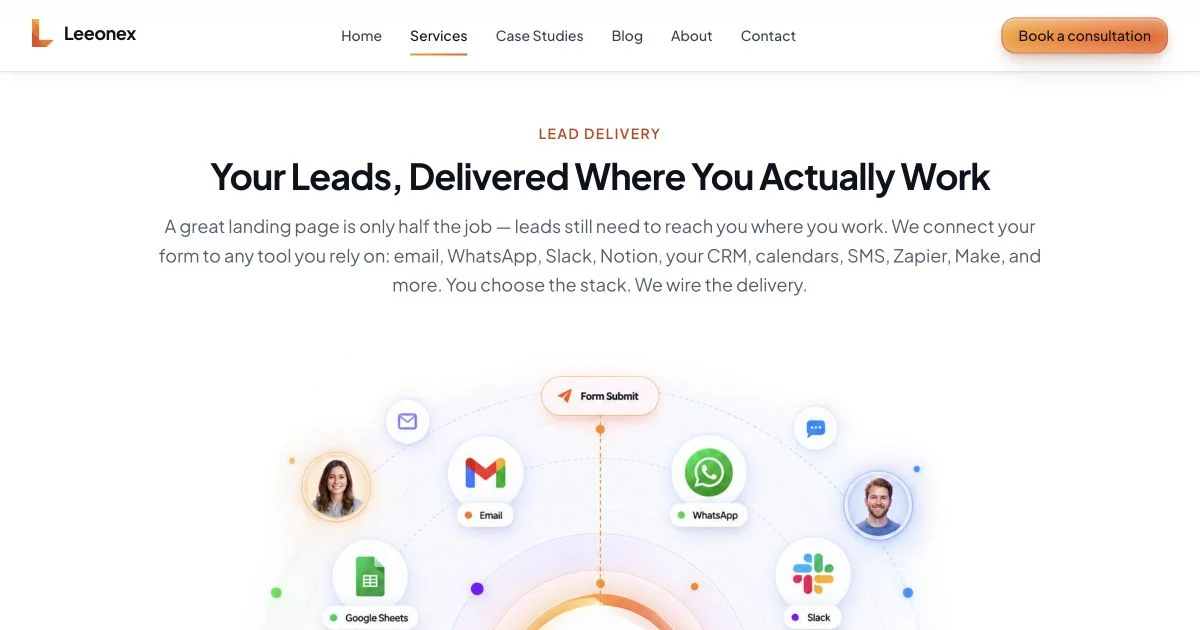
Buyers can move from a recognizable use case to the delivery scope, then inspect how a form submission can reach ten named destinations across email, messaging, collaboration, CRM, calendars, spreadsheets, and automation tools. The page also connects naturally to Leeonex guidance on choosing a landing page or MVP first.
This is an implementation outcome, not evidence that the page has increased traffic, leads, or conversion rate. Those claims need a defined measurement window and defensible analytics. The verified result here is a production service experience with explicit audience paths, delivery boundaries, proof labels, and discovery infrastructure.
What this demonstrates
A focused landing page still needs an end-to-end product decision.
Good landing-page scope begins with the audience, promise, traffic context, required action, evidence, and lead workflow. Visual design becomes more useful once those decisions are explicit and connected to what happens after launch.
Explore landing page development