
The starting point
A wide service range needed a clear customer journey.
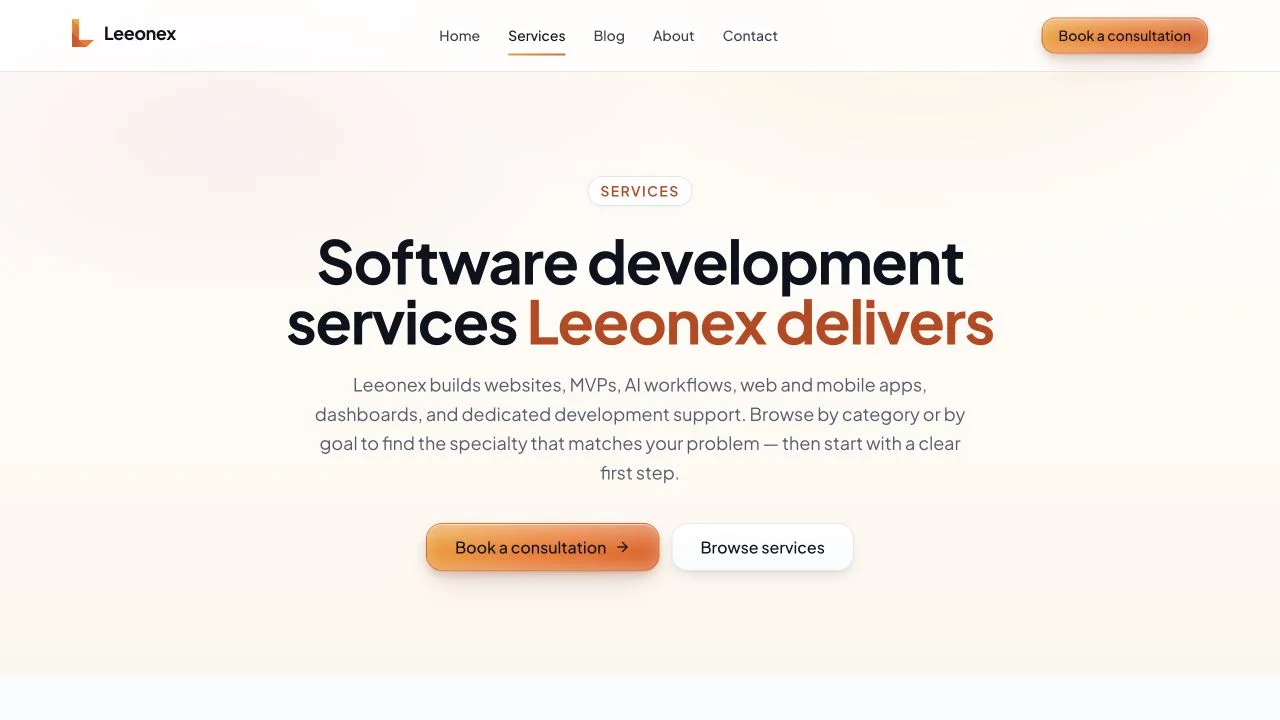
Leeonex works across websites, MVPs, AI workflows, web and mobile applications, dashboards, and delivery support. Listing every capability on one page would have made the studio look broad but left each buyer unsure where to begin.
The website also had to earn trust without leaning on client logos, testimonials, or outcome numbers that were not ready for publication. That made information architecture and proof discipline part of the product—not an editorial cleanup after launch.
Route buyers by the problem they need solved, not by a long technology list.
Keep categories, offering pages, metadata, and sitemaps aligned from shared sources.
Label concepts and future project slots honestly until verifiable proof is available.
The build
Typed content became the foundation, not decoration.
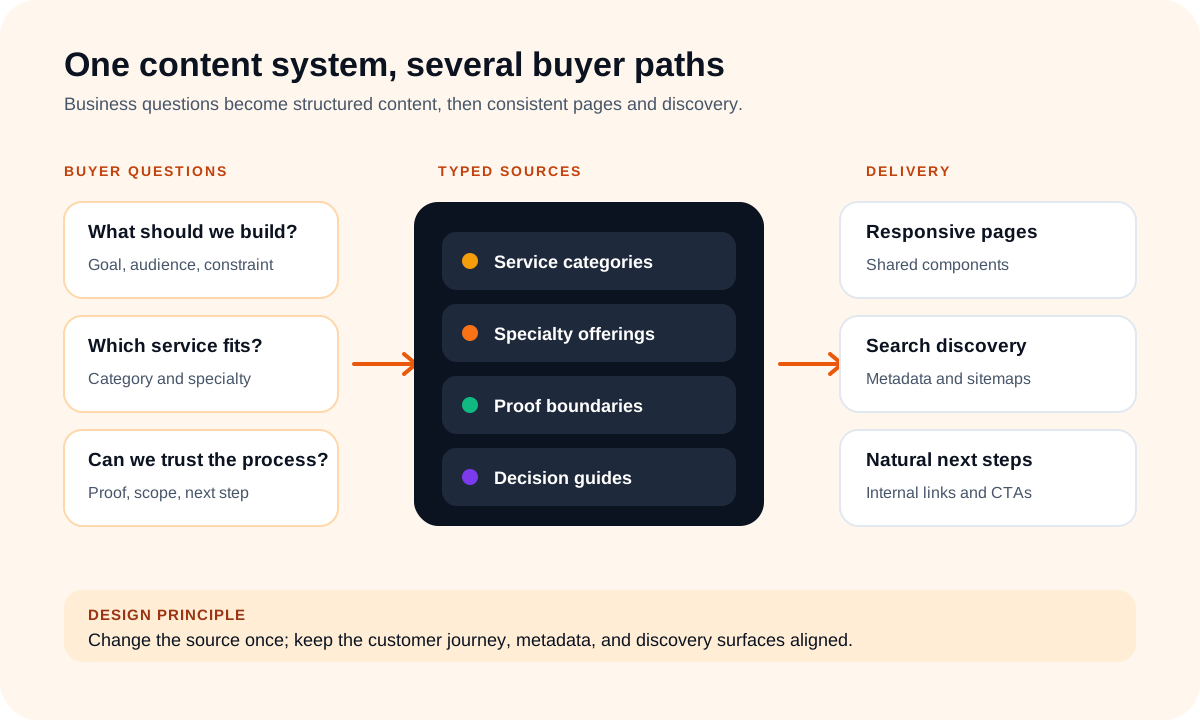
Seven service categories give different buyers a useful starting point. Twenty-one specialty offerings then capture more specific commercial intent without turning each page into an isolated content island.
Service definitions, audience labels, CTAs, related routes, metadata, and image discovery are maintained through shared typed data. The same structure supports responsive page components, XML and HTML sitemaps, and machine-readable discovery files.
The useful outcome
The site can now teach, route, and grow without pretending.
The production website gives Leeonex a coherent path from a broad promise to a specific service conversation. Three original decision guides support visitors who are still working out what should come first.
This is a delivery outcome, not a traffic or conversion claim. Business performance will be reported only after a stable measurement window provides defensible analytics. Until then, the verified result is a maintainable platform with clear proof boundaries and room for real client stories as they are approved.

What this demonstrates
Honest proof can start with the decisions you can show.
A useful first case study does not need an inflated result. It needs a real problem, visible work, explainable decisions, and a clear boundary around what has and has not been measured.
Explore website development