The short answer: specify the business boundary, not just the endpoint
A production-ready API integration needs requirements for the business job, data ownership, provider contract, security, failure behaviour, operations, and release. The brief should say which system owns each fact, how quickly a change must appear, what happens when the result is unknown, who resolves drift, and what evidence permits launch. An endpoint list and a happy-path payload are not enough.
Start with one business-critical flow, such as “an approved order creates one fulfilment request” or “a paid workspace gains the correct product access.” Name the record, owner, timing, and consequence. Then use provider documentation to test whether the API can support that contract. This keeps implementation choices tied to an operational result instead of a connector demo.
When one side is an enterprise resource planning system, use the dedicated ERP integration requirements checklist to add transaction authority, initial load, cutover, business reconciliation, and day-two support to this general interface contract.
Business
Job, authority, timing, consequence, and owner.
Technical
Contract, identity, mapping, limits, and failure paths.
Operational
Evidence, alerts, recovery, change, and release ownership.
Use seven requirement layers to expose hidden work
Teams often jump from “connect these systems” to tool selection. If the open question is whether managed connectors or custom code should own the boundary, use the separate iPaaS vs custom API integration guide. This checklist begins after a flow is worth pursuing and makes the requirements concrete enough to estimate, design, and test.
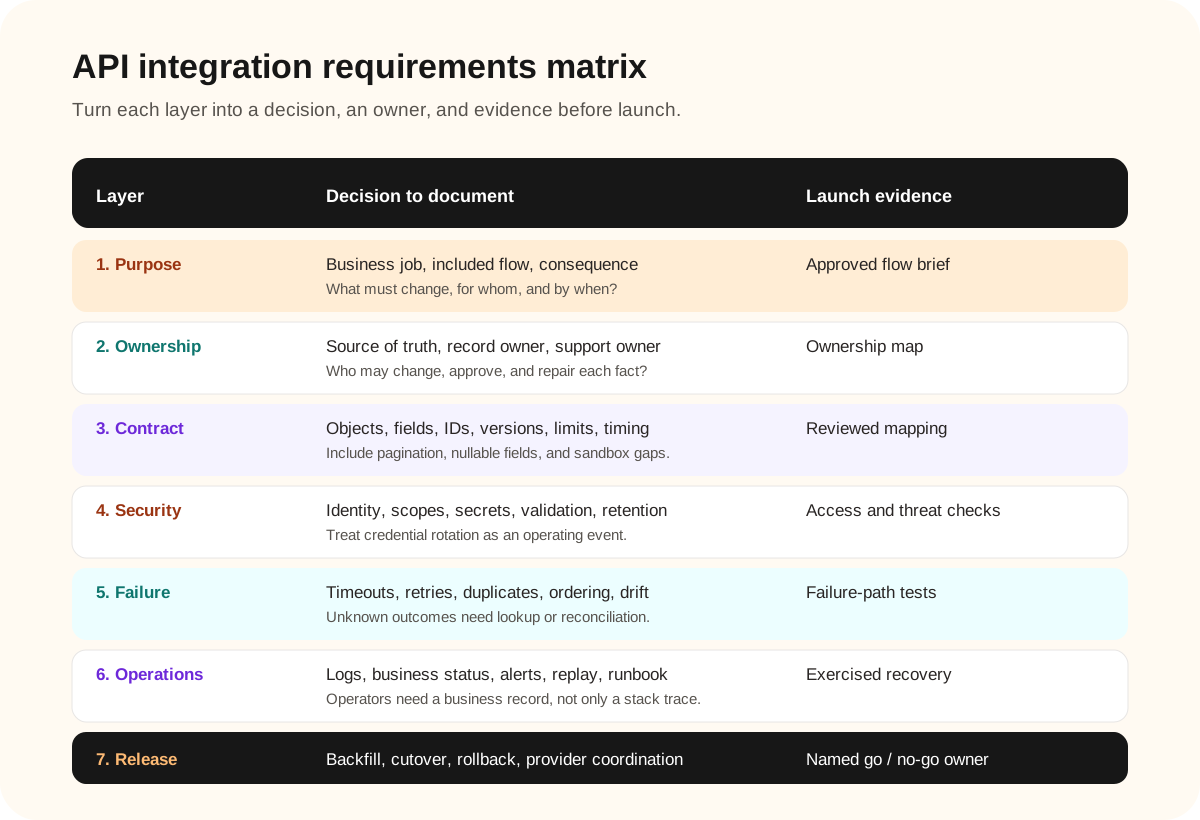
Give every layer a named decision and evidence. “OAuth” is not a security requirement until the scopes, token owner, storage, expiry, rotation, environment, and failure response are known. “Real time” is not a timing requirement until the buyer says whether ten seconds, five minutes, or the next business day is acceptable—and what must happen when that target is missed.
Write the integration contract around records and decisions
The provider's API contract defines endpoints, methods, schemas, authentication, errors, versions, pagination, and limits. Your integration contract adds the business meaning. For every important object, document its stable identifier, source of truth, permitted direction, mapping rules, required fields, nullable states, timestamps, units, and who may correct it.
| Question | Weak requirement | Useful requirement |
|---|---|---|
| Authority | Sync customers | CRM owns contact details; billing owns payment status |
| Identity | Match by email | Persist provider and internal IDs; email may change |
| Timing | Near real time | Accepted records visible within five minutes; breach alerts operations |
| Correction | Retry failures | Retry transport errors; queue invalid records for the data owner |
Test the exact provider behaviour with representative records. Sandboxes may not reproduce production limits, delayed events, account configuration, or historical data. Record those gaps so a green sandbox test does not become false launch confidence.
When the provider controls recurring payments, use the SaaS subscription billing requirements checklist to connect customer and subscription records to product entitlements, finance evidence, support actions, lifecycle testing, and failed-payment recovery.
For checkout, capture, refunds, fulfilment, and financial reconciliation, use the payment gateway integration requirements checklist to translate provider states into testable business outcomes.
Separate retries from recovery and reconciliation
A timeout means the client did not receive a conclusive answer; it does not prove the provider did nothing. Classify failures before retrying. Use bounded backoff for recoverable transport or throttling conditions, and protect duplicate-sensitive writes with the provider's idempotency mechanism or a stable business operation key.
Stripe's official idempotent request documentation gives a concrete example: a client supplies a key so a retried write can return the first operation's result rather than create a duplicate. Treat that as provider-specific behaviour; confirm the method, retention window, parameter rules, and error semantics for the API you actually use.
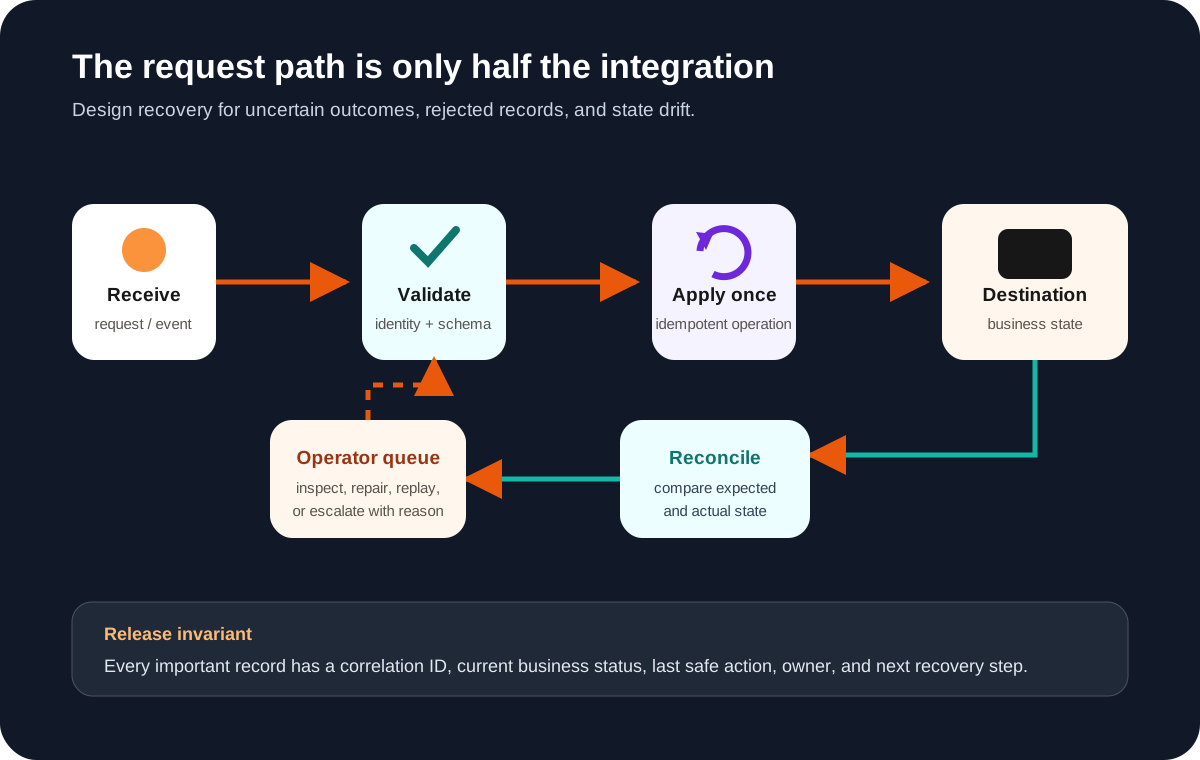
Reconciliation asks a different question: does the destination state match what the business expected? Schedule it according to consequence, keep a checkpoint or comparison key, and route differences to an operator with the affected business record, error class, attempts, last safe action, and approved next step. Silent drift is more dangerous than a visible failed request.
Design security and webhook handling as lifecycle requirements
Scope credentials to the smallest required actions, store them outside source and workflow content, and name who owns consent, refresh, rotation, revocation, and expired-token incidents. Validate inbound and outbound data at the boundary. The OWASP API Security Top 10 is a useful review prompt for authorization, authentication, resource consumption, inventory, configuration, and unsafe API consumption; it does not replace a threat model for this flow.
Treat webhooks as deliveries that may be duplicated, delayed, replayed, or missed. Verify the provider signature using the raw request rules it documents, reject unexpected event types, record a stable delivery identifier, acknowledge promptly, and process bounded work asynchronously where appropriate. GitHub's webhook guidance illustrates provider-specific requirements for secrets, delivery IDs, event checks, prompt acknowledgement, and redelivery. Use your provider's rules, not copied constants.
Test business outcomes and failure paths before go-live
Unit tests around mapping are useful but insufficient. Run end-to-end examples for new, updated, deleted, malformed, duplicated, delayed, and out-of-order records. Exercise expired credentials, provider downtime, throttling, partial backfills, webhook redelivery, schema changes, and an uncertain write. Verify both the technical signal and the operator's view.
- Prepare: production credentials, owned notification addresses, versions, limits, dashboards, alerts, runbook, and provider contacts.
- Backfill: use a restartable plan with counts, checkpoints, rejected-record handling, and reconciliation totals.
- Cut over: name the decision-maker, monitoring window, stop criteria, rollback path, and customer or operator communication.
- Operate: review drift, capacity, provider changes, credential lifecycle, alert quality, and unresolved exceptions.
If the flow belongs inside a customer portal, internal tool, or product, connect these requirements to the broader web application boundary so permissions, UI status, support tools, and audit history do not become separate afterthoughts.
Complete one brief per business-critical flow
One integration can contain several flows with different consequences. A nightly catalogue import, a customer-facing entitlement check, and a finance export should not inherit one vague “sync” requirement. Complete the worksheet for each flow, then combine shared credentials, mapping, infrastructure, and operating concerns into the implementation plan.
If your organization exposes an API to external partners, the partner API production-access concept study applies the checklist to consumer identity, sandbox evidence, production promotion, scoped credentials, live support, and revocation. It shows why a successful test call is evidence for review rather than automatic permission to use production.
For a worked asynchronous example, see the reliable webhook ingestion concept study. It separates authenticated receipt from business completion, then scopes deduplication, idempotent processing, controlled replay, and reconciliation around one consequential event family.
For a record handoff example, the order-to-fulfillment integration concept study applies the same wider contract to one accepted order, separates destination receipt from business acceptance, and keeps uncertain outcomes visible until lookup or reconciliation resolves them.
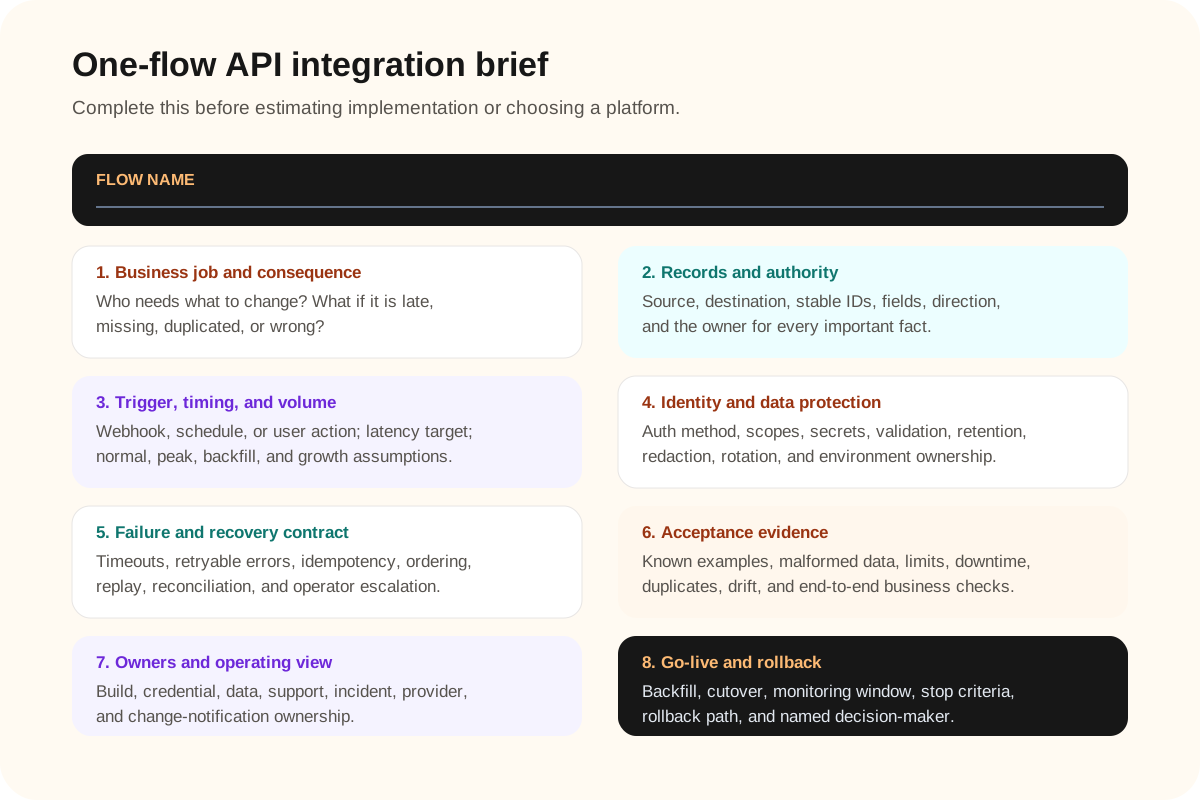
The result should be small enough to review in a working session and specific enough for an engineer to identify open questions. If the source of truth, failure consequence, or correction owner remains disputed, resolve that policy before promising a build estimate. Code cannot safely settle an ownership decision the business has not made.
API integration requirements FAQ
What should API integration requirements include?
Document the business job, source of truth, records and fields, stable identifiers, direction, trigger, latency, authentication and scopes, rate limits, pagination, validation, duplicate and ordering behavior, timeouts, retries, reconciliation, monitoring, operator recovery, test evidence, owners, and go-live or rollback plan.
What is the difference between an API contract and an integration contract?
An API contract describes the provider interface: endpoints, schemas, authentication, errors, limits, and versions. An integration contract adds the business boundary around it: which system owns each fact, how data is mapped, when changes should appear, what failures mean, who resolves exceptions, and how correctness is verified after launch.
How should API retries be designed?
Classify errors first, retry only recoverable failures, use bounded backoff, respect provider guidance, and protect duplicate-sensitive writes with provider idempotency support or a stable internal operation key. A timeout creates an unknown outcome, so include a lookup or reconciliation path instead of assuming the operation failed.
Are webhooks enough to keep two systems synchronized?
Usually not by themselves. Verify and deduplicate webhook deliveries, record them durably, process them safely, and add replay or reconciliation for missed, delayed, duplicated, or out-of-order events. The exact design depends on the provider contract and the consequence of stale data.
When is an API integration ready to launch?
Launch when the happy path and named failure paths pass with realistic data; credentials, limits, monitoring, alerts, runbooks, reconciliation, rollback, provider coordination, and operational owners are in place; and the team can prove what happened to a business record without reading raw logs alone.