The short answer: choose per business-critical flow
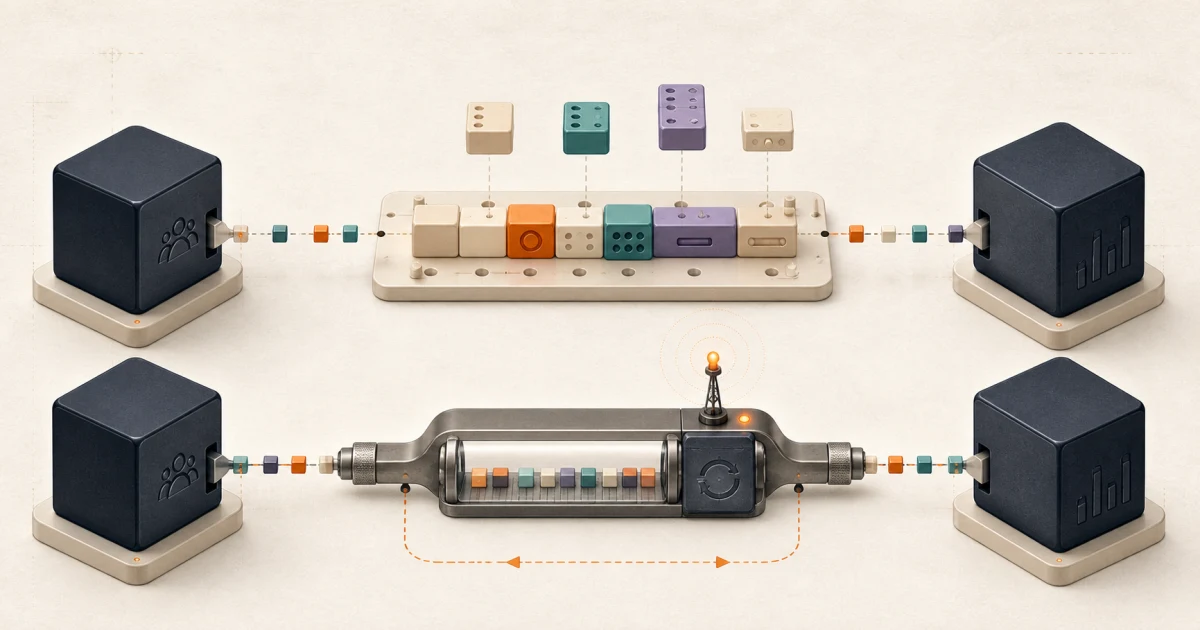
Choose iPaaS when mature connectors cover the required records and actions, the logic is mostly standard orchestration, and a managed platform improves delivery and operator visibility. Choose custom API integration when the flow is product-critical, rules or recovery are specialized, platform constraints would distort the design, or the team needs deeper control over security, performance, deployment, and observability. Use a hybrid when those conditions differ by boundary.
“The platform has a connector” is not a complete requirement. Verify the exact objects, fields, triggers, write operations, authentication method, pagination, rate limits, error details, and version behavior you need. A connector that can create a contact may not support the custom relationship, bulk update, or event history that the business process depends on.
iPaaS
Managed connectors and orchestration for supported, visible flows.
Custom
Purpose-built behavior owned as part of the product or operation.
Hybrid
Standard connectors at the edge; custom rules where differentiation lives.
Compare iPaaS and custom integration as operating models
iPaaS is not “no engineering,” and custom code is not “no platform.” Both need data definitions, permissions, failure handling, tests, monitoring, and ownership. The choice changes where those capabilities live and who is responsible when a provider changes behavior.
| Decision | iPaaS | Custom integration |
|---|---|---|
| Connector lifecycle | Platform supplies and updates supported connectors | Your team implements and tracks provider changes |
| Workflow logic | Visual or configured steps within platform limits | Code shaped to domain rules and product behavior |
| Reliability controls | Use platform retry, queue, replay, and alert features | Design idempotency, queues, replay, and reconciliation |
| Deployment and monitoring | Platform environments, logs, dashboards, and limits | Your runtime, telemetry, release, and incident process |
| Portability | Flow may depend on proprietary connectors and mappings | Code still depends on providers, libraries, and hosting choices |
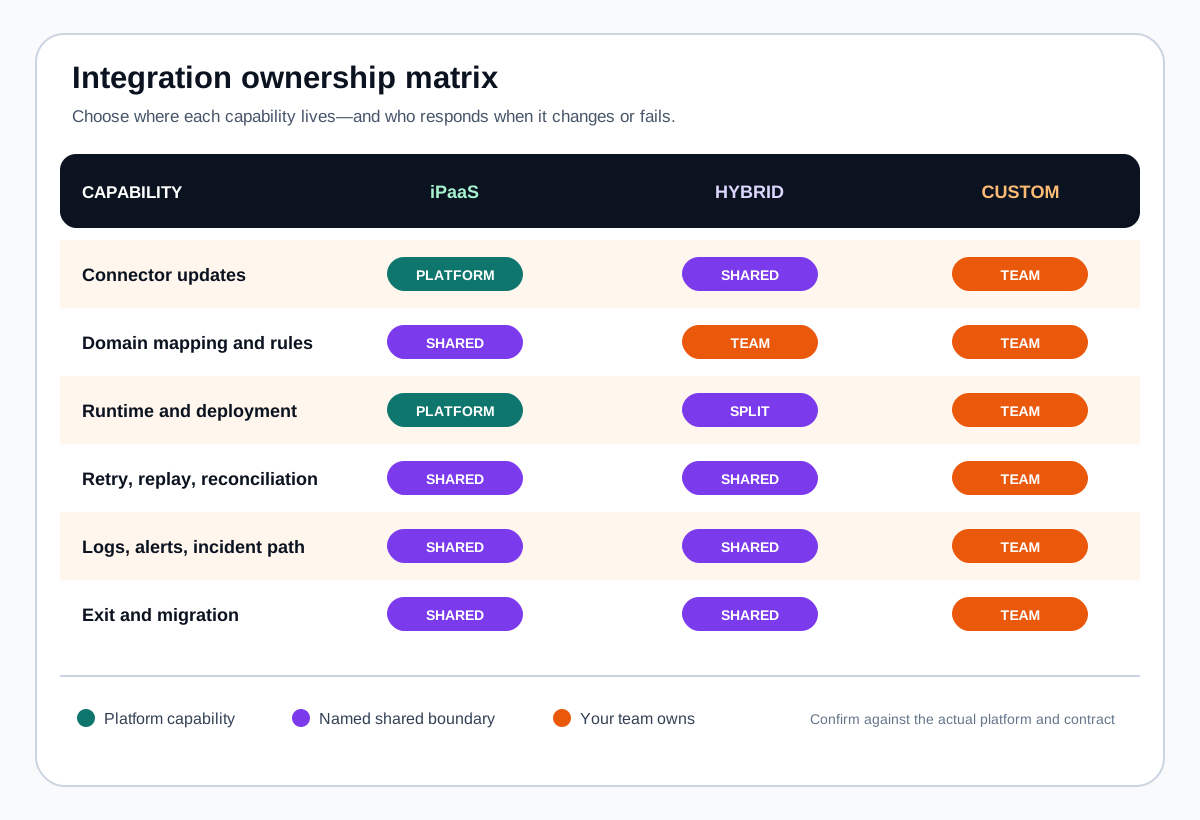
Do not decide once for the whole organization. A standard lead capture sync may fit iPaaS. A customer-facing entitlement check may need a custom service. A nightly finance export may use a managed connector plus a custom validation step. Treat each flow as a boundary with its own consequence, timing, and owner.
Run the integration fit test before comparing subscriptions
- Connector depth: Can the connector read and write the exact standard and custom records, relationships, attachments, and events?
- Logic shape: Is the flow mostly mapping and branching, or does it encode specialized domain rules and transactional behavior?
- Timing and volume: Is scheduled or near-real-time processing enough, and can the approach handle realistic bursts and payload sizes?
- Failure consequence: What happens if a record is late, duplicated, reordered, partially applied, or never delivered?
- Security boundary: Can access be limited to required tenants, objects, fields, operations, networks, and secrets?
- Change ownership: Who responds when an API version, field, credential, connector, or business rule changes?
- Exit path: Can the organization export mappings, replay state, operational history, and enough documentation to migrate?
Use representative records rather than a feature checklist. Include a normal case, missing identifier, duplicate event, deleted destination, permission failure, provider timeout, and a record edited on both sides. These cases expose the real architecture faster than a polished happy-path demonstration.
If the integration exists mainly because a spreadsheet has become a shared operational database, first separate the product and process decision with the spreadsheet-to-internal-tool guide. An integration cannot decide which system should own a record.
A reliable integration is more than a connector
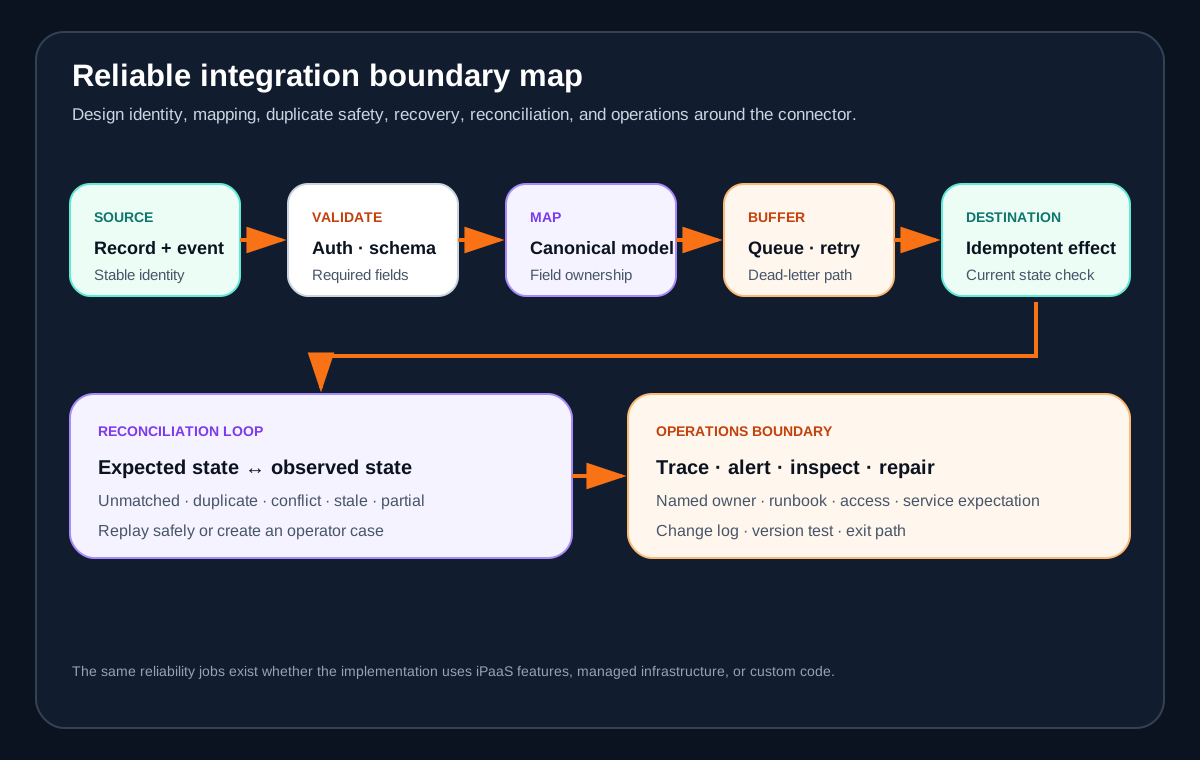
Start by naming the authoritative record and stable identifier. Validate and normalize incoming data before it reaches domain rules. Use an asynchronous boundary where bursts or provider downtime should not block the user. Make repeated delivery safe. Record enough state to replay, reconcile, and explain failures to an operator.
Assume delivery can be repeated or reordered
Webhook providers commonly retry failed deliveries. Stripe’s official webhook documentation, for example, tells implementers to handle duplicate events, avoid depending on event order, and process work asynchronously. The broader lesson is provider-independent: persist an event or operation identifier, make effects idempotent where possible, and retrieve current state when order matters.
HTTP itself defines PUT, DELETE, and safe methods as idempotent, while automatic retries for non-idempotent requests require additional knowledge or design. See RFC 9110, section 9.2.2. A business command such as “create invoice” usually needs an idempotency key or duplicate check regardless of the transport.
Put reconciliation beside retries
Retries address transient delivery failure. They do not prove that two systems agree. A reconciliation job should compare the expected and observed state, surface unmatched or conflicting records, and give an operator enough context to repair safely. For two-way sync, define field ownership and conflict policy; “last write wins” is a choice with business consequences, not a neutral default.
Microsoft’s asynchronous messaging guidance explains how brokers decouple producer and consumer availability and highlights retry, dead-letter, and idempotent-processing concerns. The pattern applies whether the implementation uses an iPaaS feature, a managed cloud service, or custom code.
Treat authorization as a data rule
Grant only the scopes and operations the flow needs, separate credentials by environment, rotate secrets, and enforce tenant and object authorization at the receiving boundary. OWASP’sAPI Security Top 10 calls out object-level authorization and unrestricted resource consumption among recurring API risks. A visual workflow does not remove those responsibilities.
Compare total ownership, not licence versus build estimate
For iPaaS, examine plan fees, task or execution pricing, connector tiers, environments, log retention, support, data movement, platform administration, and the cost of working around limits. For custom integration, include discovery, implementation, hosting, telemetry, security review, provider change work, incident response, and knowledge continuity.
Do not invent a five-year total from uncertain traffic and change. Model a few explicit scenarios: expected flow, a burst, one provider version change, one new field or rule, and a failed delivery incident. State the assumptions and compare the work required under each approach.
A hybrid is not automatically cheaper. It can be valuable when it creates a stable seam: iPaaS owns common SaaS connectivity, while a small custom service owns canonical mapping and domain rules. It is weak when logic is split across both places without one trace, replay path, deployment owner, or source of truth.
Leeonex’s API and integration service can support custom or hybrid boundaries, while AI workflow automation is relevant when interpretation or AI-assisted decisions sit inside the flow. If a model will select tools or actions, apply the agent-versus-workflow autonomy test separately.
Write one integration decision brief before procurement
Complete this worksheet with the workflow owner, the owner of each system, and the person who will operate failures. Use a real record and example payload. Unknowns should become discovery tasks, not optimistic assumptions in an estimate.
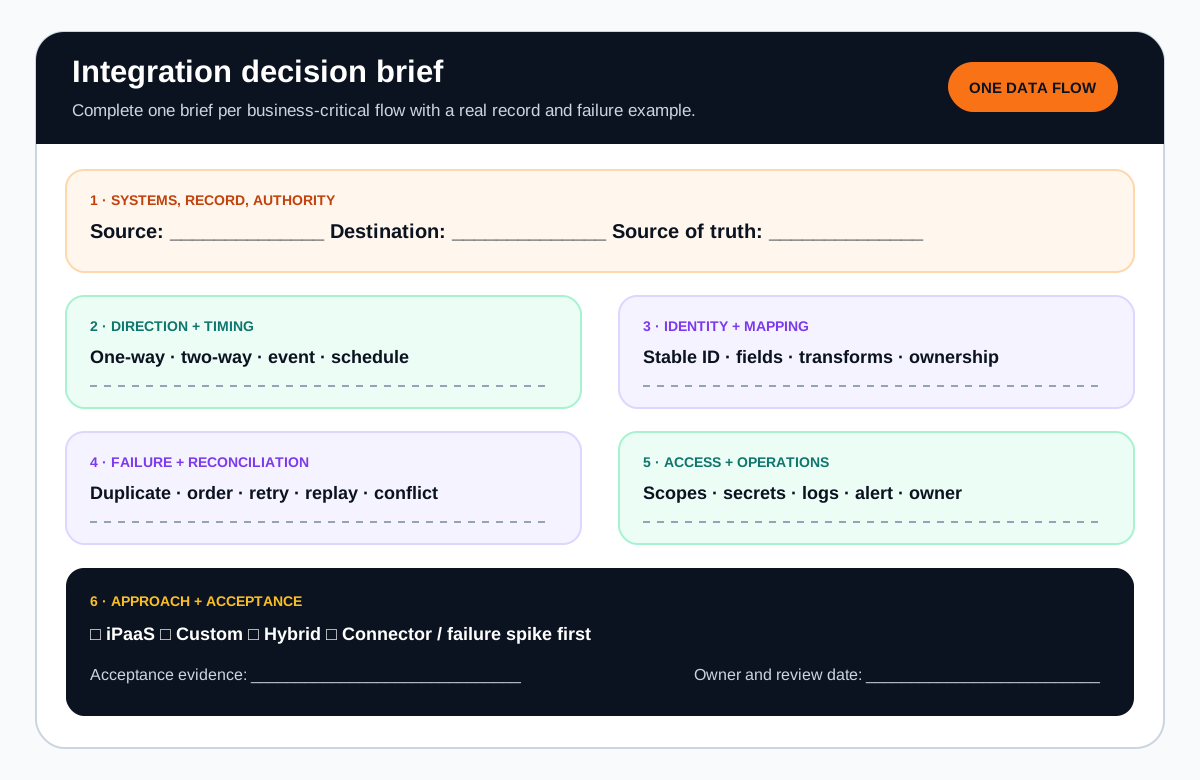
End with one decision per flow: configure in iPaaS, build a custom boundary, split responsibilities in a hybrid, or run a connector and failure-mode spike first. The brief should also name acceptance evidence: matched records, duplicate safety, permission tests, recovery from downtime, reconciliation, and an operator successfully resolving an exception.
After choosing the operating model, use the API integration requirements checklist to document the contract, security lifecycle, failure paths, testing evidence, operating owners, and go-live gate for each business-critical flow.
Frequently asked questions
What is the difference between iPaaS and custom API integration?
An integration platform as a service provides hosted connectors, workflow orchestration, mapping, deployment, and monitoring capabilities. A custom integration implements the required API, webhook, queue, transformation, and operational behavior in code owned by the product or business. Either approach still needs clear data ownership and failure handling.
When is iPaaS a good choice?
iPaaS is a strong fit when supported connectors cover the required operations, the workflow mostly uses standard triggers and mappings, operations users need visibility, delivery speed matters, and the subscription and platform constraints are acceptable. Validate connector depth with the exact records and actions, not the connector logo alone.
When should an integration be custom built?
Custom code is more defensible when the integration is part of the product experience, business rules are specialized, traffic or latency requirements are unusual, security boundaries need deeper control, provider APIs require custom recovery, or platform limits would distort the workflow. The team must be willing to own testing, monitoring, updates, and support.
Can iPaaS and custom integration be combined?
Yes. A hybrid can keep common SaaS connectors and orchestration in iPaaS while placing domain rules, canonical data mapping, high-volume processing, or product-facing APIs in a custom service. Define the seam, ownership, observability, and replay path so the hybrid does not become two uncoordinated systems.
What should an integration requirements brief include?
Name the source and destination, authoritative record and stable identifier, fields and transformations, direction, trigger, volume, latency, permissions, duplicate and ordering behavior, retry and reconciliation rules, operator workflow, test cases, owner, service expectations, change process, and exit plan.
Sources and further reading
- Microsoft Azure Architecture Center: Asynchronous messaging options
- Stripe: Webhook delivery behavior and best practices
- IETF RFC 9110: HTTP semantics
- OWASP API Security Top 10
The fit test and ownership matrix are Leeonex planning heuristics, not vendor benchmarks, security certification, or price estimates. Validate product documentation, contracts, limits, data residency, security, and compliance needs for the platforms and records in your specific integration.