
The short answer: choose the control system for your uncertainty
Choose fixed price for bounded work when the outcome, included scope, interfaces, dependencies, quality constraints, buyer responsibilities, and acceptance evidence can be defined with credible confidence. Choose time and materials when discovery, user feedback, legacy behavior, integrations, or technical feasibility should change priorities as the team learns. Use a phased hybrid when a short discovery or spike can convert a consequential unknown into a better delivery decision.
Neither model removes risk. Fixed price moves more estimation and scope risk into assumptions, contingency, acceptance, and change control. Time and materials keeps scope flexible but requires active product ownership, visible delivery evidence, budget guardrails, and a stop-or-continue cadence. The wrong model is the one whose controls do not match the uncertainty.
Fixed price
Control a defined boundary through acceptance and change rules.
Time and materials
Control evolving work through evidence, priority, cadence, and spend.
Phased hybrid
Buy down a named unknown before selecting the next commercial boundary.
Compare payment models as delivery systems
Contract terminology varies by supplier and jurisdiction, so the agreement controls. As a useful formal reference, the U.S. Federal Acquisition Regulation describes a firm-fixed-price contract as a price not adjusted by the contractor’s cost experience and suitable when reasonably definite specifications and realistic pricing are possible. Its time-and-materials definition pays specified labor rates and material costs when the extent or duration cannot be estimated with reasonable confidence. Those public-procurement definitions are not terms for every private contract, but they clarify the basic risk allocation.
| Decision | Fixed price | Time and materials | Phased hybrid |
|---|---|---|---|
| What is bought | Defined scope and acceptance boundary | Delivery capacity and evolving priorities | Evidence gate, then a selected model |
| Primary control | Specification, acceptance, change process | Backlog, working software, cadence, spend cap | Discovery question and decision criteria |
| Change | Clarification or priced change | Reprioritized within available capacity | Updates the next phase boundary |
| Buyer must provide | Timely decisions, access, acceptance | Active owner, priorities, review, stop decisions | Unknowns, access, gate owner, next decision |
Pricing model and delivery model are different decisions. A supplier-managed project, embedded specialist, or dedicated squad can use different commercial mechanisms. Use the staff augmentation versus project outsourcing guide first if the unresolved question is who should own coordination and the delivery outcome.
Run five uncertainty tests before requesting a quote
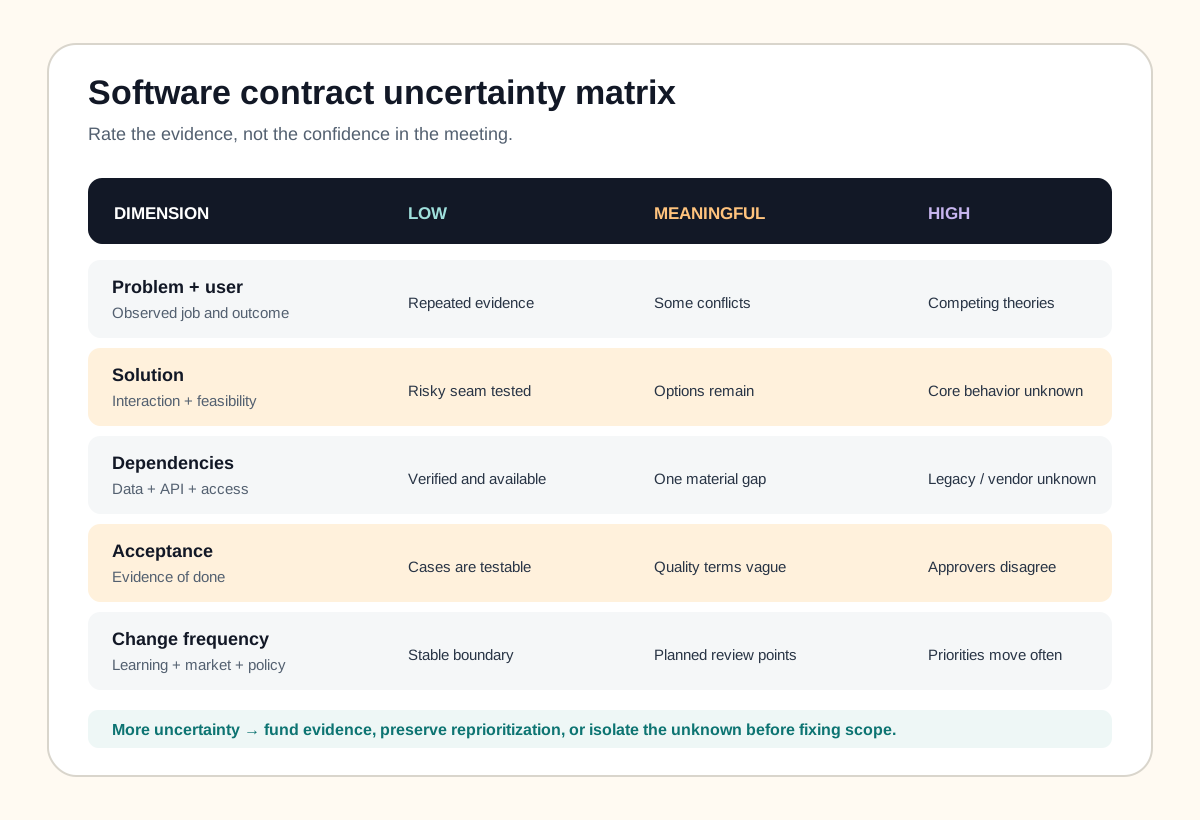
A detailed document can still conceal uncertainty. Score each dimension as low, meaningful, or high and attach evidence. A fixed boundary becomes more credible when all five are low or can be isolated behind explicit assumptions.
1. Problem and user uncertainty
Are the user, workflow, pain, and desired outcome observed, or are stakeholders still offering competing theories? If real use could change the product shape, preserve room to learn.
2. Solution uncertainty
Has the riskiest interaction, algorithm, permission model, data volume, or platform behavior been tested? “Build a dashboard” is not a solution boundary until its decisions, data, actions, and quality needs are clear.
3. Dependency uncertainty
Verify APIs, data quality, legacy code, environments, vendor limits, security review, content, and stakeholder availability. An undocumented integration can dominate a project whose screens appear completely specified.
4. Acceptance uncertainty
Can buyer and supplier prove completion with representative cases, quality constraints, environments, and named approvers? Words such as “fast,” “secure,” “intuitive,” and “scalable” need operational definitions before they support a fixed boundary.
5. Change frequency
How often do regulations, campaigns, customer feedback, market learning, or internal priorities alter the backlog? Predictable change is still change; choose a governance model that can absorb it without commercial friction overwhelming delivery.
Control spend and change differently under each model
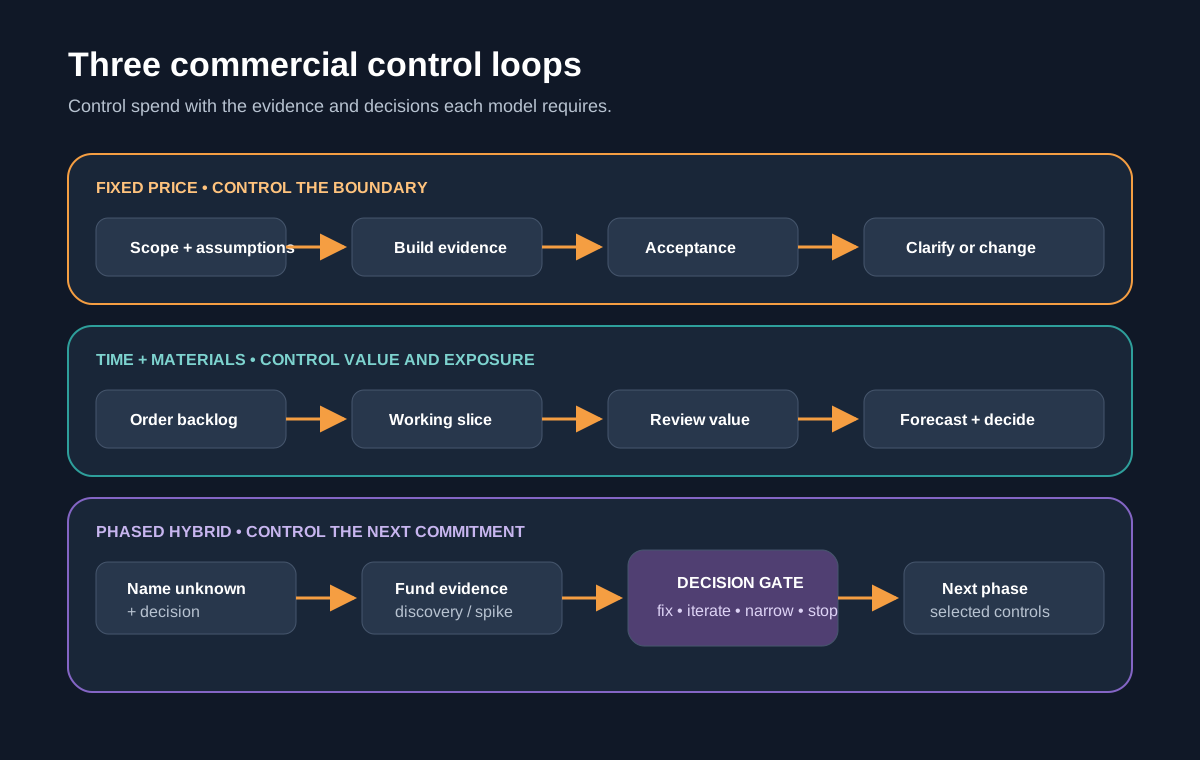
For fixed price, make the boundary executable
State the outcome, scope, exclusions, assumptions, interfaces, data, environments, non-functional requirements, buyer inputs, milestones, acceptance evidence, review window, defect rules, change process, handoff, and support boundary. Separate a genuine defect from a newly discovered requirement. A fixed number with ambiguous acceptance is not budget control; it postpones the disagreement.
For time and materials, govern value and exposure
Agree roles and rates, capacity assumptions, reporting, quality standards, repositories, environments, an ordered backlog, demonstrations of working software, accepted work, forecasts, invoice detail, budget alerts, a spending ceiling or review threshold, and an easy stop or transition path. Paying for time does not mean accepting invisible activity.
For a phased hybrid, fund a decision
Give discovery a bounded question and deliverables: for example, a tested workflow, representative prototype, integration probe, codebase assessment, architecture options, risk register, release boundary, or estimate range with assumptions. End with a decision—proceed fixed, continue iteratively, narrow, change direction, or stop—not an automatic commitment to the next phase.
If the immediate question is what belongs behind the number, use the custom software cost-factor guide to describe the delivery boundary, compare estimate assumptions, and decide which unknown deserves a funded test.
The UK government’s contracting-for-agile guidance likewise warns that rigid fixed price fits poorly when information is limited, describes fixed-price sprints and discovery phases as possible risk controls, and says T&M needs appropriate progress metrics. Its broader Digital, Data and Technology Playbook emphasizes outcomes, documented risk allocation, roles, obligations, payment mechanisms, and performance measures.
Match the model to the work, not a universal preference
- Bounded migration or implementation: fixed price can fit when inventories, mappings, environments, cutover, rollback, and acceptance are verified.
- New product discovery:use a bounded discovery or governed T&M while user and solution evidence can still change the release.
- Legacy rescue: start with diagnosis or a safe technical slice; use the refactor-or-rewrite guide to expose the unknowns before fixing a broad scope.
- Ongoing roadmap:T&M or a capacity model fits evolving priorities when an empowered owner reviews value and spend continuously.
- Small defined enhancement: fixed price can reduce administration when dependencies and acceptance are already understood.
Compare proposals against the same scenarios: one changed requirement, one delayed buyer dependency, one failed integration assumption, one rejected acceptance case, one paused month, and handoff after the current milestone. Ask what changes commercially and operationally in each case.
Leeonex’s MVP scoping service is relevant when the uncertainty is the first product boundary. Software project rescue fits diagnosis and recovery of existing software, while dedicated development support fits teams deciding how ongoing delivery capacity should work.
Complete the commercial decision brief
Before comparing prices, write the outcome, users, current evidence, unknowns, included and excluded scope, dependencies, acceptance cases, quality constraints, budget boundary, governance cadence, decision owner, access, intellectual property and repository expectations, handoff, support, and the next decision. Obtain qualified legal review for the actual agreement, applicable law, liability, data protection, and intellectual-property terms.
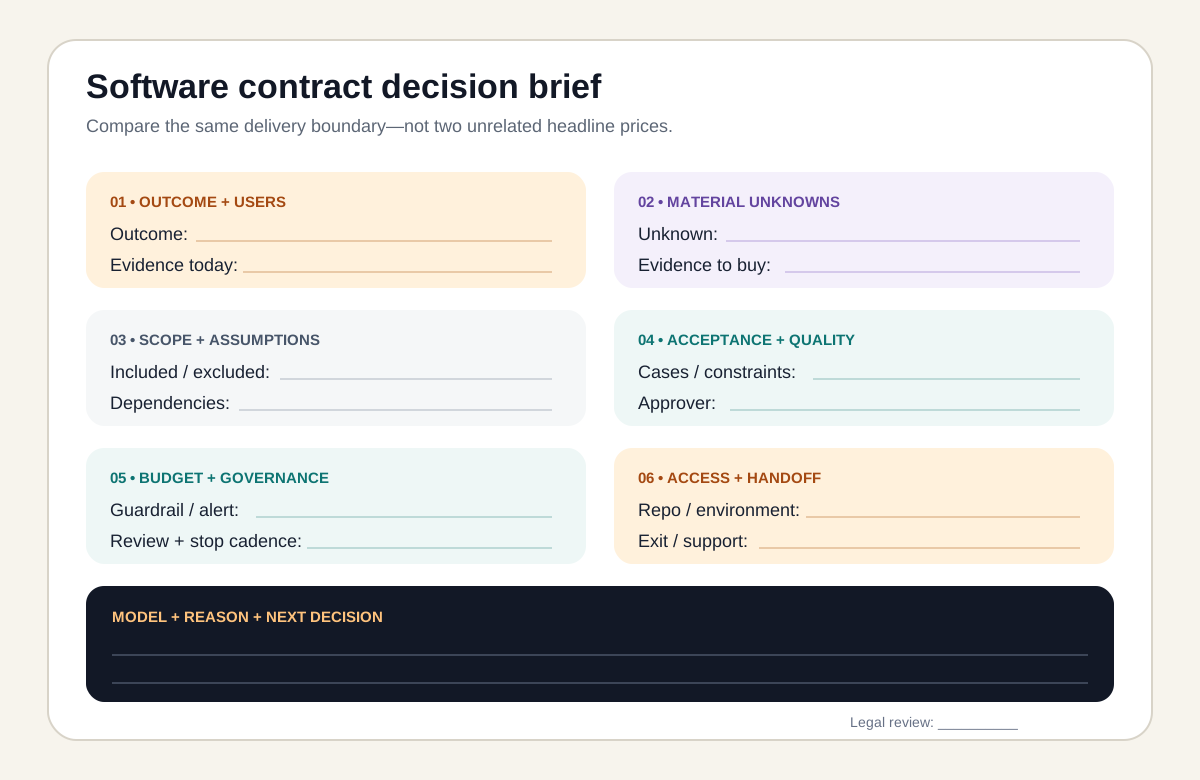
A good proposal should make assumptions and control loops easy to inspect. If two suppliers appear to price different projects, return to the brief before negotiating rates. The goal is not certainty theatre; it is a delivery boundary in which both parties can see progress, change, spend, and acceptance early.
Frequently asked questions
What is the difference between fixed-price and time-and-materials software development?
A fixed-price engagement agrees a price for a defined scope and acceptance boundary, with changes handled through an agreed mechanism. A time-and-materials engagement pays for actual delivery capacity at agreed rates while priorities and scope can evolve. The practical difference is not simply price certainty: it is what must be specified before starting and how progress, change, quality, and spend are governed afterward.
When is fixed-price software development a good fit?
Fixed price fits bounded work when the desired outcome, included and excluded scope, interfaces, dependencies, quality constraints, acceptance evidence, buyer responsibilities, and change process can be described credibly. It is weaker when discovery, user behavior, legacy systems, third-party integrations, or technical feasibility could materially change the solution.
When is time and materials a better fit?
Time and materials fits discovery, rescue work, evolving products, uncertain integrations, and ongoing delivery where learning should change priorities. It still needs a product owner, ordered backlog, visible working software, quality standards, regular acceptance, forecasts, spend guardrails, and a stop or continue decision cadence.
Can a software project use a hybrid contract model?
Yes. A common phased model funds a bounded discovery or technical spike first, then selects fixed-price milestones or governed time and materials using better evidence. Other hybrids can fix time and budget while allowing prioritized scope to move, or fix discrete deliverables while keeping uncertain streams iterative. Define the seam and decision gate rather than blending labels loosely.
Which software contract model is cheapest?
Neither is universally cheapest. Compare the expected cost of discovery, priced contingency, buyer management, change requests, rework, delayed feedback, unused capacity, support, and handoff under realistic scenarios. The lowest headline quote can be expensive if its assumptions are wrong; an open-ended rate card can also drift without strong governance and evidence of accepted value.