
The short answer: choose by delivery ownership, not headcount
Choose staff augmentation when your product and engineering leaders can own the backlog, architecture, coordination, quality, release, and outcome—and need specific capacity or expertise inside that system. Choose project outsourcing when a supplier can own a defined result, organize the delivery team, manage execution, and prove acceptance. Use a dedicated squad when the product needs continuity and cross-functional capacity but the buyer and supplier want an explicit shared governance boundary.
The engagement name does not create accountability. A contract can say “project” while the buyer still makes every daily decision. A “dedicated team” can mean named individuals under client direction or a supplier-managed pod. Before comparing profiles and rates, write down who can decide priority, approve technical trade-offs, reject incomplete work, release to production, and accept the result.
Staff augmentation
Buy capacity inside an operating system you already own.
Dedicated squad
Keep a stable team and define shared decision rights.
Project delivery
Buy an accountable outcome with testable acceptance.
Compare three models across the same delivery system
Staff augmentation, a dedicated squad, and project outsourcing are not levels of quality. They allocate control, coordination, change, and risk differently. Compare them against the work and the buyer’s actual management capacity.
| Model | Buyer must own | Supplier should own | Strong fit |
|---|---|---|---|
| Staff augmentation | Product direction, work allocation, integration, release | Individual capability, availability, professional work | Evolving backlog, known skill gap, capable internal leads |
| Dedicated squad | Product goal, business decisions, timely feedback | Team composition, delivery practice, transparent progress | Ongoing product stream with stable cross-functional capacity |
| Project outsourcing | Outcome, constraints, decisions, access, acceptance | Plan, team coordination, implementation, delivery evidence | Bounded result with definable acceptance and handoff |
Pricing can be hourly, sprint-based, milestone-based, or fixed under more than one model. Do not use billing mechanics as a substitute for an operating definition. A fixed price does not make an uncertain outcome clear, and hourly billing does not prevent a team from committing to visible sprint outcomes.
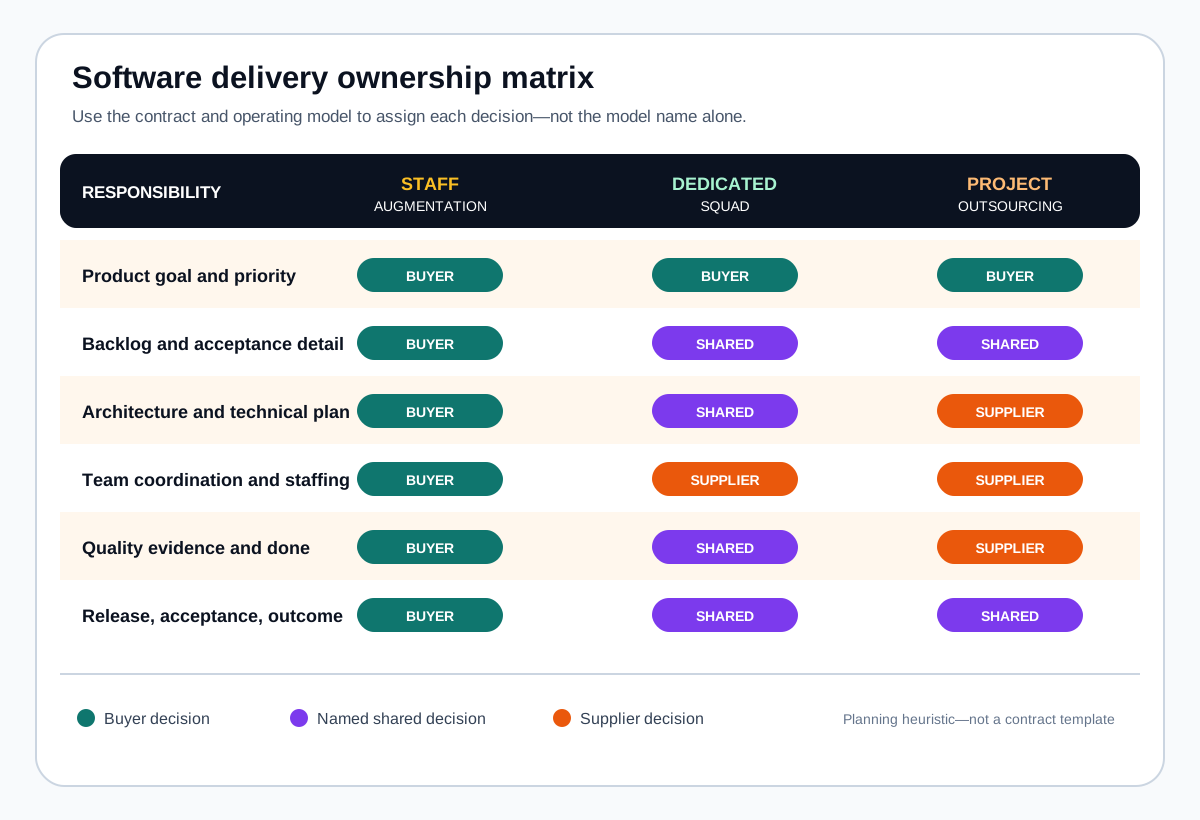
Run the delivery ownership test before requesting CVs
Answer these questions with names, available time, and evidence. “The business” or “the vendor” is not an owner. If no one can make a decision within the delivery cadence, extra developers will wait, guess, or optimize the wrong work.
- Who owns the product outcome? Name the person who can rank value, resolve stakeholder conflict, and say what will not be built.
- Who turns the outcome into ready work? Decide who researches users, clarifies rules, maps dependencies, and writes acceptance examples.
- Who owns architecture and technical risk? Assign authority for boundaries, security, data, integrations, performance, and maintainability.
- Who coordinates the team? Name the owner for planning, blockers, cross-team dependencies, and delivery visibility.
- Who defines and verifies done? Include code review, tests, accessibility, security, documentation, operations, and acceptance—not only a demo.
- Who controls release and production response? Assign environments, approvals, monitoring, rollback, support, and incident decisions.
- Who owns continuity? Decide where knowledge, code, credentials, runbooks, and unfinished work live when a person or supplier leaves.
If the buyer can answer most operational questions and the gap is people, staff augmentation is credible. If the supplier must design and run the delivery system, ask for project or managed squad accountability. If the answers are mixed, define the boundary role by role instead of choosing the most flexible label and hoping governance emerges later.
Product accountability still needs a buyer-side owner
A supplier can research, facilitate, recommend, coordinate, and deliver. It cannot independently decide which business outcome matters most or grant itself stakeholder authority. The official 2020 Scrum Guide says the Product Owner remains accountable for effective Product Backlog management even when parts of that work are delegated. Your process does not need to be Scrum for the ownership lesson to hold.
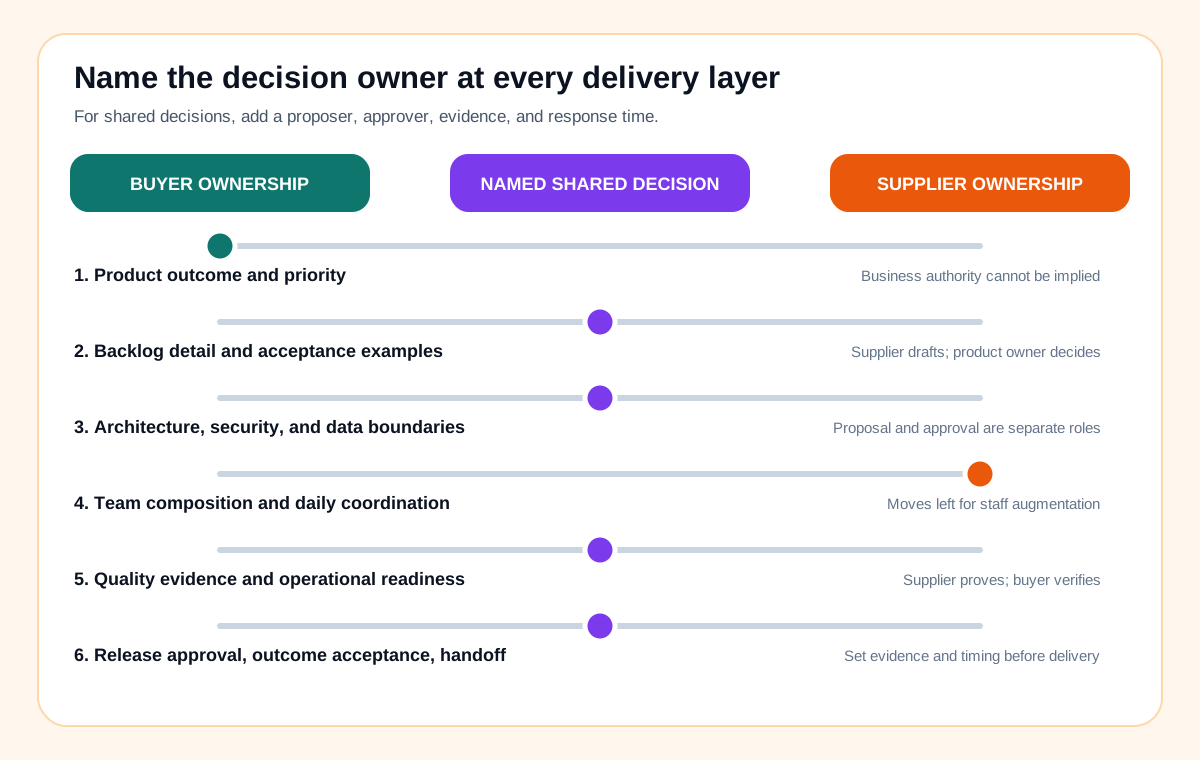
Shared does not mean vague. For every shared row, specify the proposal owner, decision owner, consultation group, evidence, and response time. For example, a supplier technical lead may propose an architecture, the buyer security owner may approve access controls, and both may review a written threat model.
Match scope certainty to the commercial promise
Project outsourcing needs enough clarity to price, plan, and accept an outcome. That does not require pretending every screen and edge case is known. It requires an outcome, constraints, excluded work, quality bar, change mechanism, and evidence that both parties will use to decide whether the result is acceptable.
The UK government’s guidance on contracting for agile delivery recommends making roles, interactions, quality thresholds, and governance explicit, while allowing the backlog to evolve. It also describes bounded discovery and fixed-price sprints as options when committing to an entire uncertain scope would allocate risk poorly. Treat this as a useful delivery reference, not legal advice for your contract or jurisdiction.
If the delivery owner is clear but the payment mechanism is not, apply the fixed-price versus time-and-materials decision framework to the project’s problem, solution, dependency, acceptance, and change uncertainty.
Use discovery when the promise is not ready
If stakeholders disagree about the user, workflow, data, integration, or acceptance, neither staff augmentation nor a fixed project scope will repair the missing decision. Run a bounded discovery: map the current flow, inspect systems and data, test the riskiest assumption, and produce a prioritized first-release boundary. Then choose the delivery model using better evidence.
For an existing fragile product, first use the refactor-or-rewrite software rescue guide to separate stabilization, selective replacement, and rewrite work. A rescue diagnosis and a capacity request solve different problems.
Write a one-page model brief before supplier selection
Complete the brief with the product owner, engineering lead, operations or support owner, procurement lead, and security or legal reviewer where relevant. Use facts from the current delivery system. If internal review time is already unavailable, do not quietly assume augmented staff will manage themselves.
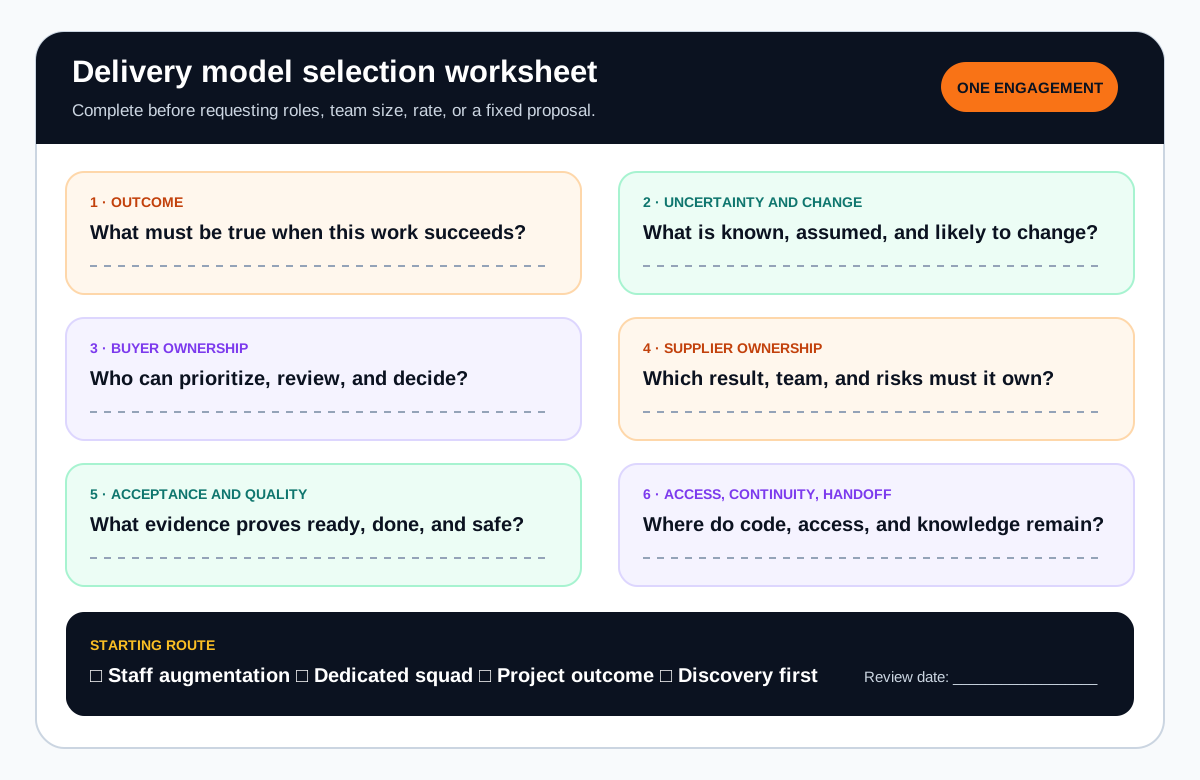
Use the same brief to compare proposals. Ask every supplier to mark assumptions, buyer dependencies, named roles, quality evidence, reporting, change handling, and handoff. A lower rate can produce a more expensive operating model if it consumes the scarce leadership time the engagement was meant to protect.
Design onboarding and handoff as delivery work
External contributors need the same product, technical, and operational context required to make safe changes. Prepare repository access, environments, architecture boundaries, coding and review standards, decision records, data-handling rules, current incidents, release process, and a small first slice with a verifiable result.
Use the external development team onboarding checklist to turn those inputs into owned access, context, quality, and first-change gates before the team's responsibility expands.
Security responsibilities also cross organization boundaries. NIST’s Secure Software Development Framework calls for secure-development roles and responsibilities to be defined for everyone inside and outside the organization who participates in the software lifecycle. Translate the controls relevant to your product into access, review, testing, artifact, and approval requirements.
From the first week, keep code, issues, documentation, build pipelines, and decision records in agreed systems the buyer can retain. Review knowledge concentration, access, unfinished work, and operational ownership at regular boundaries. Handoff should be a normal state of the system, not a documentation sprint after the final invoice.
When delivery is actively moving to another supplier or an internal team, use the software project handover checklist to verify client ownership and prove that the receiving team can build, release, diagnose, recover, rotate access, and make a safe change independently.
When a live SaaS product is already changing hands, the live SaaS product handover concept study turns that principle into a concrete custody path across access, builds, releases, credentials, operations, and acceptance.
Leeonex’s staff augmentation offering supports teams that already own their delivery system, while dedicated development squads suit a stable cross-functional stream with explicit shared governance. A scoping conversation can also reveal that a bounded project, rescue review, or smaller first slice is the better starting point.
If a stable squad is the likely fit, the dedicated squad roadmap-stream concept study shows how to bound one outcome, retain buyer-side product authority, define technical interfaces, and make integration, release, and continuity evidence part of the initial operating model.
Staff augmentation vs project outsourcing FAQ
What is the main difference between staff augmentation and project outsourcing?
Staff augmentation adds people who work inside the buyer's delivery system, so the buyer normally directs priorities, integrates the work, and remains accountable for the outcome. Project outsourcing asks a supplier to organize the team and deliver an agreed result against defined acceptance and governance. The contract should state the real decision rights rather than relying on either label.
When does staff augmentation work best?
It works best when a capable product and engineering system already exists, an internal owner has time to prioritize and review work, the scope will evolve, and the gap is specific capacity or expertise. It is a poor substitute for missing product ownership, architecture leadership, quality standards, or release management.
When is project-based software delivery a better fit?
Use project delivery when the desired outcome, constraints, dependencies, acceptance evidence, and handoff can be described well enough for a supplier to own coordination and delivery. If the problem or solution is still highly uncertain, fund a bounded discovery or technical spike before fixing the whole scope.
Is a dedicated development squad the same as staff augmentation?
Not necessarily. A dedicated squad can be embedded under the buyer's day-to-day direction, supplier-managed around agreed outcomes, or genuinely shared. Define who owns the backlog, technical decisions, staffing, quality, release, and acceptance. Team continuity alone does not settle the operating model.
What should be agreed before an external software team starts?
Agree the product owner, intended outcome, scope boundary, decision rights, repositories and environments, access and security rules, quality and acceptance criteria, delivery cadence, escalation path, documentation, intellectual-property terms, and exit or handoff plan. Obtain appropriate legal and security review for the contract and access model.
A practical next step
Choose the delivery model before choosing the team size.
Bring the outcome, current team shape, delivery constraints, and the decisions your organization can genuinely own. Leeonex can help define a practical embedded, squad, or project boundary.
Clear decision rights, visible delivery evidence, and a handoff path from the start—without forcing every engagement into one commercial model.