
The short answer: accept operating control, not a folder of project files
A software project handover is complete when the receiving team can build the product from a clean environment, identify what is running in production, deploy and roll back through an approved path, diagnose a realistic failure, restore representative data, rotate critical access, support the core workflow, and release a small safe change without undocumented help from the outgoing supplier.
Repositories, credentials, diagrams, and walkthroughs are inputs. Pair every input with a client-owned account, a named receiving owner, and evidence that the asset works. This turns a polite knowledge-transfer meeting into an acceptance process that exposes hidden dependencies while the outgoing team can still resolve them.
Own
Accounts, code, data, contracts, domains, and recovery.
Prove
Build, release, observe, recover, rotate, and change.
Exit
Close gaps, remove old access, and reach independence.
Review nine control areas with evidence and an owner
A long inventory can still hide the one account, scheduled job, manual correction, or release step that keeps the former supplier indispensable. Review each area through three questions: does the client organization control it, can the new team demonstrate it, and who owns it after the transition?
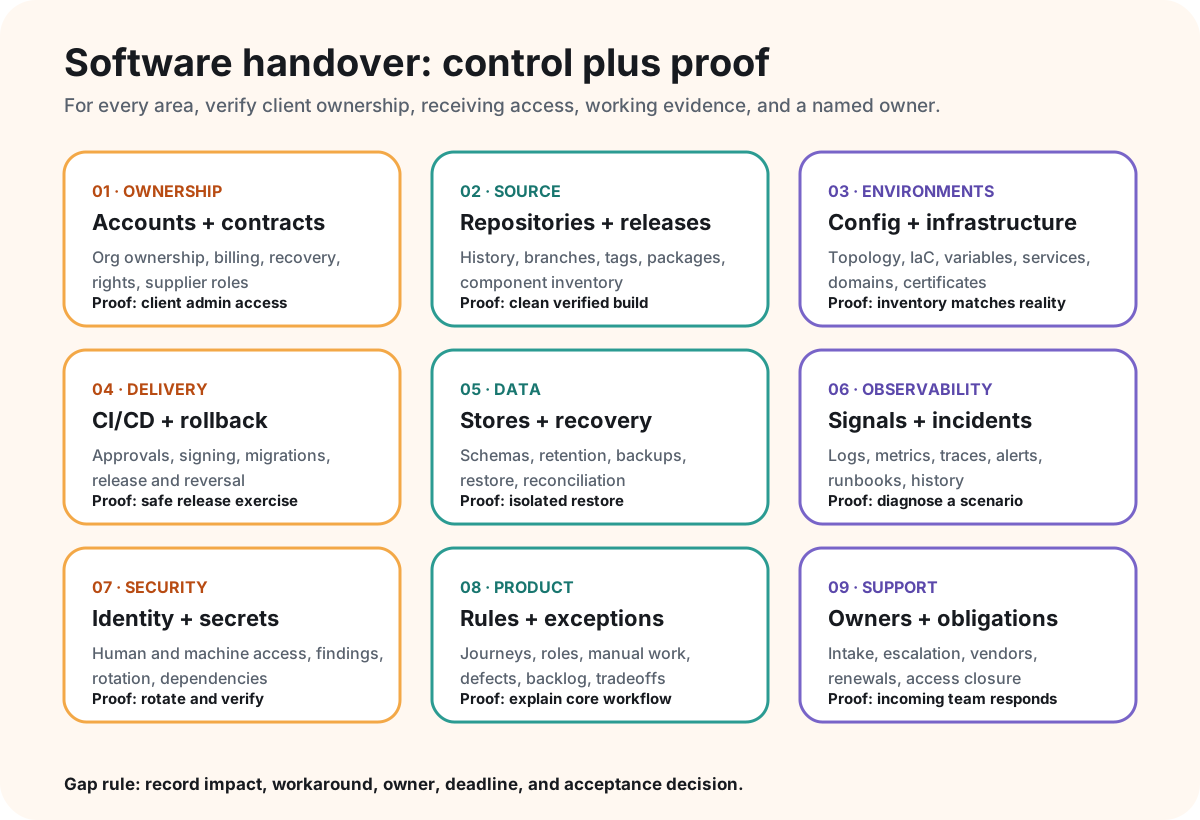
Classify evidence as verified, partially verified, missing, or not applicable. Add impact, workaround, owner, and deadline for every gap. Missing analytics access may be acceptable for a few days; unknown production ownership, untested recovery, or an unavailable signing key may change whether the handover can safely proceed.
Establish client-owned accounts and legal clarity first
List source-control organizations, cloud accounts, domains and DNS, registrars, app-store accounts, package registries, CI/CD, monitoring, email delivery, payments, analytics, support tools, third-party APIs, certificates, billing, and recovery contacts. Record the legal owner, administrative owner, billing owner, and current supplier access for each one.
Prefer organization-owned accounts with role-based supplier access over accounts owned by an individual or vendor. Do not move an account blindly: understand billing, policies, integrations, automation identities, feature changes, and recovery behavior first. GitHub's official repository-transfer documentation, for example, explains which repository data remains associated and which permissions or connected services can be affected. Review the equivalent current documentation for every provider in scope.
| Asset | Weak handover | Acceptance evidence |
|---|---|---|
| Repository | Archive received | Client owns history, settings, branches, releases, and admin access |
| Cloud | Console login shared | Organization owns billing, recovery, roles, and inventory |
| Secrets | Password list delivered | Store mapped; identities understood; critical values rotated |
| IP and licenses | Contract assumed enough | Counsel confirms rights; components and restrictions are inventoried |
Treat intellectual-property, data-processing, employment, warranty, and termination questions as legal matters. This checklist helps surface them but is not legal advice. Have qualified counsel review disputed ownership and contract obligations before withholding acceptance, moving data, or changing access.
Freeze an evidence-backed production baseline
Record the exact release running in each environment, its source revision, build inputs, configuration source, database and schema version, infrastructure definition, third-party dependencies, scheduled jobs, queues, domains, certificates, and outstanding migrations. Preserve a current inventory before the transition introduces new uncertainty.
The NIST Secure Software Development Framework provides a useful handover lens: protect development environments and code, track security requirements and design decisions, preserve release integrity, and maintain provenance for release components. The framework is broader than a vendor transition, but those practices help the incoming team know what it received and what produced the deployed artifact.
Build on a clean machine or disposable environment using the documented process. Compare the output to the known release. Capture version assumptions, private registries, generated files, manual patches, and environment-specific steps. A build that works only on the outgoing developer's laptop is an unresolved dependency, not a completed handover.
Run six proof exercises before final independence
Documentation becomes trustworthy when the receiving team uses it. Run the exercises in a safe environment first, then use the approved production procedure where necessary. The outgoing team can observe, but the incoming team should drive the tools and explain the decision points.
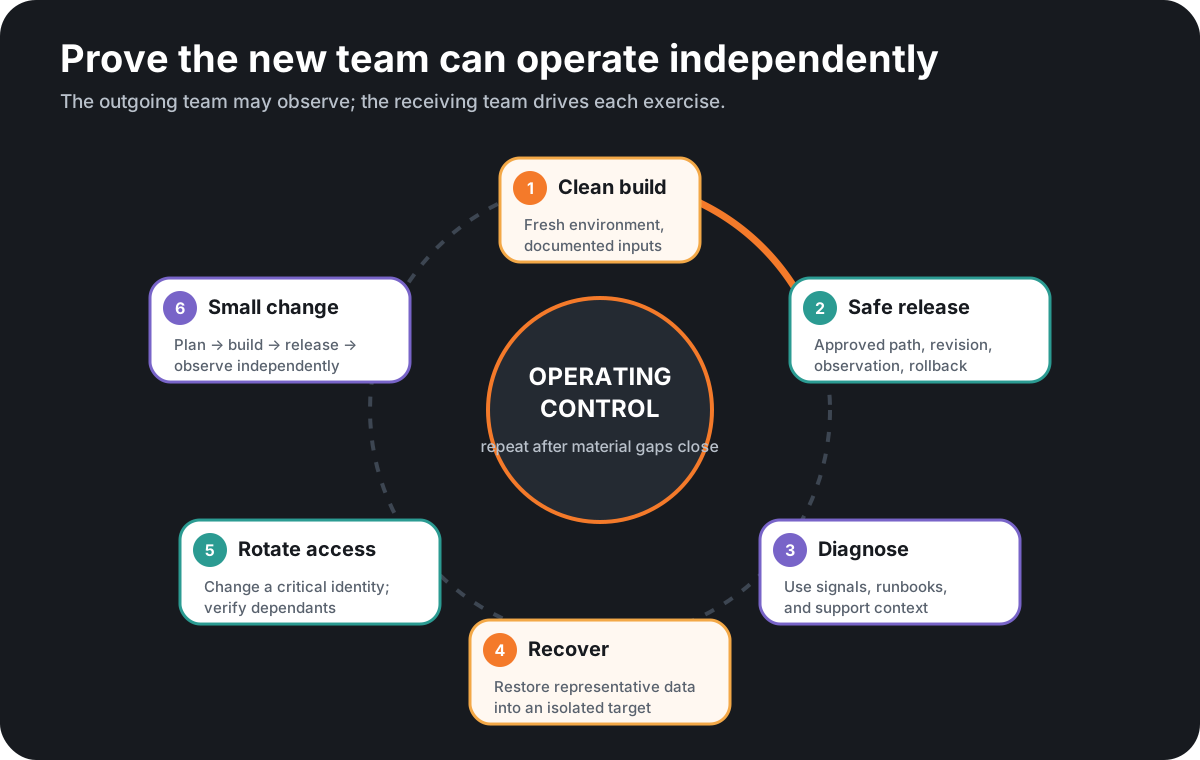
- Build and test the product from a clean, documented environment.
- Deploy a harmless change through the normal release path and verify the running revision.
- Diagnose a realistic alert or failure using dashboards, logs, traces, and support context.
- Restore representative data or a service from a tested backup into an isolated destination.
- Rotate a critical secret or machine identity and confirm every dependent system still works.
- Deliver one small product change from requirement through review, release, observation, and rollback readiness.
Choose exercises proportionate to risk. Do not manufacture a production incident or rotate a credential without a rollback plan. The goal is evidence of capability, not a dramatic test. If a release is too risky during transition, document why and prove the same path in the closest safe environment before accepting the gap.
Transfer product rules, operational exceptions, and current risk
Architecture diagrams rarely explain why users call support. Walk through the product's core journeys, roles, permissions, business rules, integrations, manual approvals, reconciliation, reports, scheduled work, retention, and common exception paths. Include support tickets, incident reviews, known defects, workarounds, postponed migrations, security findings, and the reasoning behind recent tradeoffs.
Separate facts from opinions. “This queue has no alert” is a verifiable gap. “The codebase needs a rewrite” is a proposal that requires evidence. If the takeover reveals structural problems, use the refactor-or-rewrite assessment before committing to replacement. For a system that needs staged modernization beyond immediate stabilization, the legacy modernization roadmap helps select a bounded first slice.
Sequence the transition from safety to independent delivery
Start with governance: sponsor, product owner, technical owner, decision path, communication channel, freeze windows, and acceptance criteria. Then establish client ownership and the production baseline, triage critical gaps, pair on operations, run the proof exercises, deliver one safe change, rotate old access, and close or explicitly defer every gap.
Maintain a responsibility map across the outgoing supplier, incoming team, client product owner, operations, security, legal, and third-party providers. State which support obligation ends when, who responds during overlap, which changes are frozen, and who authorizes release. If the larger question is whether a supplier should own delivery or extend an internal team, decide that separately with the staff-augmentation-vs-project-delivery guide.
Independence is the final milestone: the incoming team can operate the product without routine help from the former vendor, and former access has been removed or deliberately retained for a time-boxed obligation. Keep a contact path for genuine historical questions, but do not confuse availability with operational ownership.
Use an acceptance worksheet that makes gaps visible
Review the worksheet in a live working session. Link each asset to its source of truth, name the receiving owner, record the proof performed, and mark the gap decision. Avoid pasting secret values into the document; link to the approved secret-management location and record that access or rotation was verified.
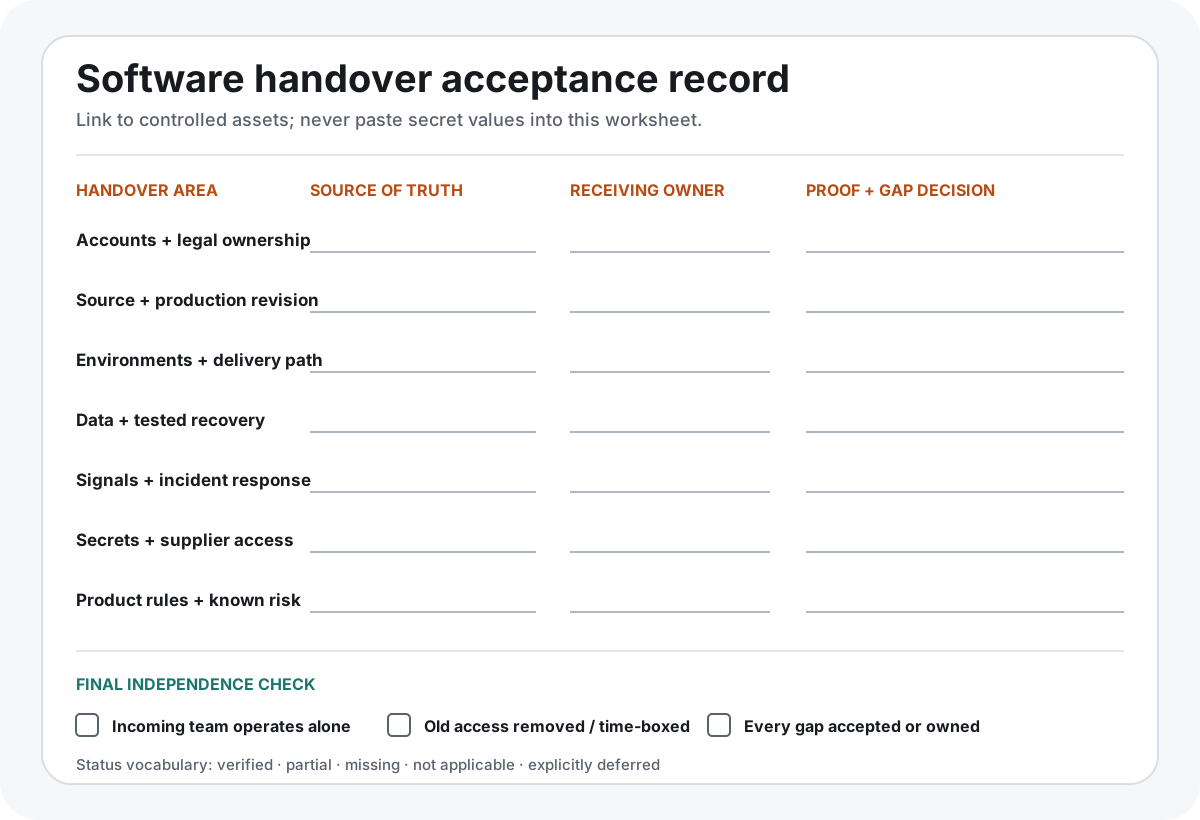
Copyable software handover acceptance template
Copy this table into your working document or spreadsheet. Add one row per asset or exercise within each area. Record the receiving owner, a link to proof, and whether the gap is verified, accepted with a deadline, or still blocking handover.
| Control area | Receiving owner | Proof or evidence link | Status and gap decision |
|---|---|---|---|
| Account and legal ownership | To assign | To verify | Open |
| Source and reproducible build | To assign | To verify | Open |
| Production environments | To assign | To verify | Open |
| Deployment and rollback | To assign | To verify | Open |
| Data and tested recovery | To assign | To verify | Open |
| Monitoring and incidents | To assign | To verify | Open |
| Access and security | To assign | To verify | Open |
| Product rules and known risks | To assign | To verify | Open |
| Support and first independent change | To assign | To verify | Open |
The first incoming change should be small enough to review and reverse, but real enough to exercise planning, development, testing, release, observability, and support. That creates a stronger takeover signal than a document sign-off alone. If you need help assessing the boundary and sequencing the first safe change, it is a practical entry point for software project rescue support.
Software project handover FAQ
What should a software project handover include?
Include legal and account ownership, repositories and release history, reproducible local and hosted environments, deployment and rollback, data stores and tested recovery, monitoring and incident history, secrets and access rotation, dependency and license inventory, architecture and business rules, backlog and known defects, support procedures, vendor contacts, and evidence that the receiving team can operate independently.
How do you know a software handover is complete?
The receiving team should be able to build from a clean environment, identify the production release, deploy through the approved path, diagnose a realistic incident, restore representative data, rotate critical access, explain the core business workflow, and release a small safe change without relying on undocumented help from the outgoing team.
Should ownership be transferred or should access just be shared?
Business-critical accounts should normally be owned by the client organization, with suppliers receiving role-based access. The exact transfer mechanism depends on the provider and contract. Verify billing, recovery contacts, organization owners, integrations, policies, and what does or does not move before changing ownership.
When should software handover planning begin?
Define handover deliverables and acceptance evidence when the engagement begins, keep them current during delivery, and run the transition before the outgoing team becomes unavailable. For an urgent takeover, establish client-owned access and the production baseline first, then prioritize operational risk.
What if the outgoing vendor cannot provide everything?
Create a gap register with business impact, evidence, owner, workaround, deadline, and acceptance decision. Recover client-owned accounts, preserve the current production state, rotate exposed access, and prioritize the smallest actions that restore safe operation. Seek appropriate legal advice for disputed ownership or contractual obligations.