
The short answer: choose the buying situation, not a winner
Google Search Ads are usually the stronger starting point when buyers express demand in explicit searches and you need keyword, search-term, location, and mature campaign controls. ChatGPT Ads are worth a bounded test when the offer is relevant while people explore, compare, or plan inside a conversation. Do not replace a proven channel on novelty alone; compare both against the same qualified business outcome.
The useful question is not “Which platform has the cheaper click?” It is “Which buying context can produce evidence for our next decision?” Hold the offer, destination quality, qualification rule, and review window steady enough to learn whether the channel contributed something valuable.
Protect
Keep proven campaigns stable
Test
Bound one new hypothesis
Decide
Use qualified outcomes
ChatGPT Ads and Google Search Ads meet different intent signals
Google explains that a Search ad enters an auction when keywords match a person's search, subject to eligibility and Ad Rank. Its official description of the Google Ads auction makes the query, keyword, eligibility, bid, quality, and search context visible parts of the delivery model. Search-term reports and negative keywords give advertisers a way to inspect and refine the demand they reached.
OpenAI describes a different matching model. Ads appear below a ChatGPT response, and delivery may consider the current conversation, landing page, ad title and copy, advertiser-provided context hints, and permitted personalization signals. Its current advertiser basics explicitly say context hints are not exact-match keywords and do not guarantee delivery in a particular conversation.
| Decision factor | Google Search Ads | ChatGPT Ads |
|---|---|---|
| Intent signal | A search query matched through campaign settings | Conversation context plus ad and landing-page signals |
| Advertiser input | Keywords, negatives, audiences, geography, bids, assets | Context hints, creative, landing page, budget, and available campaign controls |
| Control model | Strong query-level inspection and established optimization workflows | Context hints guide matching but are not exact placement rules |
| Best first question | Can we capture existing explicit demand efficiently? | Does conversational exploration reveal incremental qualified demand? |
This is why a Google campaign should not simply be copied into ChatGPT Ads and judged by the same tactical controls. The offer, proof, landing page, and conversion can transfer. The assumed buying moment and matching logic need a fresh hypothesis.
Use a six-part channel-fit matrix before allocating budget
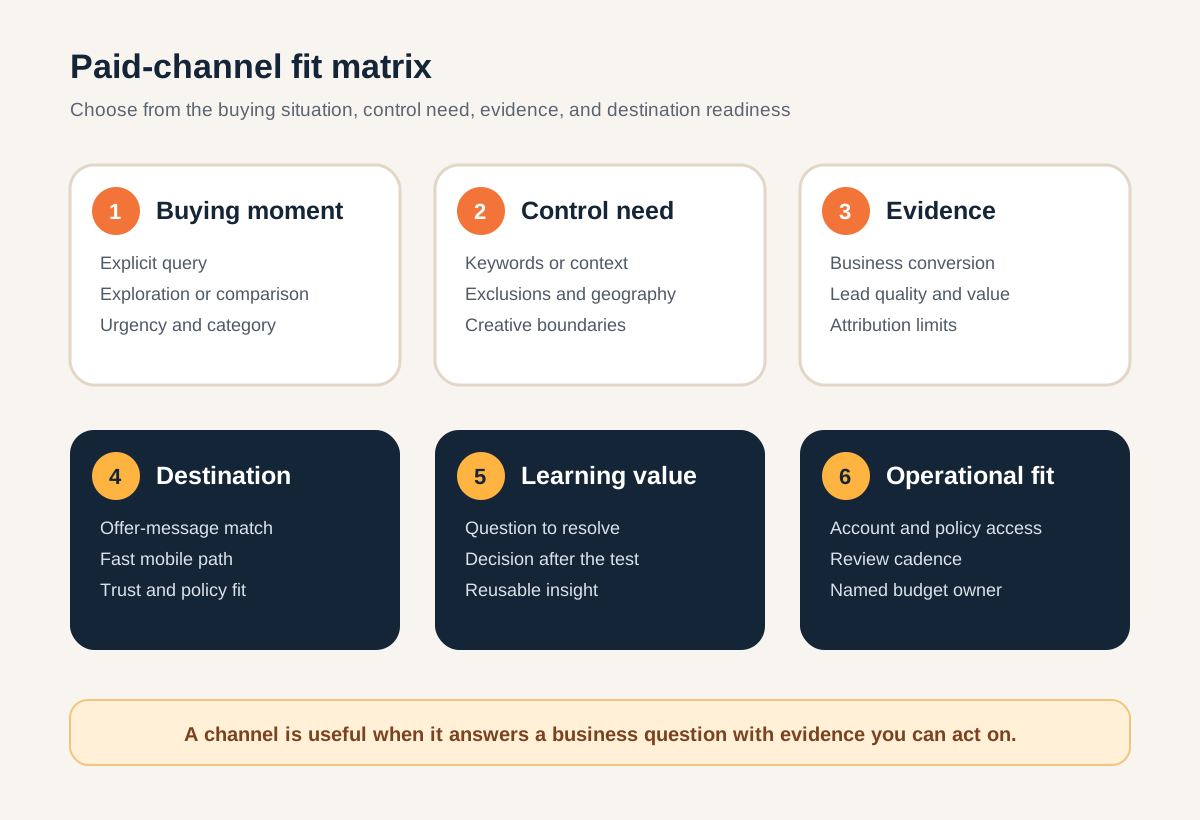
- Buying moment: write the real trigger. Is the buyer naming a product, researching a category, comparing approaches, or still defining the problem?
- Control need: decide how much query inspection, exclusion control, geography, scheduling, or placement predictability the offer requires.
- Evidence: name the valuable action and the downstream evidence that distinguishes a qualified outcome from a platform-reported conversion.
- Destination: verify that the landing page continues the exact promise, works on mobile, loads reliably, and supports the intended action without hidden friction.
- Learning value: state what a test can change. If either result leads to the same budget decision, the hypothesis is too vague.
- Operational fit: confirm current access, advertiser eligibility, policy fit, account ownership, review cadence, and a person authorized to pause spend.
Review the current OpenAI ad policies before treating a category or claim as eligible. OpenAI reviews advertisers, creative, landing pages, and placement, and its policy changelog shows that boundaries can evolve. A campaign plan is incomplete when eligibility is an assumption.
Compare business evidence, not platform dashboards
Both platforms can report impressions, clicks, and conversions, but the attribution and optimization systems are not identical. OpenAI's conversion measurement documentation describes pixel and server-side events, click references, advanced matching, and modeled measurement where available. Google likewise recommends defining valuable conversions and reviewing conversion data alongside relevant landing pages in its campaign measurement guidance.
Build a neutral evidence table outside either dashboard. Record spend, valid traffic, completed actions, qualified leads or orders, downstream value where available, refunds or rejection reasons, attribution assumptions, and operational effort. For a long sales cycle, schedule a second review after lead quality is known instead of optimizing from form submissions alone.
Do not call the comparison fair unless
- The offer and qualification rule are explicit
- Tracking is tested through the real destination
- Consent and privacy duties are handled
- Modeled and observed conversions are distinguishable
- Sales or operations return lead-quality evidence
- The review date accounts for conversion delay
Run a controlled test instead of a budget migration
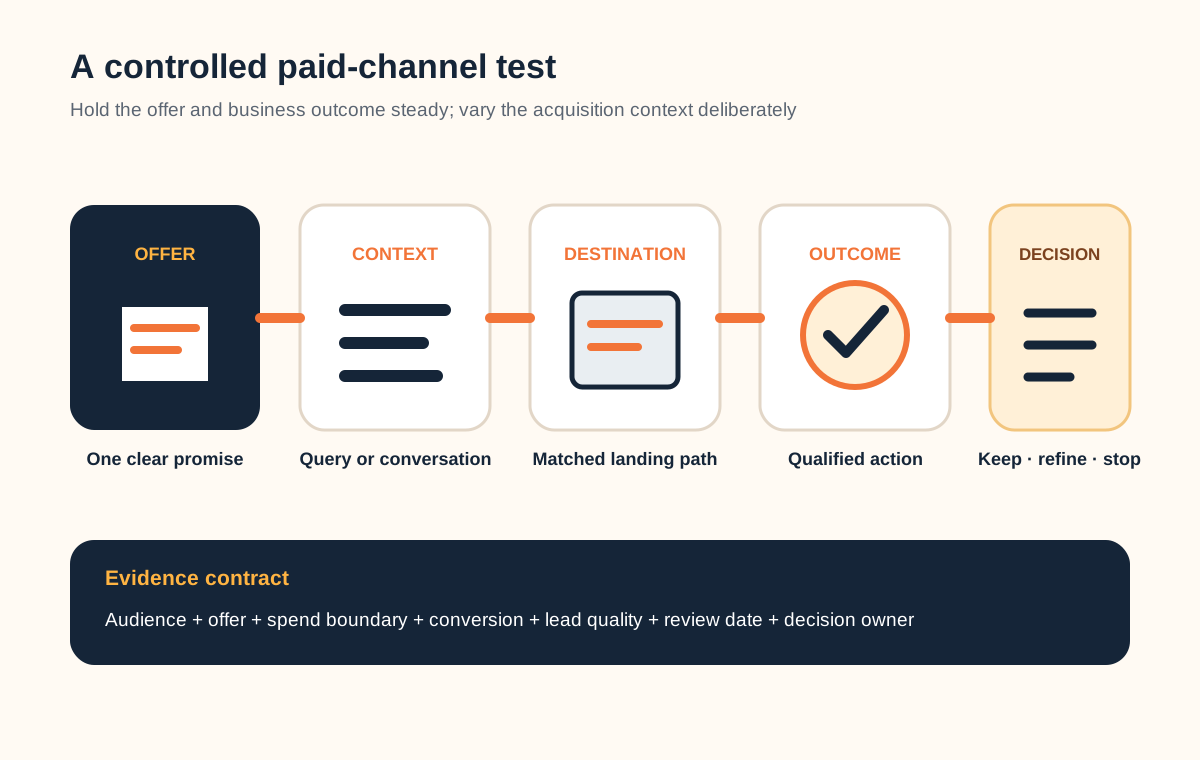
Start with one offer and one primary conversion. Use a destination built for that promise; a generic homepage makes it difficult to separate channel mismatch from page confusion. If the page itself needs work, review the website conversion audit checklist before paying for more traffic.
Set a maximum spend and a review date before launch. Define pause conditions for policy issues, broken tracking, invalid traffic, irrelevant inquiries, destination failure, or spend that cannot answer the hypothesis. Preserve working Google campaigns unless the business has separate evidence for changing them.
For a worked example of connecting campaign delivery to a landing page, business action, lead-quality feedback, and a budget rule, use the ChatGPT Ads pilot concept study. It is an educational model, not a client result or performance promise.
Complete this paid-channel decision brief
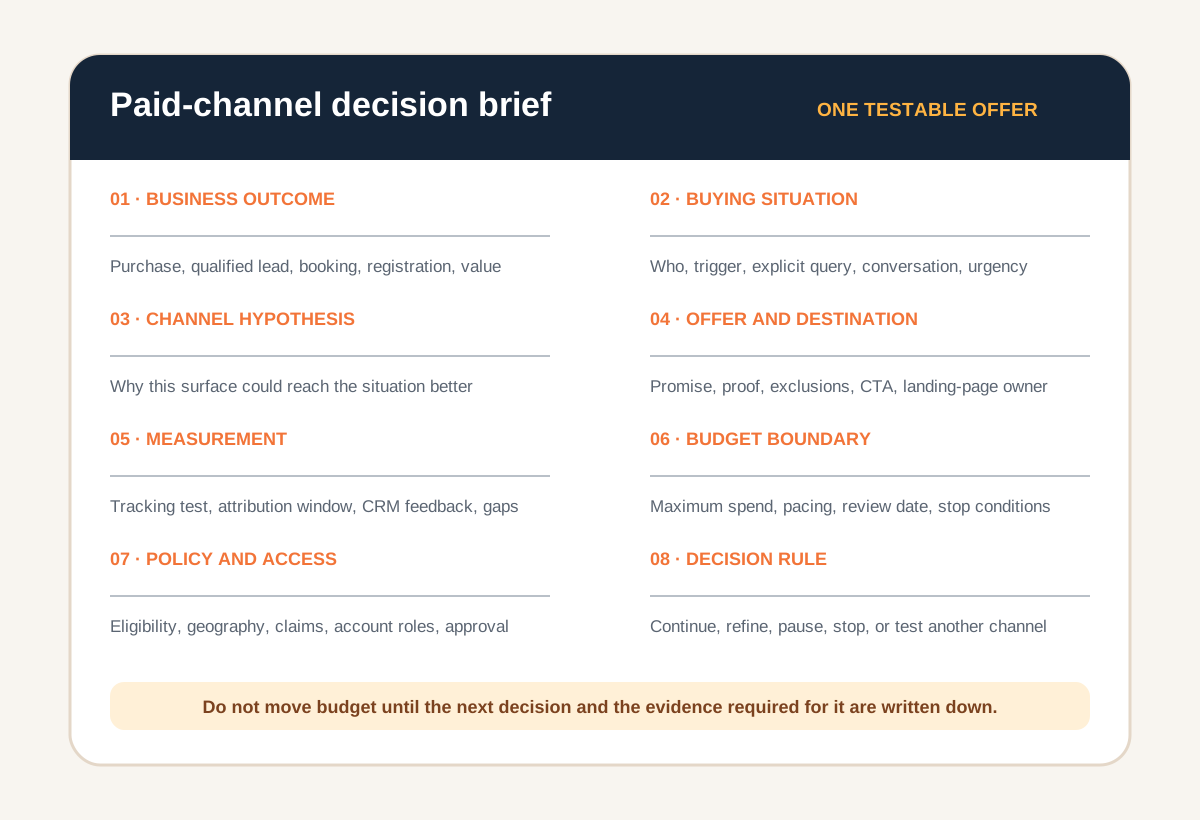
A strong brief can still conclude “do not test yet.” That is a useful outcome when the valuable action is unclear, tracking is unverified, the destination does not match the offer, the category is ineligible, or nobody owns lead-quality feedback. Repair that boundary first.
When the inputs are ready, Leeonex's ChatGPT Ads management service can connect campaign planning, creative, landing-page work, conversion tracking, and ongoing review. The objective is a defensible demand test, not a claim that paid placement changes organic ChatGPT answers or guarantees results.
Frequently asked questions
Is ChatGPT Ads better than Google Ads?
Neither platform is universally better. Google Search Ads are usually the stronger fit when explicit searches, keyword and search-term control, and mature campaign operations matter. ChatGPT Ads can be worth a bounded test when buyers explore or compare inside conversations and the offer can be matched to that context. Compare qualified business outcomes, not clicks alone.
Should a business move budget from Google Ads to ChatGPT Ads?
Do not move proven budget only because a new channel is available. Protect campaigns that already produce acceptable business outcomes, then fund a separate ChatGPT Ads test with one offer, a maximum spend, verified conversion tracking, lead-quality review, and a written continue, refine, pause, or stop rule.
Do ChatGPT Ads use keywords like Google Search Ads?
OpenAI says advertisers can provide context hints describing relevant conversations, topics, or keywords, but those hints are not exact-match keywords and do not guarantee placement in a specific conversation. Google Search campaigns use keywords and expose search-term controls, so the targeting and diagnostic models are not interchangeable.
How should ChatGPT Ads and Google Ads be compared?
Use the same valuable business action, consistent qualification rules, transparent attribution limits, and a shared review window. Separate reach, clicks, landing-page conversion, qualified leads or purchases, downstream value, and operational effort. Do not compare platform-reported conversion totals without checking how each platform attributes and models them.
What should be ready before testing ChatGPT Ads?
Confirm current account and geographic availability, advertiser and offer eligibility, policy-compliant creative and claims, a relevant landing page, consent-aware conversion measurement, account ownership, a bounded budget, and a named reviewer. The campaign should answer a decision, not merely generate traffic.