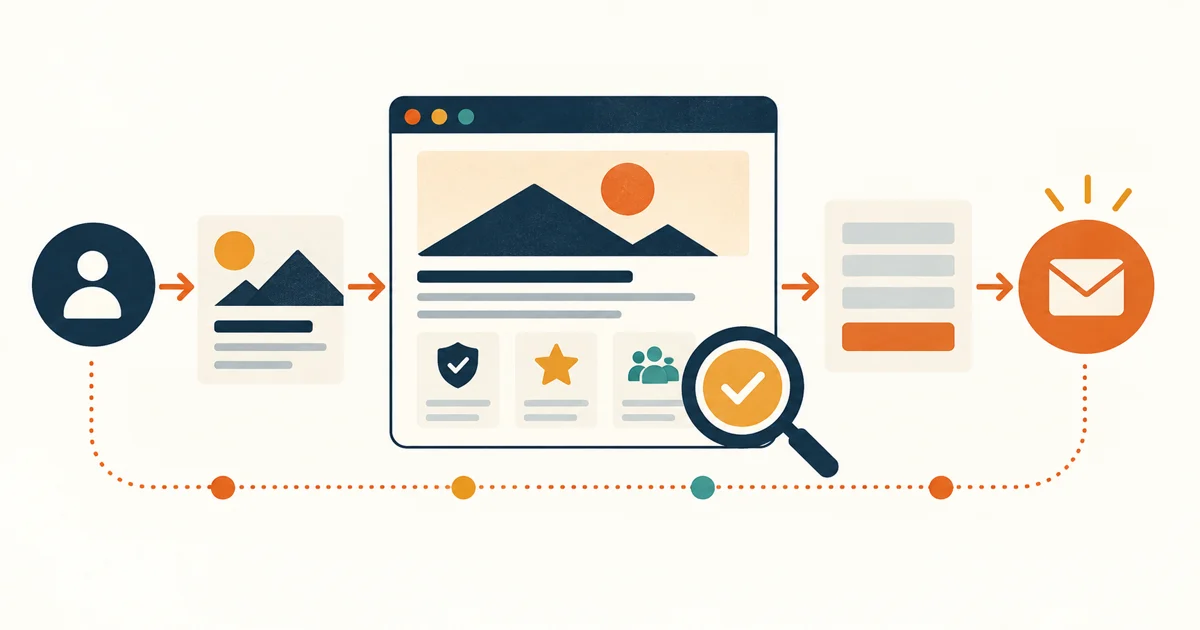
The short answer: trace one qualified inquiry end to end
A useful website conversion audit follows one important buyer from a real entry page to a meaningful action, confirmed business receipt, and owned follow-up. Verify the measurement first, then inspect message clarity, decision evidence, interaction friction, performance, accessibility, and the handoff after submission.
Do not begin with a universal conversion score or a list of fashionable page elements. A weak result may come from irrelevant traffic, broken event tracking, an unclear offer, missing proof, an inaccessible form, a failed notification, or slow human response. Those problems lead to different projects.
Prove the path
Entry, action, receipt, and response
Find the break
Evidence before design opinion
Choose scope
Repair, test, redesign, or rebuild
Choose one business outcome and one journey boundary
Define conversion in business language before opening an audit tool. For a service business, a useful primary action may be a consultation request that includes enough context to assess fit. A phone-number click, brochure download, or generic page view may support that journey without proving the same outcome.
Record the audience, triggering need, entry page, intended action, required fields, confirmation, receiving system, owner, and expected next step. Include the path from search, referral, campaign, or direct visit when that promise changes what the landing page must explain. Audit a small set of priority pages instead of treating every URL as equally valuable.
If the next decision is whether to add conversational advertising or protect paid search, use the ChatGPT Ads versus Google Ads guide to keep the offer, destination, qualified action, and review rule comparable across channels.
| Define | Useful evidence | Avoid assuming |
|---|---|---|
| Qualified action | A test submission reconciled with the receiving system | Every CTA click is a lead |
| Priority audience | Search terms, referrals, interviews, and sales questions | All visitors need the same proof |
| Entry pages | Landing-page and acquisition reports by device | The homepage owns every first impression |
Audit six conversion evidence lanes
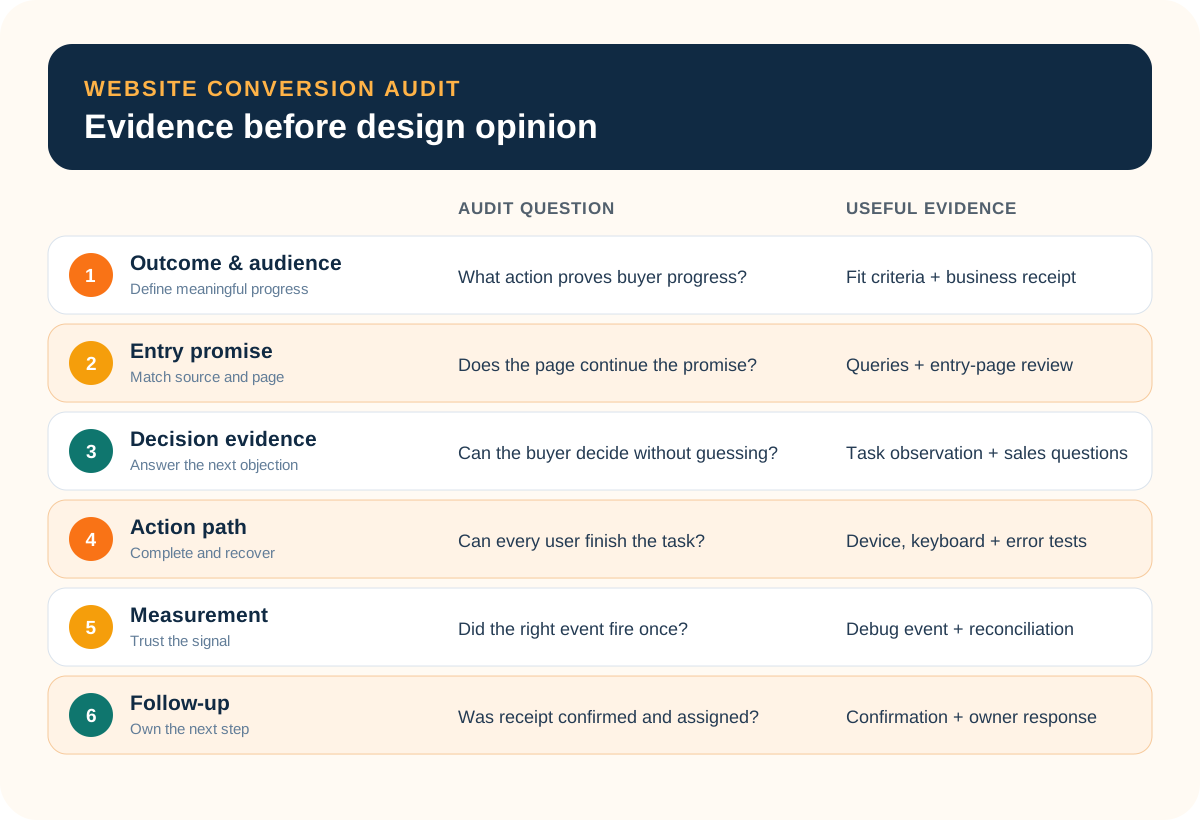
- Outcome and audience: the action, fit criteria, decision owner, and real next step.
- Entry promise: the source promise, page intent, offer, audience, and next useful decision are consistent.
- Decision evidence: scope, process, constraints, relevant proof, objections, and expectations are available where the buyer needs them.
- Action path: the CTA, form, booking, phone, or checkout works across devices and failure states.
- Measurement: the event fires once at the right moment with enough context and can be reconciled with business receipt.
- Confirmation and follow-up: the visitor knows what happened, the team receives the right information, and ownership does not disappear into an inbox.
Verify measurement before diagnosing performance
Google Analytics defines a key event as an event that measures an action important to the business. Its current recommended events include generate_lead for a submitted form or request for information. Use the official GA4 recommended-events guidance where it fits, but name and document any custom event so future teams know exactly what triggered it.
Submit the form yourself on desktop and mobile. Confirm the browser success state, analytics event, receiving inbox or CRM record, source details, duplicate behavior, consent behavior, and assigned owner. Google recommends checking implemented events in DebugView or the Realtime report. If those layers disagree, repair measurement before calculating a rate or attributing a change.
Keep the denominator explicit: users, sessions, page views, or qualified opportunities answer different questions. Segment by page, source, device, and relevant audience only when the sample supports a useful comparison. Report unknowns instead of turning small counts into confident design claims.
Observe the journey, not just the page
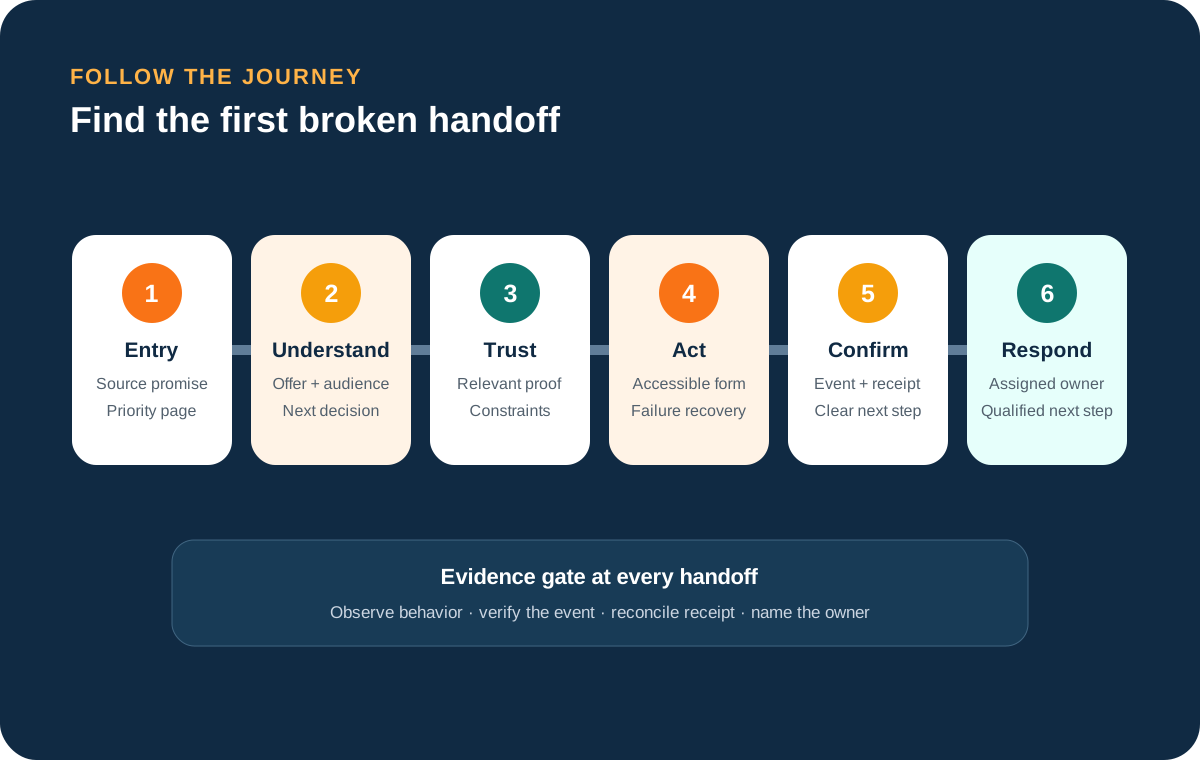
Ask a representative person to complete the journey without a tour. Observe where they hesitate, seek proof, misread a label, lose context, or cannot recover from an error. Review keyboard operation, focus, labels, instructions, validation, success messages, and zoom. The W3C accessible forms tutorial recommends asking only for information required for the task and providing labels, instructions, validation, and useful notifications.
Check performance with both field and lab evidence where available. web.dev notes that field data captures real-user experiences while lab tools help reproduce and diagnose issues; some interaction and post-load layout problems are not fully represented by a one-time lab run. Test priority pages and the form flow on realistic mobile conditions instead of treating a single score as the business result.
For a broader accessibility release boundary, use the website accessibility requirements checklist. The conversion audit should surface the blocker and owner, not reduce accessibility to a conversion tactic.
Turn findings into the lightest credible next project
| Evidence pattern | Likely next move | Verify after change |
|---|---|---|
| Broken event, form, routing, or confirmation | Focused repair | End-to-end receipt and error cases |
| One uncertain message, proof block, or action | Measured content or interaction test | Behavior plus qualified outcomes |
| Repeated comprehension and journey problems | Experience redesign | Task evidence across priority templates |
| CMS, content model, integration, or platform blocks change | Staged rebuild or replatform | Migration, regression, and conversion continuity |
Use the website redesign or rebuild decision guide when the audit reveals structural or platform constraints. If the offer needs a focused demand test rather than a site-wide project, a scoped landing page may be the smaller useful move.
Complete one action brief per priority journey
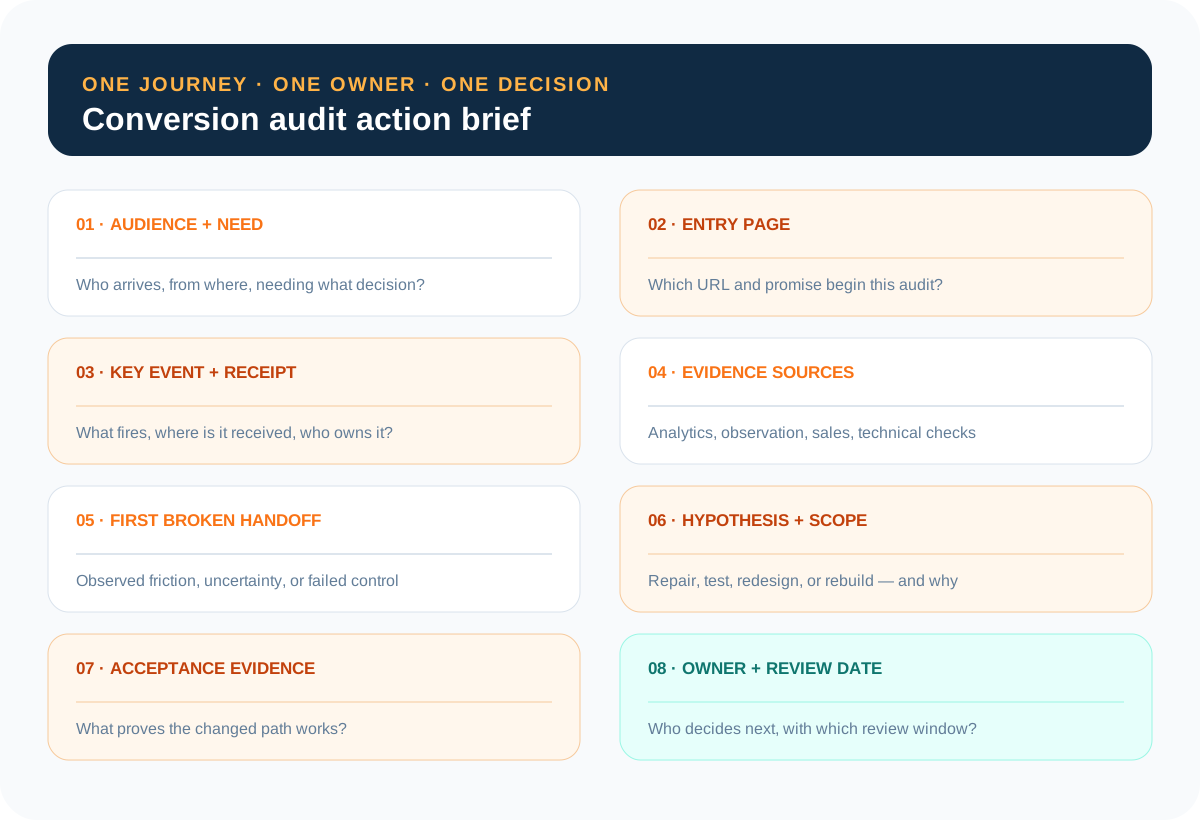
Record the audience, entry context, meaningful event, business receipt, evidence sources, observed friction, hypothesis, scope, owner, acceptance check, and review date. Preserve the baseline and annotate releases so the team can distinguish a change from seasonality, acquisition shifts, or a different follow-up process.
A complete brief is also a better input to the website requirements checklist. It turns “make the site convert better” into a bounded user journey, measurable behavior, acceptance evidence, and a clear reason for the requested work.
Website conversion audit FAQ
What is a website conversion audit?
A website conversion audit is a structured review of whether a priority visitor can understand the offer, find relevant evidence, complete the intended action, receive confirmation, and enter a working business follow-up process. It combines instrumentation checks, page and journey review, accessibility and performance evidence, and a prioritized action decision.
Should we audit conversions before redesigning a website?
Usually yes. The audit can separate messaging, proof, form, tracking, performance, and follow-up problems from platform or content-model constraints. That evidence may support a focused repair, a measured test, a redesign requirement, or a rebuild instead of assuming every weak result needs a new site.
Which website conversion should we audit first?
Choose one action that represents meaningful buyer progress, such as a qualified consultation request, booking, quote request, or completed application. Start with the entry pages most relevant to that action and verify the event, business receipt, and follow-up path before auditing secondary clicks.
Can an automated website audit measure conversion quality?
Automated tools can reveal technical, accessibility, and performance issues, but they cannot by themselves confirm message relevance, proof quality, lead fit, sales receipt, or whether the next human step occurred. Use them as evidence sources inside a wider journey review.
Does a conversion audit guarantee more leads?
No. An audit identifies evidence gaps and testable constraints; it does not guarantee demand, traffic quality, or commercial results. Measure changes against a valid baseline and keep external factors, small samples, seasonality, and sales follow-up visible when interpreting the result.