The short answer: specify recoverable service, not “daily backups”
A useful SaaS backup and disaster recovery checklist defines the business impact, workload-specific recovery point objective (RPO), recovery time objective (RTO), complete recovery inventory, tenant-safe restore behavior, dependency order, security boundary, validation journeys, drill evidence, and decision owners. A successful backup job does not prove that the product can recover.
Start with a concrete failure and a usable end state: recover a corrupted tenant dataset without overwriting healthy tenants, restore the full service after a regional outage, or return to a trustworthy point after a destructive operator action. The scenario determines what must be copied, rebuilt, rotated, reconciled, and accepted.
Target
Define tolerable loss and interruption
Restore
Rebuild the complete service boundary
Prove
Validate critical journeys and integrity
Set recovery objectives from business impact
RPO is the maximum acceptable gap between the chosen recovery point and the interruption: the product's tolerable data-loss window. RTO is the maximum acceptable delay before the service is restored to the agreed usable state. Neither should be copied from a vendor plan or applied as one number to every workload.
AWS's Well-Architected recovery guidance treats RPO and RTO as business decisions that guide the technical strategy, and recommends testing actual recovery capability against them. Record the start and end events precisely: “service available” could mean infrastructure is up, staff can sign in, or customers can complete the critical journey with trustworthy data. Those are different endpoints.
| Decision | Requirement question | Evidence |
|---|---|---|
| RPO | How much confirmed data can this workload lose? | Selected point and reconciled missing interval |
| RTO | When must the agreed service state be usable? | Timed incident-to-business-validation result |
| Scope | Which tenants, journeys, regions, and dependencies recover? | Inventory and restore manifest |
| Authority | Who declares disaster, restores, validates, and returns service? | Runbook roles and recorded approvals |
Inventory the whole recovery boundary
A SaaS product may depend on transactional databases, object storage, search indexes, queues, caches, identity configuration, secrets, infrastructure definitions, DNS, application artifacts, feature flags, billing state, scheduled jobs, observability, support tooling, and third-party services. Decide which items are restored, reconstructed, replayed, or accepted as disposable—and in what order.
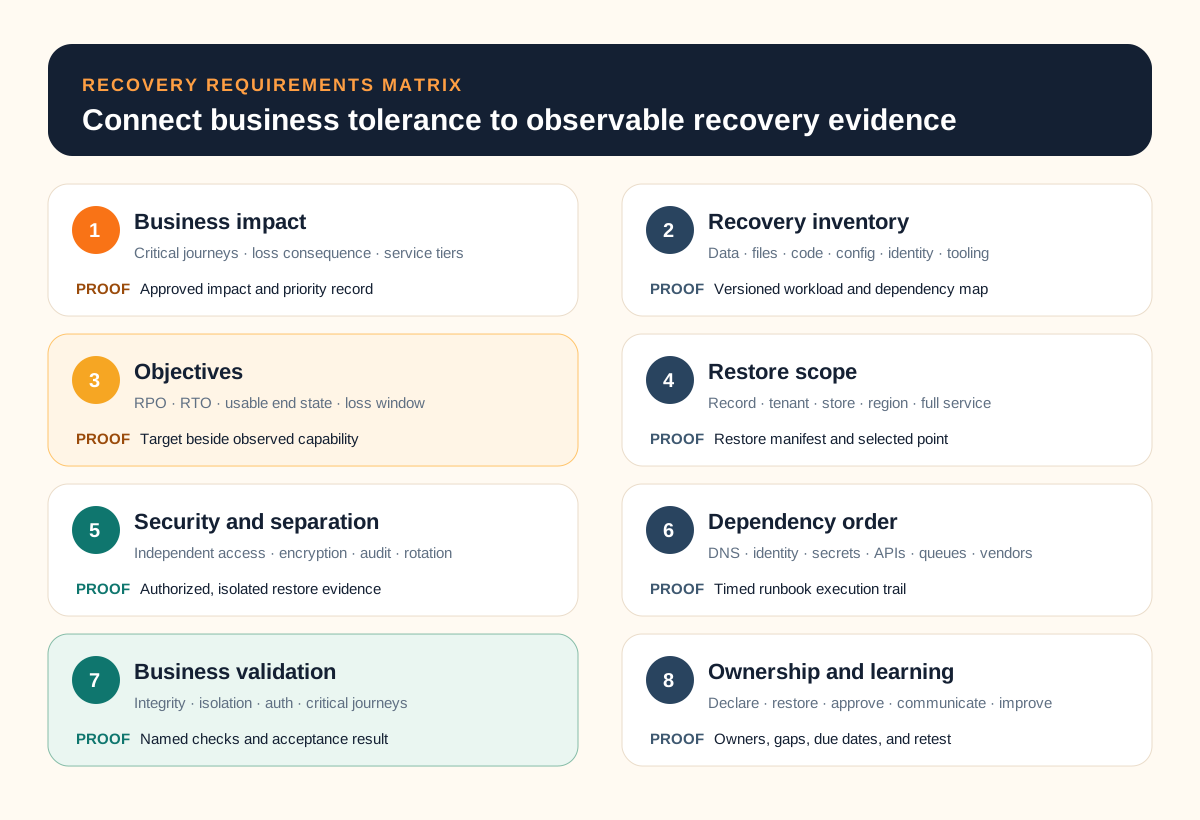
Keep configuration and runbooks reachable if the primary production account, identity provider, or documentation system is unavailable. Name the minimum independent access path and how credentials are controlled, rotated, and audited. A backup that relies on the same failed or compromised boundary may be inaccessible when needed.
NIST's contingency planning guide connects impact analysis, recovery priorities, strategies, plan development, testing, training, and maintenance. The publication targets federal information systems, so use its planning structure as guidance rather than claiming it certifies a commercial SaaS product.
Design tenant-aware restore and controlled return
Multi-tenant products need restore granularity. Define whether the team can restore one record, one tenant, one logical store, or the complete environment. Preserve tenant identifiers, relationships, encryption context, audit evidence, files, and connected state. If selective restore is impossible, document the safe extraction and merge process rather than promising a one-click tenant recovery.
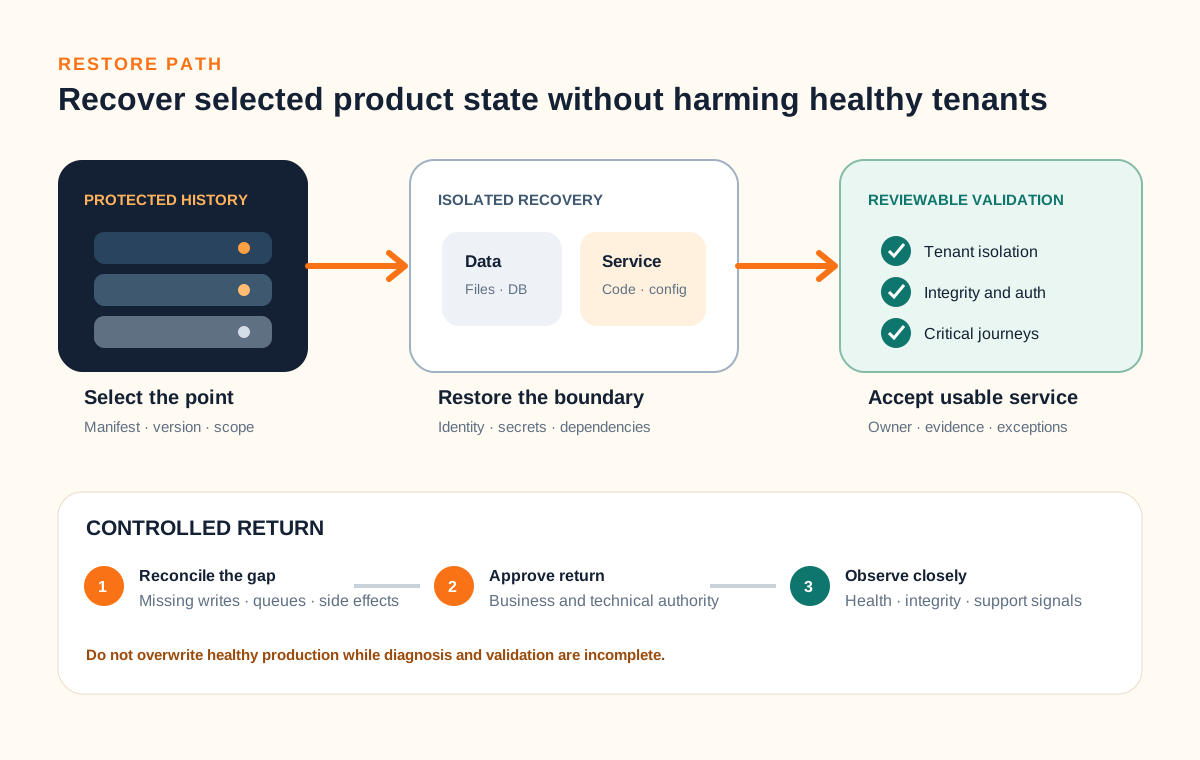
Restore into an isolated environment first when the scenario permits. Verify manifests and checksums, apply the compatible application and schema version, rotate compromised credentials, confirm identity and permissions, and run business validation. Plan how writes that occurred after the recovery point will be replayed or reconciled. Returning service without addressing the missing interval can create a second incident.
Backup, replication, high availability, and disaster recovery solve different problems. Replication may quickly copy corruption or destructive changes. Availability across healthy components may reduce interruption but does not create an older, independent recovery point. State the role and failure boundary of each control.
Measure drills from declaration to business acceptance
A restore test should answer more than “could the database start?” Choose a scenario, freeze the expected recovery point, start the clock at the defined event, execute the runbook, validate identity and dependencies, complete critical user journeys, reconcile delayed work, and record business-owner acceptance. Keep target RPO/RTO beside observed recovery point and elapsed time.
- Select: scenario, scope, recovery point, objectives, observers, and safety constraints.
- Recover: data, application, infrastructure, secrets, identity, and required dependencies in the planned order.
- Validate: integrity, tenant isolation, authorization, integrations, and the named customer and operator journeys.
- Reconcile: account for the loss window, queued work, outbound side effects, and any records created outside the restored boundary.
- Improve: record observed capability, exceptions, owners, due dates, and the next retest trigger.
Automated restore checks are valuable, but they do not replace role handoffs and product validation. Vary the exercise depth: configuration review, runbook walkthrough, component restore, tenant restore, isolated full restore, and failover or return exercise can each reveal different gaps.
Make recovery an owned operating capability
Name who approves objectives, monitors backup failures, owns retention, can initiate recovery, controls emergency access, validates data, communicates with affected customers, approves return, and closes remediation. Include vendors and managed services without transferring accountability to a status page or contract.
The existing web application maintenance checklist provides the wider operating loop for monitoring, dependencies, incidents, releases, support, and continuity. Recovery should feed that loop: architecture changes update the inventory, incidents update scenarios, drills update runbooks, and overdue remediation becomes visible product risk.
Also align the recovery model with the application security requirements. Backup copies need access control, encryption, retention, deletion, monitoring, and incident handling appropriate to the data. A recovery environment should not become a less protected route to production information.
Use a scenario-based recovery drill brief
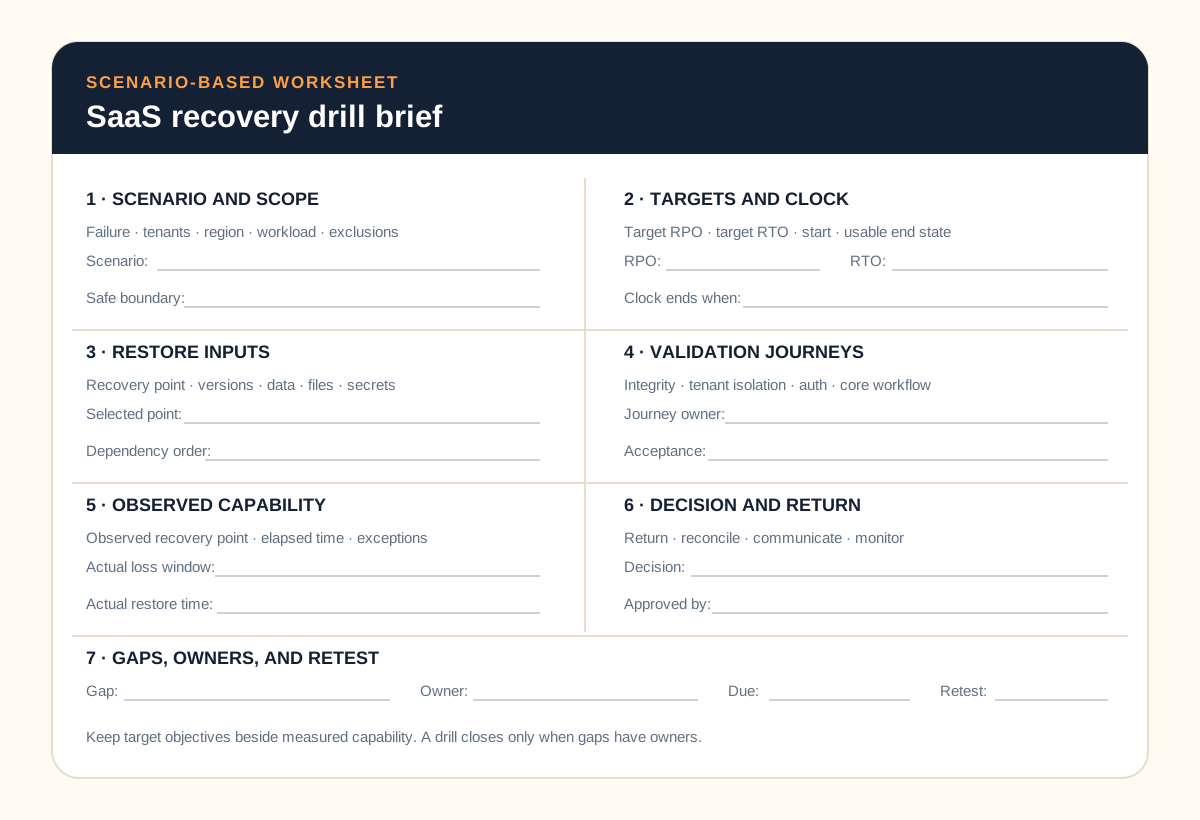
Start with the failure that carries the clearest business consequence, not the most dramatic imaginable disaster. Leeonex can help teams map a bounded recovery path through its software project rescue offering, including the product, data, integration, and validation work around the infrastructure controls. Legal, security, privacy, contractual, and business-continuity owners must approve the requirements that fall within their authority.
SaaS backup and disaster recovery FAQ
What should a SaaS backup and disaster recovery plan include?
Include business impact and service tiers, workload-specific RPO and RTO, an inventory of data and dependencies, backup and retention controls, tenant-aware restore behavior, infrastructure and identity recovery, security and separation, runbooks, communication, validation journeys, test cadence, evidence, remediation, and named decision owners.
What is the difference between backup and disaster recovery?
Backup creates recoverable copies of data or configuration. Disaster recovery is the wider capability to restore a usable service, including infrastructure, identity, secrets, dependencies, application versions, data integrity, validation, communication, and controlled return to operation. Replication and high availability also do not replace an independent recoverable history.
How should a SaaS team choose RPO and RTO?
Business owners should define the maximum tolerable data-loss window and service-interruption window for each critical workload or journey. Technical teams then design and test a recovery strategy against those objectives. Arbitrary near-zero targets can add large cost and complexity without matching actual business need.
How often should SaaS restore tests run?
Use a risk-based cadence and test after material architecture, data, identity, or dependency changes. Automated checks can run frequently, while partial restores, tenant restores, runbook walkthroughs, and full recovery exercises may run at different intervals. The requirement should name the trigger, scope, owner, and retained evidence.
What proves that a SaaS restore succeeded?
Proof includes the selected recovery point, measured data-loss and elapsed recovery windows, integrity and tenant-isolation checks, authentication, secrets and dependency validation, successful critical user journeys, reconciliation of delayed work, business-owner acceptance, recorded exceptions, and owned remediation with a retest date.