The short answer: maintain the service, not only the code
A useful web application maintenance plan defines the live service boundary, critical journeys, health and business signals, vulnerability and dependency response, data recovery, integration failure handling, safe releases, support flow, and continuity of knowledge. Give every control an owner, trigger or cadence, response target, and retained evidence.
A queue of bug reports is not a maintenance system. It reacts to what users notice while certificates, access, dependencies, backups, failed jobs, integration drift, and unsupported runtimes can deteriorate quietly. The goal is not zero change; it is controlled change with a known recovery path.
Observe
Know whether critical journeys and dependencies are healthy
Change safely
Prioritize, test, release, monitor, and roll back
Recover
Restore data and service with practiced owners and evidence
Start with the product and service boundary
Inventory what the team is actually expected to keep working: repositories, applications, APIs, jobs, databases, file stores, hosting accounts, domains, certificates, secrets, identity providers, queues, analytics, monitoring, and third-party services. Record production and non-production environments, owners, access paths, billing owners, renewal dates, and vendor support status.
Then identify the few journeys whose failure would materially interrupt the business: sign in, submit an order, approve a request, receive a payment event, generate a required report, or recover a customer record. Technical uptime can look healthy while one business-critical job has stopped. Monitor the service outcome as well as the infrastructure.
| Boundary item | Record | Proof |
|---|---|---|
| Critical journey | Owner, consequence, dependency chain | Synthetic check or reconciled business signal |
| Technical component | Version, support state, repository, deploy path | Current inventory and build record |
| External service | Contract owner, limits, status, fallback | Health check and failure drill |
| Privileged access | Purpose, approver, recovery, removal | Reviewed access register |
If this inventory cannot be assembled confidently, begin with the software project handover checklist. Maintenance ownership is fragile when repositories, production access, release procedures, or vendor accounts still belong to an unavailable supplier or individual.
Define eight maintenance control lanes
For each lane, record what is controlled, the signal or review trigger, the responsible and backup owner, the expected response, and the evidence that closes the action. “Check monthly” is not enough if nobody knows what result requires intervention.
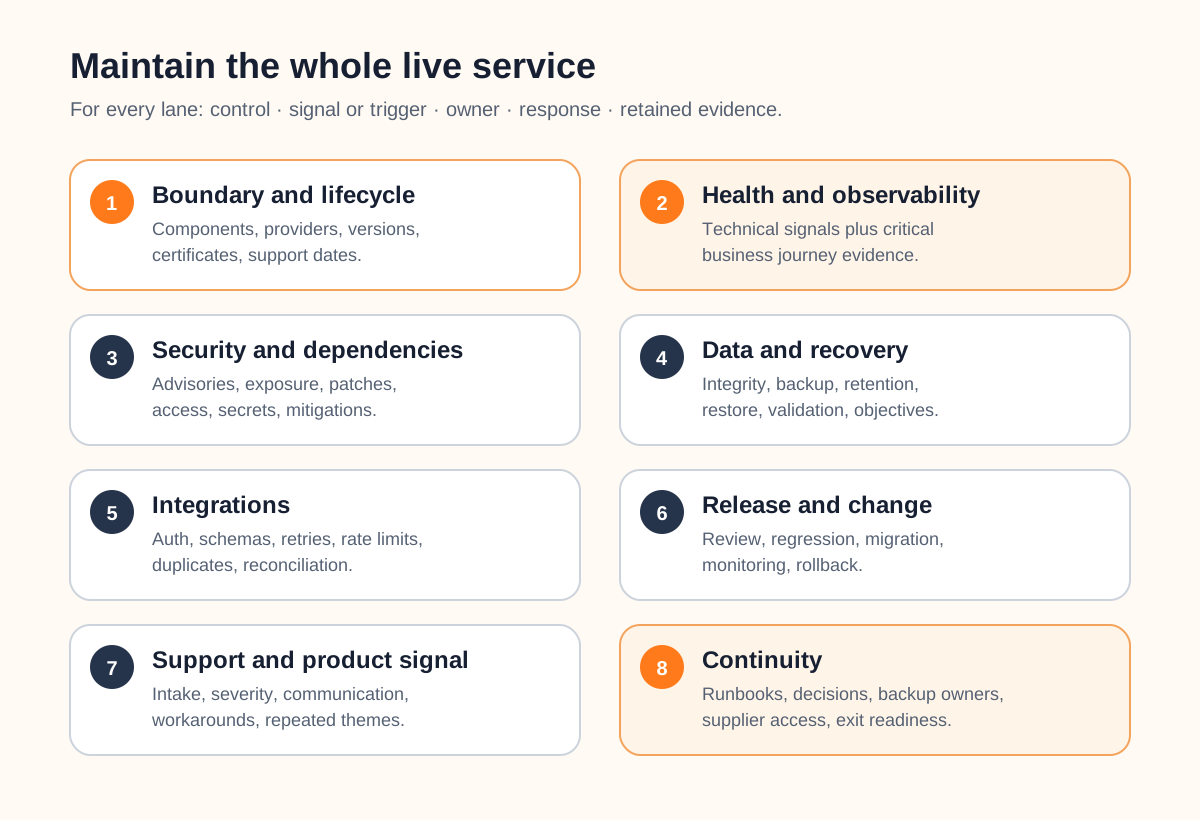
- Boundary and lifecycle: supported environments, components, providers, certificates, and end-of-life dates.
- Health and observability: availability, errors, latency, queues, jobs, capacity, and critical business events.
- Security and dependencies: vulnerability intake, exposure assessment, patches, compensating controls, secrets, and access.
- Data and recovery: backup scope, retention, integrity, restore procedure, recovery objectives, and exercised evidence.
- Integrations: authentication, rate limits, schema changes, retries, duplicates, reconciliation, and failure ownership.
- Release and change: review, regression, environment promotion, migration, monitoring, rollback, and emergency change.
- Support and product signal: intake, severity, communication, workaround, feedback, usage, and repeated failure themes.
- Continuity: runbooks, architecture, decisions, supplier access, backup owners, and exit readiness.
Make application logs useful and safe
Infrastructure logs alone do not explain whether a business workflow completed. OWASP's application logging guidance describes operational uses such as debugging, baseline and business-process monitoring, and recommends recording enough “when, where, who and what” context for analysis. Decide which events matter, protect the logs, avoid unnecessary sensitive data, and connect serious alerts to an incident response path.
Run a risk-based maintenance loop
Cadences help teams remember routine work, but triggers matter more than a universal calendar. A known exploited vulnerability, failed payment webhook, expiring certificate, restore failure, provider deprecation, or sharp error increase should not wait for the next monthly meeting.
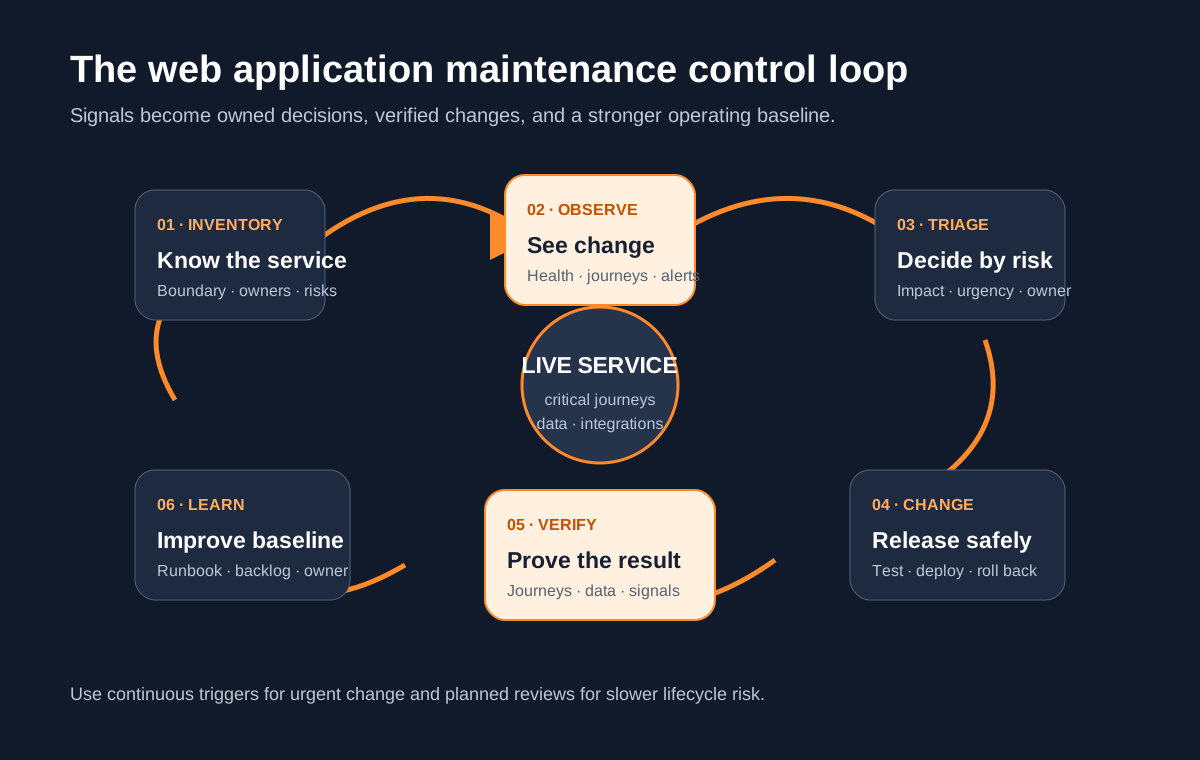
| Signal | Triage question | Close with |
|---|---|---|
| Error or workflow failure | Who is affected and can work continue safely? | Resolution, workaround, communication, cause |
| Dependency advisory | Is this version exposed and what is the consequence? | Patch, mitigation, acceptance, verified release |
| Capacity or latency drift | Which journey and threshold is degrading? | Measured change and updated baseline |
| Recovery exercise | Can data and service return within the agreed boundary? | Restore result, gaps, revised runbook |
When latency or capacity drift is recurring, define the affected journey, target population, percentile, workload, dataset, and evidence before prescribing a fix. The web application performance requirements checklist turns a vague speed complaint into a testable budget that can become part of the maintenance loop.
NIST's Secure Software Development Framework treats security practices as part of the software lifecycle, not a one-time launch exercise. For prioritization, CISA maintains a living Known Exploited Vulnerabilities catalog as an input to vulnerability management. A scan finding is a signal; the team still needs to confirm applicability, exposure, urgency, safe remediation, and verification.
Test recovery, not only backup creation
A successful backup job proves that something was written, not that the service can be recovered. Define which data, configurations, code, secrets, and external dependencies are needed; restore into a safe environment; validate data and critical journeys; and record actual time, gaps, and owners. NIST describes information-system contingency planning as coordinated plans, procedures, and technical measures for recovering systems, operations, and data after disruption.
SaaS teams can turn this lane into a testable contract with the SaaS backup and disaster recovery checklist, which separates target RPO and RTO from observed recovery capability and adds tenant-aware restore validation.
Choose an internal, partner, or blended ownership model
Do not buy “maintenance hours” until responsibilities are clear. Compare who monitors, triages, approves risk, accesses production, communicates with users, releases changes, restores service, pays providers, and retains product knowledge.
| Model | Best fit | Control question |
|---|---|---|
| Internal | Stable team owns product, platform, and response | Is there real backup coverage and specialist depth? |
| Partner | A defined service can be transferred with controlled access | Does the business retain authority, accounts, evidence, and exit rights? |
| Blended | Internal owners set priority while a partner supplies delivery depth | Is every decision and response boundary explicit? |
Separate maintenance from modernization without pretending they are unrelated. Keep service controls running while structural risks move through a planned improvement track. Use the refactor-or-rewrite guide when the architecture is blocking safe change, or the legacy modernization roadmap when unsupported components and concentrated risk need a staged transition.
Build a 90-day maintenance operating brief
A first quarter should establish control before promising broad optimization. Baseline the service, repair urgent ownership and recovery gaps, stabilize release and incident paths, then choose a small preventive backlog from evidence.
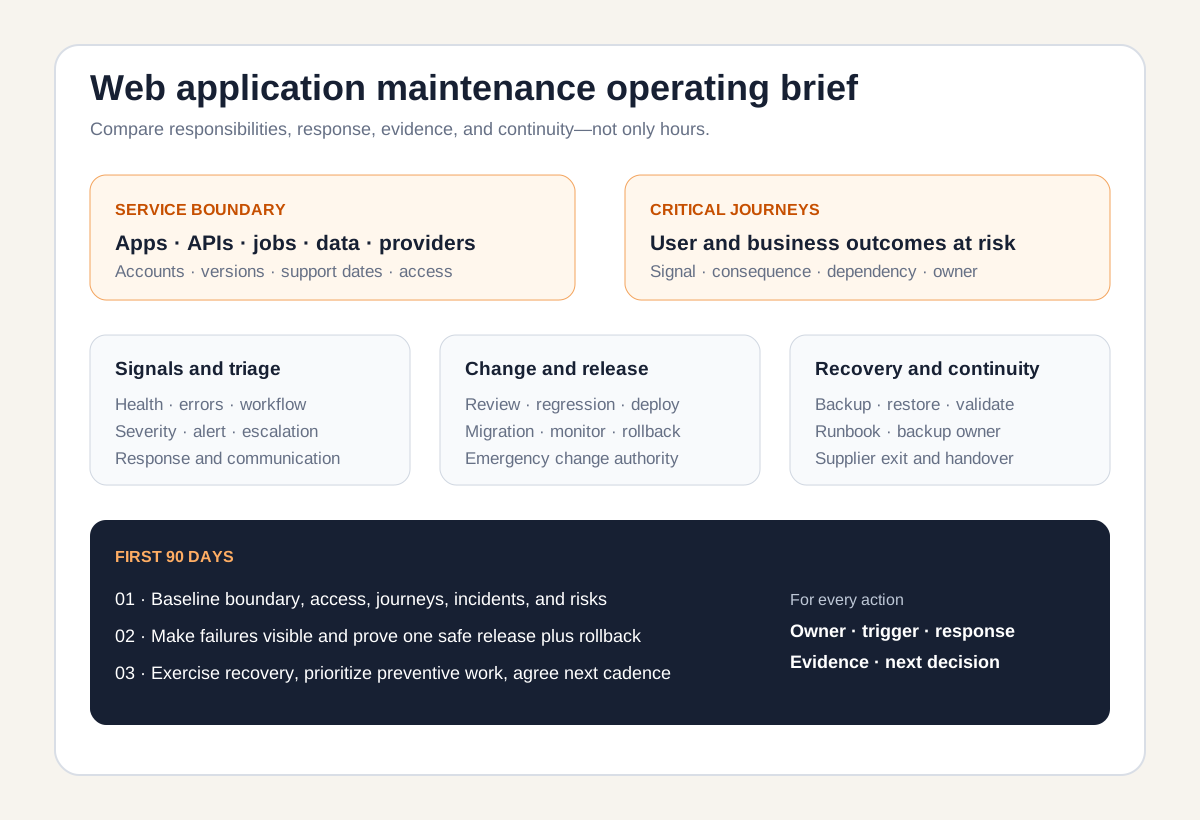
First-quarter sequence
- Confirm accounts, architecture, data, critical journeys, and current risks.
- Make incidents, failed jobs, and integration exceptions visible to named owners.
- Prove one supported release and rollback path with representative regression checks.
- Restore a representative backup and validate service behavior and data integrity.
- Prioritize dependencies, lifecycle risks, recurring defects, and knowledge gaps.
- Agree the next cadence, response boundaries, evidence, budget decisions, and exit path.
Pair the brief with the web application security requirements checklist when control coverage is unclear. If the product needs immediate stabilization, Leeonex's software project rescue service can start from the smallest risk-bearing slice rather than an unsupported promise to repair everything at once.
Web application maintenance FAQ
What should a web application maintenance checklist include?
Include the service boundary, critical user journeys, environments and components, health and business signals, incident paths, dependencies and vulnerabilities, access and secrets, data integrity, tested recovery, integration failures, release and rollback controls, support intake, documentation, vendor continuity, and named decision owners.
How often should a web application be maintained?
Use both continuous signals and planned reviews. Availability, errors, critical workflow failures, security advisories, certificate expiry, and failed integrations may need immediate or automated attention. Access, dependencies, recovery, performance, documentation, and lifecycle risks need a cadence based on consequence and rate of change rather than a universal monthly checklist.
What is the difference between application maintenance and support?
Support handles user questions, incidents, requests, and communication. Maintenance keeps the product and its operating environment healthy through monitoring, updates, testing, recovery, releases, documentation, and preventive work. A reliable operating model connects both so support evidence informs product maintenance and technical changes improve the support path.
Should a business maintain a web app internally or use a partner?
Use an internal model when the organization can staff the needed product, engineering, platform, security, and support ownership. A partner can be useful for missing capacity or specialist depth. A blended model often works when business prioritization and access authority stay internal while a delivery partner owns agreed technical controls, releases, and response duties.
When does maintenance become a modernization project?
Consider a focused modernization or rescue track when supported updates cannot be applied safely, incidents recur from the same structural cause, recovery is unproven, core journeys lack regression coverage, knowledge is concentrated in one person, or routine changes require disproportionate effort. Keep urgent operational controls running while modernizing one risk-bearing slice at a time.