The short answer: every control needs context and evidence
A web application security requirements checklist should connect the system's users, sensitive data, trust boundaries, and plausible harmful outcomes to specific control objectives. Each requirement then needs an owner, verification method, release decision, exception path, and operating response.
“Use secure authentication” is an aspiration. “Administrative access requires the approved identity method, a second factor, session expiry, server-side authorization, logged changes, and tested revocation” is closer to a requirement. The exact control still depends on the product, threat model, platform, and risk.
Context
Actors, data, boundaries, and harmful outcomes.
Control
A testable condition with a named owner.
Evidence
Proof, release decision, and response path.
Describe the system before listing security products
Begin with the workflows that create consequence. Name every human and machine actor, the resources they use, sensitive actions, data classes, external services, background jobs, administrative paths, and deployment environments. Include what happens when a user leaves, an integration fails, a secret is exposed, or a supposedly internal endpoint becomes reachable.
Draw the data flows and trust boundaries. Mark where identity is established, where authorization is enforced, where information is stored or exported, and where responsibility crosses into a supplier. The OWASP threat-modeling guidance treats this system model as the foundation for identifying and ranking threats, choosing mitigations, and validating the result.
Record harmful outcomes in business language: another tenant reads a record, an operator changes payout details without approval, a deleted account retains access, a service cannot be recovered, or an incident cannot be reconstructed. This helps product, engineering, operations, and security specialists agree on what the requirement is protecting.
Cover eight security requirement lanes
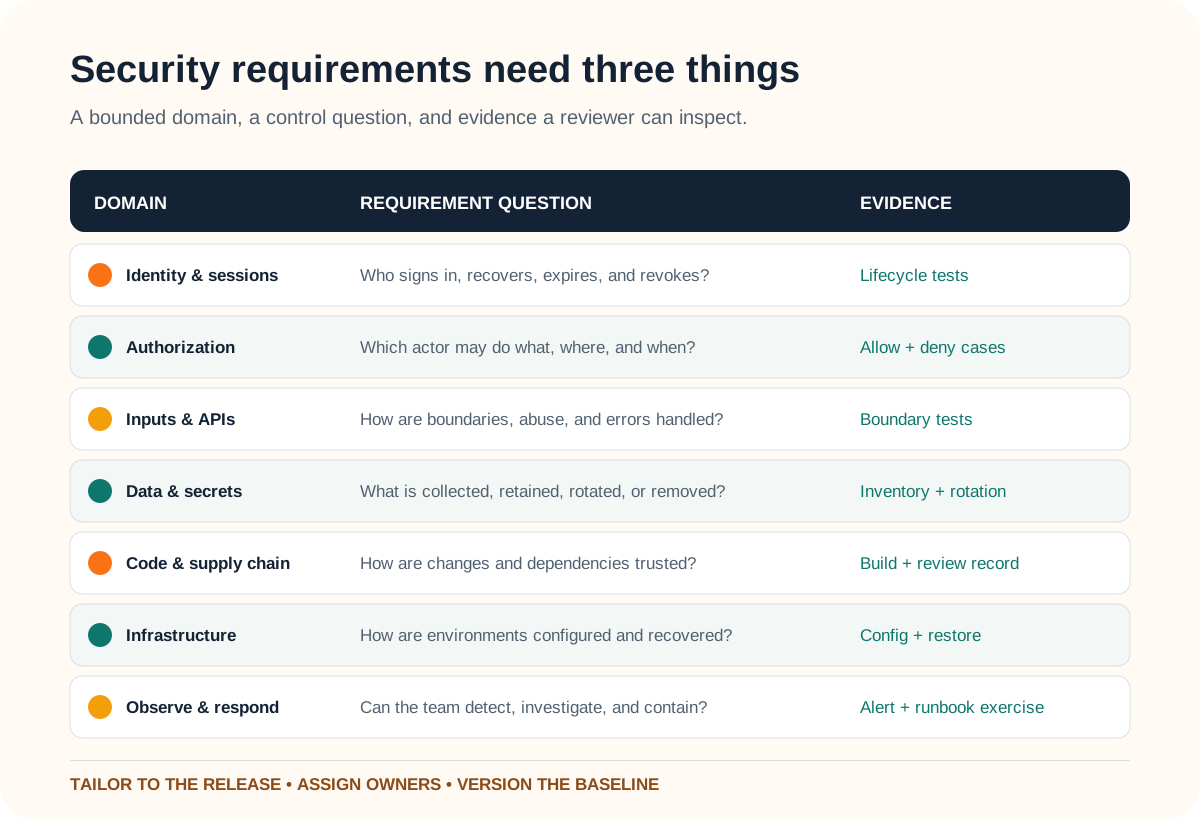
| Lane | Define | Example evidence |
|---|---|---|
| Identity and sessions | Identity proof, recovery, MFA, session lifecycle | Recovery and revocation tests |
| Authorization | Actors, resources, actions, scopes, deny behavior | Allowed and denied cases |
| Inputs and APIs | Validation, output handling, limits, error behavior | Automated abuse and boundary tests |
| Data and secrets | Collection, storage, transfer, retention, rotation | Inventory and rotation record |
| Code and dependencies | Review, provenance, scanning, update ownership | Build report and remediation log |
| Infrastructure | Environment separation, configuration, backups | Configuration and restore check |
| Observability | Security events, privacy, alerts, investigation | Alert exercise and trace |
| Response | Triage, containment, disclosure, recovery, learning | Runbook exercise and owner sign-off |
This matrix is a discovery aid, not a universal control set. Some products need deeper payment, health, identity, geographic, safety, or regulatory requirements. Others can meet their risk boundary with simpler managed services and fewer custom controls.
When the product needs a customer-reviewable record of privileged actions, exports, role changes, or sensitive object history, use the SaaS audit log requirements checklist to define tenant context, event fields, privacy, integrity, review access, lifecycle, and acceptance evidence in depth.
Move from harmful outcome to release evidence
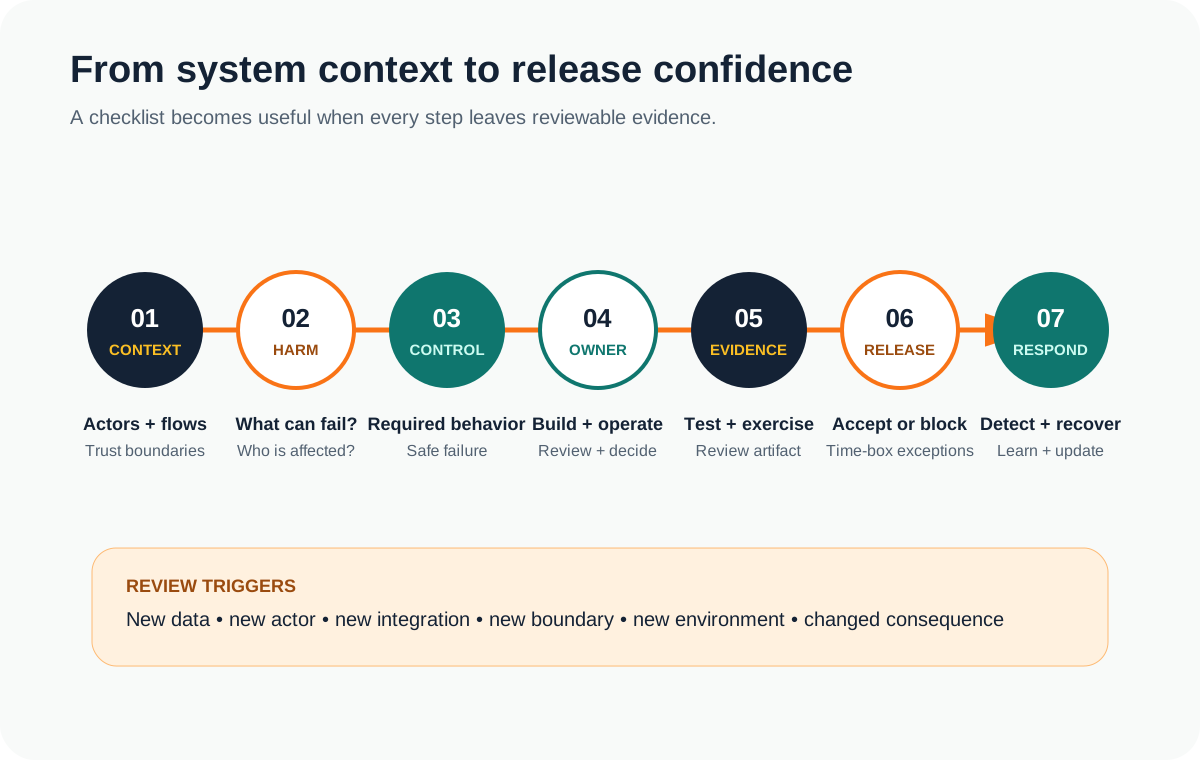
- Model the context. Capture actors, data, flows, stores, integrations, environments, and trust boundaries for one release.
- Name the harm. Describe what could go wrong, who or what would be affected, and which uncertainty needs specialist review.
- Select the control objective. State the condition that should prevent, limit, detect, or help recover from that outcome.
- Assign implementation and operation. Name who builds, configures, reviews, monitors, updates, and responds.
- Define evidence before delivery. Choose the acceptance example, automated test, review, scan, exercise, or specialist assessment that supports the release decision.
Use standards as baselines, then tailor them
The OWASP Application Security Verification Standard provides a current, commercially usable basis for specifying and verifying web application technical controls. OWASP lists ASVS 5.0.0 as the latest stable release and recommends including the version when referencing individual requirements so the expected control does not drift silently.
The NIST Secure Software Development Framework complements product controls with lifecycle practices: prepare the organization, protect software, produce well-secured software, and respond to vulnerabilities. NIST explicitly positions the framework as a common vocabulary for producers and software purchasers.
Choose and document the baseline version, applicable sections, exclusions, compensating controls, evidence, and reviewer. Do not claim “OWASP compliant” because a team skimmed a checklist. Standards improve coverage; application context decides what is relevant, and verification depth determines how much confidence the evidence supports.
If the central problem is who may perform which action inside a tenant or workspace, use the SaaS permissions requirements checklist to define authorization as a product model before expanding into the wider security release plan.
Write requirements that survive implementation choices
A useful requirement identifies the context, required behavior, failure behavior, owner, and evidence. Avoid locking a tool into the requirement unless procurement, architecture, or operations truly require it. “Secrets are stored in Product X” may become stale; “production secrets are not committed to source, access is restricted and auditable, rotation is supported, and exposed values can be revoked” describes the outcome to preserve.
Requirement formula
In [context], the system must [control behavior]. If [failure or abuse case] occurs, it must [safe behavior]. [Owner] verifies this with [evidence] before [release gate] and reviews it when [trigger] changes.
Attach the requirement and acceptance evidence to the same work that changes the feature. Security controls postponed to a final audit often reveal architectural assumptions too late. The requirement should move through discovery, design, development, review, release, and operation with visible status and exceptions.
Make the launch decision explicit
A security gate is not “all scans are green.” It is a recorded decision about whether required evidence exists, remaining findings are understood, exceptions have owners and expiry, and the team can detect and respond to meaningful failure after release.
- The release scope and threat model match what was built.
- Required identity, authorization, data, API, dependency, and environment controls have reviewable evidence.
- High-impact abuse and isolation cases were tested through the server-side enforcement path, not only hidden in the interface.
- Findings are triaged by consequence; accepted exceptions have an owner, rationale, compensating control, and review date.
- Monitoring, escalation, credential rotation, backup restore, rollback, and vulnerability response paths have named owners.
Automated scanning, code review, dependency checks, configuration review, security testing, and specialist assessment answer different questions. Choose the mix from the risk rather than presenting one tool as proof of the whole application.
Turn the checklist into a security release brief
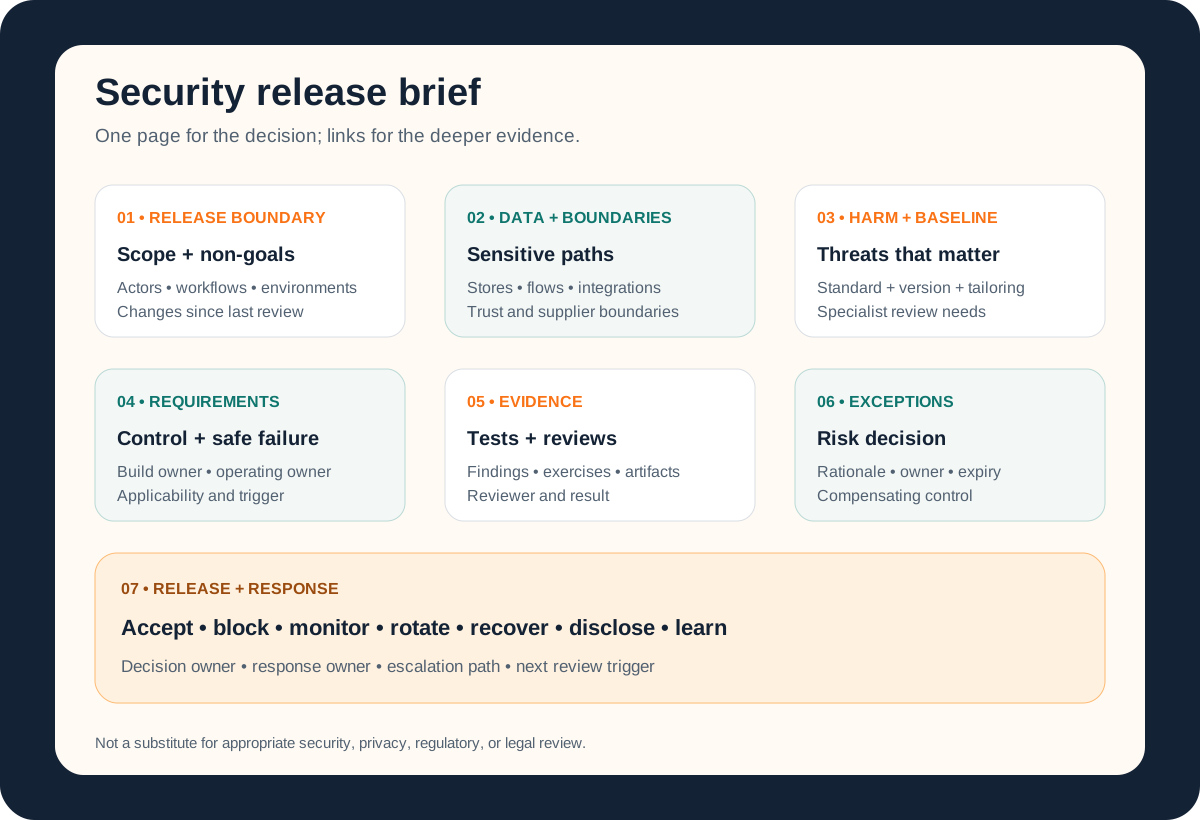
Keep one brief for the release: scope and non-goals, actors, sensitive data, system and trust boundaries, harmful outcomes, baseline and version, requirements, owners, evidence, unresolved findings, exceptions, monitoring, response, and review triggers. Link deeper threat models, test reports, and runbooks instead of turning the brief into an unreadable archive.
Teams preparing a partner procurement can place these fields inside the software development RFP checklist so every proposal states assumptions, control responsibilities, verification evidence, and specialist dependencies on the same basis.
Web application security requirements FAQ
What are web application security requirements?
Web application security requirements are testable conditions that reduce relevant risks across identity, sessions, authorization, inputs, APIs, data, secrets, dependencies, infrastructure, logging, recovery, and vulnerability response. Each requirement should identify its context, control objective, owner, verification evidence, exceptions, and review trigger.
When should security requirements be defined?
Define an initial baseline during discovery, refine it while mapping architecture and data flows, attach requirements to delivery work, and verify them before release. Revisit the threat model and requirements when sensitive data, trust boundaries, integrations, roles, deployment environments, or harmful outcomes change.
Is the OWASP Top 10 a complete security checklist?
No. The OWASP Top 10 is an awareness document about important risk categories, not a complete application-specific requirements or verification plan. OWASP ASVS provides a broader control-verification baseline, which still needs to be tailored to the application, architecture, data, users, regulatory context, and consequences of failure.
Who owns web application security requirements?
Ownership is shared but must be explicit. Product or business owners define harmful outcomes and acceptable tradeoffs; engineering and architecture translate them into system controls; security specialists review high-risk areas; delivery teams implement and test; and operations owns monitoring, incident response, patching, recovery, and access reviews after launch.
Does passing a security checklist prove an application is secure?
No checklist can prove absolute security. A checklist improves coverage and accountability, but assurance depends on the threat model, implementation, test depth, environment, evidence quality, and ongoing response. High-impact, regulated, or unusually exposed systems need appropriate independent security and legal review.