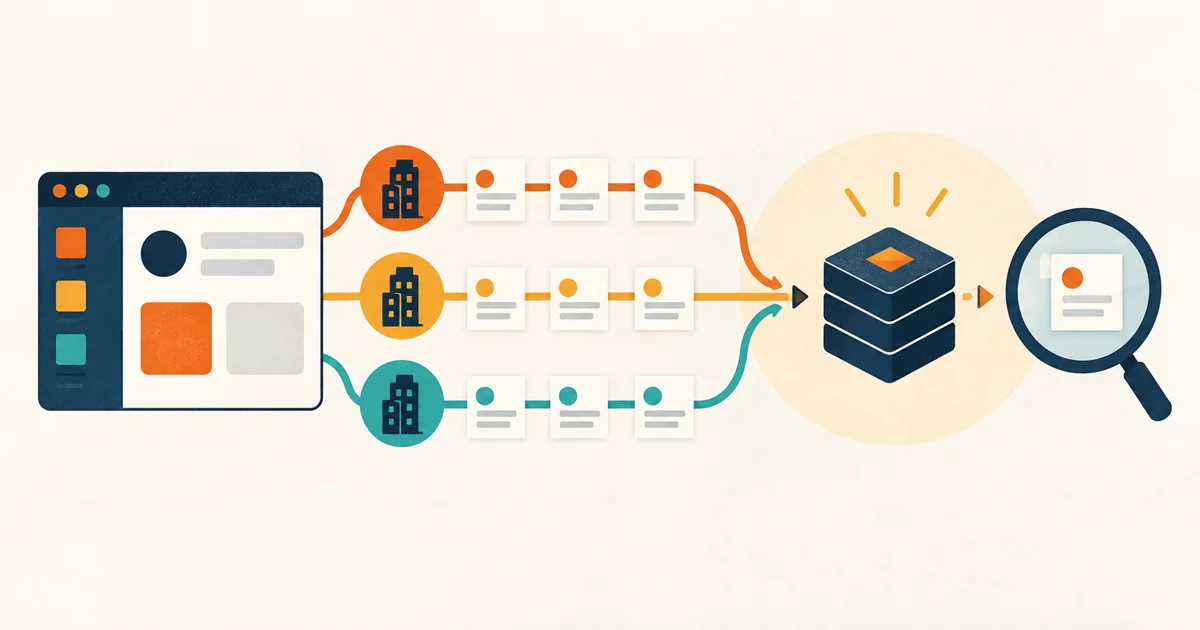
The short answer: define the question the trail must answer
A SaaS audit log should let an authorized reviewer reconstruct important product actions without guessing from current database state. Define the review purpose and event catalog, then preserve the actor, tenant, object, action, time, outcome, authority, and correlation context needed for that purpose.
“Log all user activity” is not a usable requirement. It creates uncontrolled volume, privacy risk, vague retention, and a trail nobody has proved they can search. A useful specification says which actions matter, who may review them, what must never be recorded, how integrity is protected, and which test proves the evidence survives every execution path.
Purpose
Name the review or investigation question
Context
Preserve actor, tenant, object, and authority
Evidence
Protect, retrieve, test, and operate the trail
Separate audit evidence from operational telemetry
Audit, security, transaction, analytics, and diagnostic logs can share collection infrastructure, but they do not automatically serve the same job. OWASP's current application logging guidance notes that process monitoring, audit, and transaction trails often have different purposes, event details, and handling from security logging.
Start with reviewer questions. Can a workspace owner see who changed a role? Can support explain an export without exposing another tenant? Can an investigator follow a privileged action through an asynchronous job? Can the team tell when audit collection stopped? Each question identifies events, context, readers, retention, and failure behavior.
| Evidence job | Typical question | Primary reviewer |
|---|---|---|
| Customer accountability | Who changed this workspace setting? | Tenant administrator |
| Support investigation | What path produced this state? | Authorized support role |
| Security response | Was access attempted or granted? | Security or incident owner |
| Assurance evidence | Was this control operated and reviewed? | Qualified internal or external reviewer |
Define eight audit-log requirement lanes
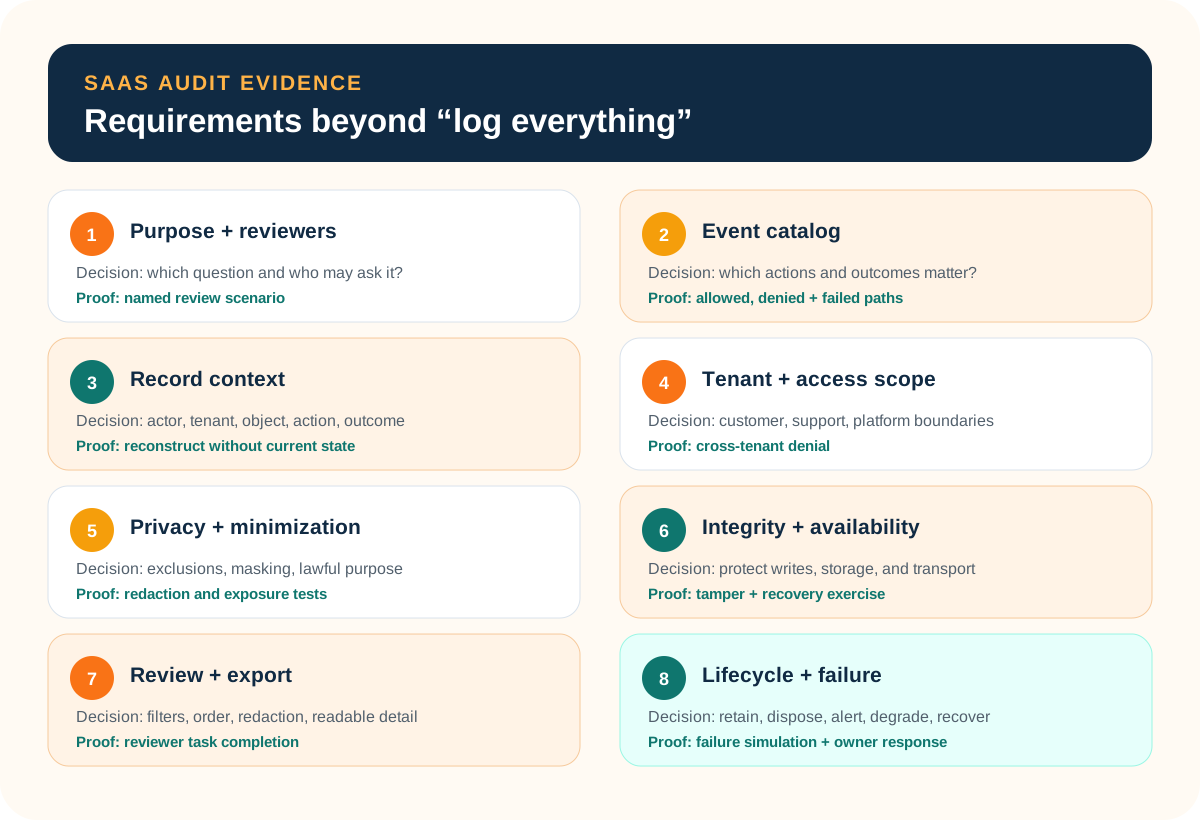
- Purpose and reviewers: investigation, customer accountability, assurance, support, and the authorized audience for each.
- Event catalog: sensitive reads, creates, changes, deletes, exports, permission changes, administrative actions, and denials that matter to the defined purpose.
- Record context: actor, tenant, object, action, timestamps, source, result, authority, and correlation identifiers.
- Tenant and access scope: ownership, reader permissions, support elevation, break-glass paths, and cross-tenant denial.
- Privacy and minimization: excluded secrets, sensitive fields, masking, lawful purpose, regional constraints, and reviewer exposure.
- Integrity and availability: restricted writes, tamper evidence, transport, storage, monitoring, backup, and recovery.
- Review and export: filters, ordering, time zones, pagination, redaction, export, access logging, and understandable event descriptions.
- Lifecycle and failure: retention, holds, disposal, capacity, collection failures, alerts, degraded behavior, owners, and verification.
Design an event model around business actions
NIST SP 800-171 Rev. 3 describes audit record content in terms of the event type, time, location, source, outcome, and related identities or objects. OWASP similarly recommends enough “when, where, who and what” context for the intended analysis. Use those as coverage prompts, then add the SaaS context that makes the record meaningful: tenant, workspace, delegated authority, impersonation or support session, object version, and correlation across services.
Emit events from the business action, not only the web controller. Role changes, exports, imports, billing changes, approvals, and deletions can also happen through APIs, background workers, scheduled jobs, migrations, and support tools. Preserve both the initiating actor and the executing service so an asynchronous action does not collapse into an unexplained “system” event.
Event requirement formula
When [actor using authority] attempts [business action] on [tenant-scoped object], record [required context and outcome] before or with [state transition]. Protect it from [change or disclosure], expose it to [reviewer], and verify it with [acceptance scenario].
Use stable identifiers and reviewer-friendly descriptions. A record should not require current user names or current object state to understand an earlier action. Decide deliberately whether before-and-after values are needed; they can improve reconstruction but also increase sensitivity, size, and retention risk.
Protect tenant, privacy, and integrity boundaries
The audit viewer is itself a privileged product surface. Apply the same tenant and role model used by the protected resource, then add explicit rules for support access, platform operators, exports, and cross-tenant investigations. The SaaS permissions requirements checklist can help define actors, resources, actions, scope, denials, and review evidence before the viewer is built.
Never treat the log as a safe place for request bodies, passwords, access tokens, session identifiers, secrets, or unrestricted personal data. OWASP recommends removing, masking, hashing, or encrypting sensitive values where appropriate and protecting logs in transit and at rest. Record the minimum that answers the declared question and test redaction on every event producer.
Make unauthorized modification or deletion difficult and detectable. Separate normal product permissions from audit writes, restrict administrative access, record access to the trail, and define what happens if storage, transport, or collection fails. NIST's log-management planning guide treats generating, transmitting, storing, accessing, and disposing of logs as one lifecycle; the product requirement should too.
A regulated or contract-bound product needs qualified review of applicable retention, privacy, residency, disclosure, and legal hold obligations. Do not copy a competitor's duration into the backlog and call it a policy.
Verify the complete evidence flow
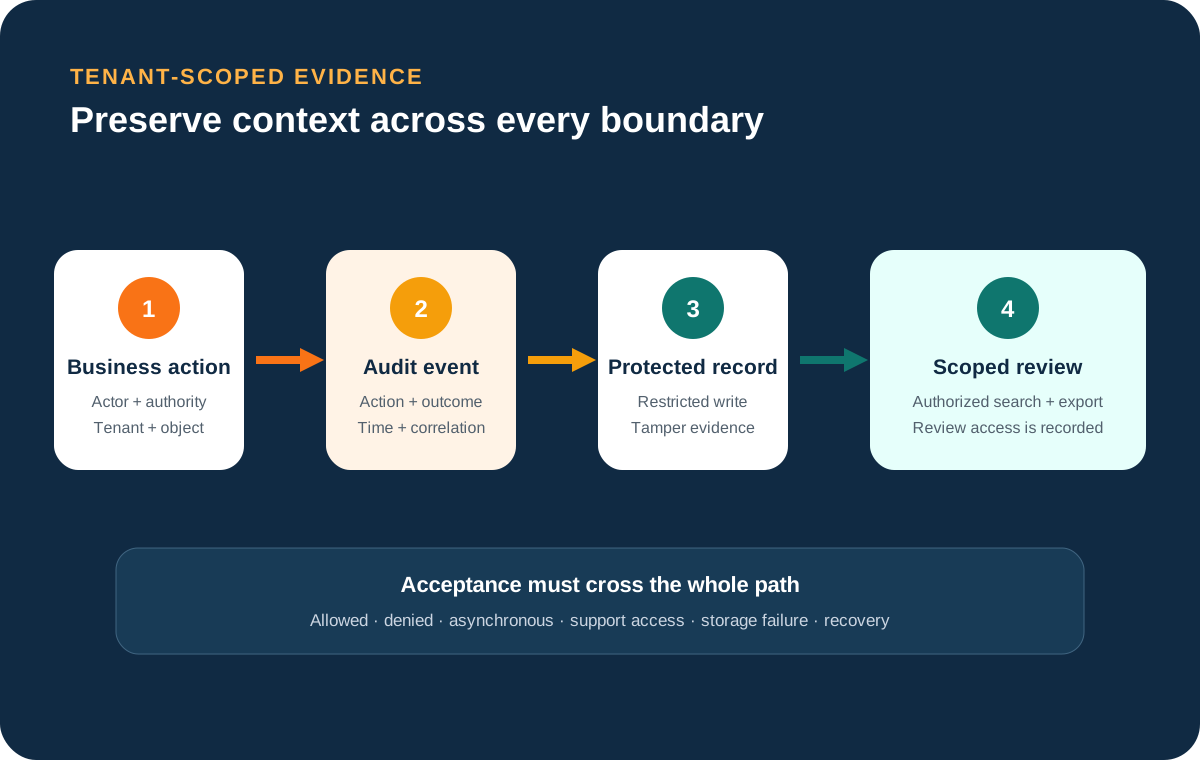
Build acceptance scenarios for allowed, denied, failed, and asynchronous paths. Create an action in Tenant A, verify the durable record, search it as an authorized Tenant A reviewer, deny it to Tenant B, export it within the permitted boundary, and confirm the reviewer access is itself recorded. Repeat with support elevation, a background job, deletion, and collection failure.
Test ordering and timestamps across services, retry and duplicate behavior, clock differences, partial outages, capacity limits, redaction, pagination, long retention, and restore. OWASP recommends including logging mechanisms in code review, application testing, security verification, and failure simulation rather than checking only that a row exists.
Broader authentication, authorization, dependency, infrastructure, and incident controls still need their own release boundary. Use the web application security requirements checklist for that wider model, and the application maintenance checklist to assign ongoing review, alert, capacity, and recovery duties.
Complete the acceptance brief before implementation
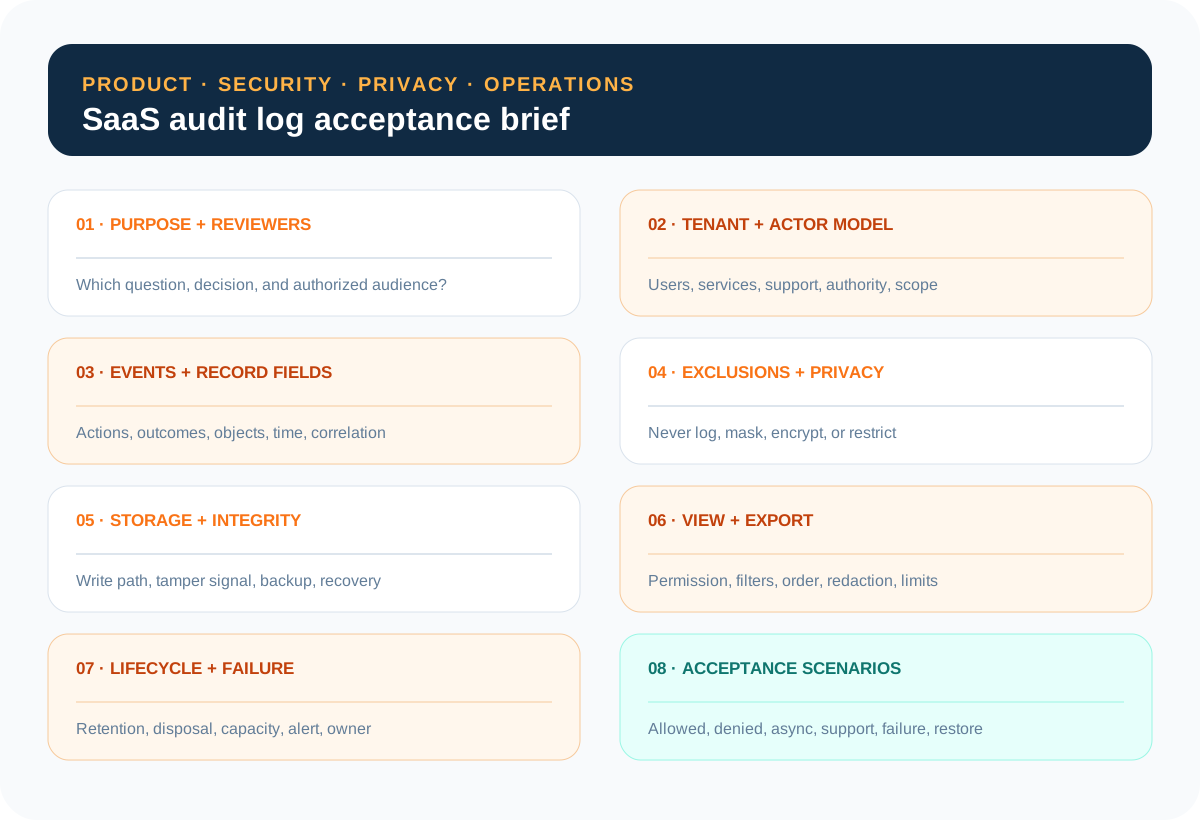
Record purpose, reviewers, tenant model, sensitive actions, event fields, excluded data, storage and integrity approach, viewer permissions, search and export behavior, retention and disposal authority, failure response, acceptance scenarios, and unresolved specialist questions. Link every event family to a product owner and operating reviewer.
For a new product, include the smallest credible evidence slice in the first release rather than postponing the entire audit trail. The Leeonex SaaS platform development path starts from roles, workflows, data, and maintainable product boundaries—the same inputs that make audit evidence scoping concrete.
SaaS audit log FAQ
What should a SaaS audit log record?
Record enough context to answer who or what acted, which tenant and object were affected, what action occurred, when and where it occurred, the outcome, the authority or role used, and a correlation identifier where useful. The exact fields should follow the review purpose and avoid unnecessary sensitive data.
How are audit logs different from application logs?
Audit logs preserve reviewable evidence of important business and administrative actions. Security logs support detection and investigation, while operational logs support reliability and debugging. They may share an event pipeline, but their users, fields, access, retention, and integrity requirements can differ.
Should SaaS customers be able to view their own audit logs?
Provide customer access when the product and buyer requirements justify it, but define tenant scope, permissions, searchable fields, export limits, redaction, pagination, and support access explicitly. A customer-facing viewer is a product surface with authorization and privacy risks, not merely a log search screen.
How long should SaaS audit logs be retained?
There is no universal retention period. Set it from the review purpose, customer commitments, legal and regulatory obligations, privacy and minimization requirements, investigation window, storage model, and deletion process. Record who approves the policy and how exceptions or holds are handled.
Are audit logs enough to prove compliance?
No. Audit logs can provide evidence for particular controls and investigations, but compliance depends on the applicable framework, system scope, implementation, operating practice, review, and independent assurance. Use qualified security, privacy, and legal specialists where required.