
The short answer: define permissions as product rules
SaaS permissions requirements should say who or what may perform which action on which resource, inside which tenant or ownership scope, under which conditions, with which effect. They must also define how access is granted, changed, reviewed, revoked, enforced, logged, and tested.
Do not begin with a list of job titles. First model actors, resources, actions, scopes, conditions, and sensitive effects. Then package common permissions into roles. This prevents “admin,” “manager,” and “member” from becoming vague labels that accumulate exceptions as the product grows.
Decision
Actor + action + resource + context.
Boundary
Tenant, workspace, ownership, and state.
Evidence
Allow, deny, audit, review, and tests.
Start with the permission domain, not the role names
List every actor that can cause work: customer users, organization owners, invited guests, internal support, background jobs, service accounts, integrations, and automated agents. For each, define the tenant memberships and relationships that establish context. A single person may belong to several organizations with different access in each.
Inventory resources at the level where policy changes. “Customer data” is too broad if a user may view a profile but not payment details, export a report but not edit its metric definition, or update a draft but not an approved record. Include files, comments, settings, billing, invitations, exports, API credentials, audit history, and support controls—not just the main screens.
Describe actions as business verbs: view, create, edit, assign, approve, publish, export, archive, delete, restore, invite, impersonate, or configure. Separate actions whose consequence or approval path differs. The admin panel requirements checklist is a useful companion when privileged operations need confirmation, reason capture, audit, and recovery.
Use eight lanes to make the permission model reviewable
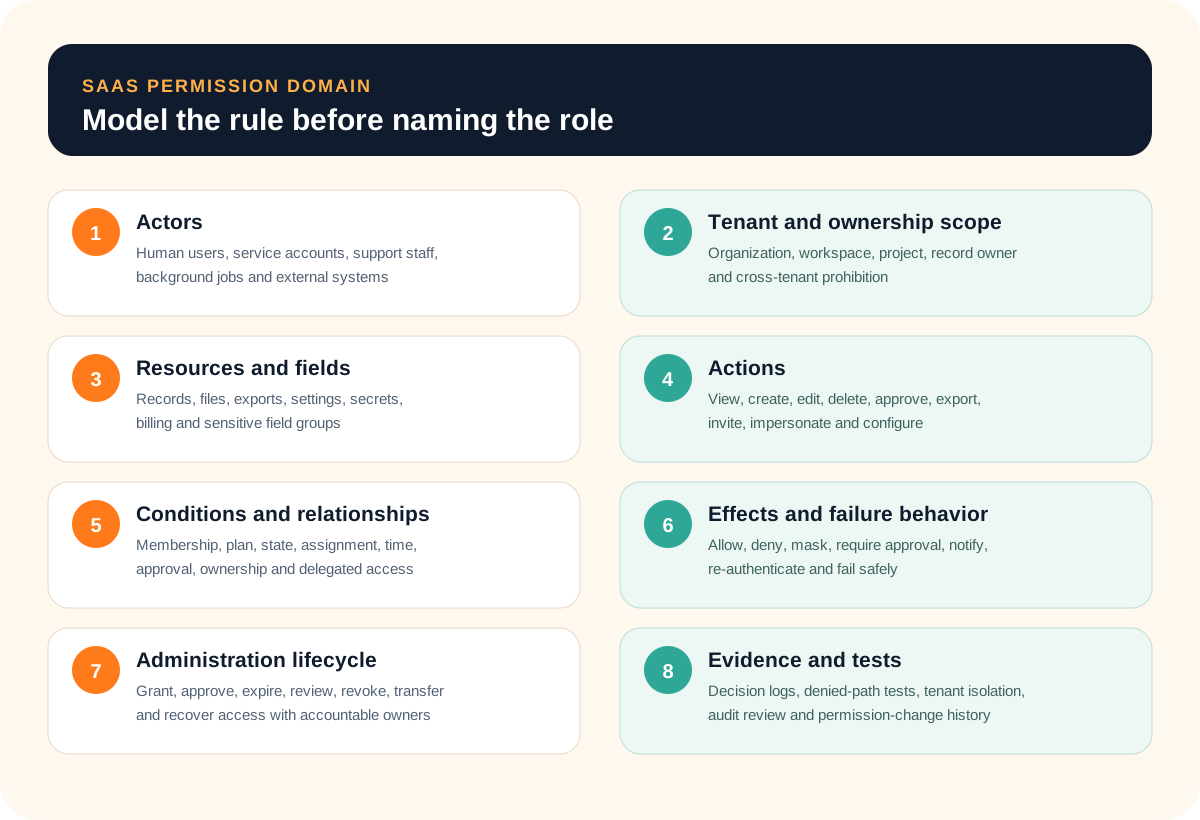
| Requirement | Question to answer | Example evidence |
|---|---|---|
| Actor | Who or what initiates the action? | Identity and membership example |
| Scope | Which tenant, workspace, owner, or tier applies? | Cross-tenant denial case |
| Resource | What object or sensitive field is protected? | Resource catalogue |
| Action | Which business operation is requested? | Action vocabulary |
| Condition | Which state, attribute, or relationship matters? | Policy example |
| Effect | Allow, deny, mask, approve, notify, or re-authenticate? | Expected outcome |
| Lifecycle | Who grants, reviews, expires, and revokes access? | Admin workflow |
| Evidence | How will the decision be explained and tested? | Logs and test cases |
Choose RBAC, ABAC, or relationships from the real rules
Role-based access control (RBAC) assigns permissions to roles and roles to users. It is a strong starting point when stable business functions explain most access. The NIST RBAC model formalizes users, roles, permissions, sessions, hierarchies, and separation-of-duty constraints; it is more rigorous than scattering role-name checks through interface code.
Attribute-based access control (ABAC) uses properties of the actor, resource, environment, or application state. Relationship-based access control (ReBAC) uses relationships such as owner, project member, approver, or parent organization. These models fit rules like “an assigned reviewer may approve this tenant's draft before expiry” more naturally than creating a role for every combination.
AWS's multi-tenant access-control guidance compares RBAC, ABAC, and a hybrid: RBAC is simpler, while attributes add dynamic context and granularity at higher implementation cost. Start with the simplest model that expresses the product rules without role explosion. Keep plan entitlements separate from authority unless the business rule explicitly connects them.
Treat tenant isolation as an explicit boundary
Authentication answers who the actor is. Authorization answers whether that actor may take the requested action. Tenant isolation ensures the request cannot cross into another customer's resources. A user can be correctly authenticated and hold a valid role while still targeting an object that belongs to the wrong tenant.
Include the tenant identifier in the decision context and derive it from trusted membership or routing data, not only from a user-editable request field. Define how resources are assigned to tenants, whether cross-tenant support access exists, how shared resources work, and what happens when a membership is removed or an object changes ownership.
AWS distinguishes multi-tenant authorization from tenant isolation and recommends pervasive API access checks. The application's tenancy architecture also affects blast radius and customization; use the single-tenant versus multi-tenant SaaS guide when the infrastructure boundary itself is still undecided.
If customer identity providers will authenticate users, define the connection, account-linking, session, provisioning, and recovery boundary separately. The SaaS SSO requirements checklist shows how federated identity reaches this permission model without treating an IdP claim as an automatic authorization decision.
Enforce the same decision at every protected path
Hiding a button improves the interface but does not enforce access. Check authorization where the server, API, worker, file service, or data boundary performs the protected action. Include bulk actions, exports, scheduled jobs, webhooks, search, direct object URLs, and administrative scripts in the enforcement inventory.
A customer data export is a particularly sensitive bulk-read path. The SaaS customer export requirements guide turns its permission, tenant boundary, package, and verification rules into a testable product contract.
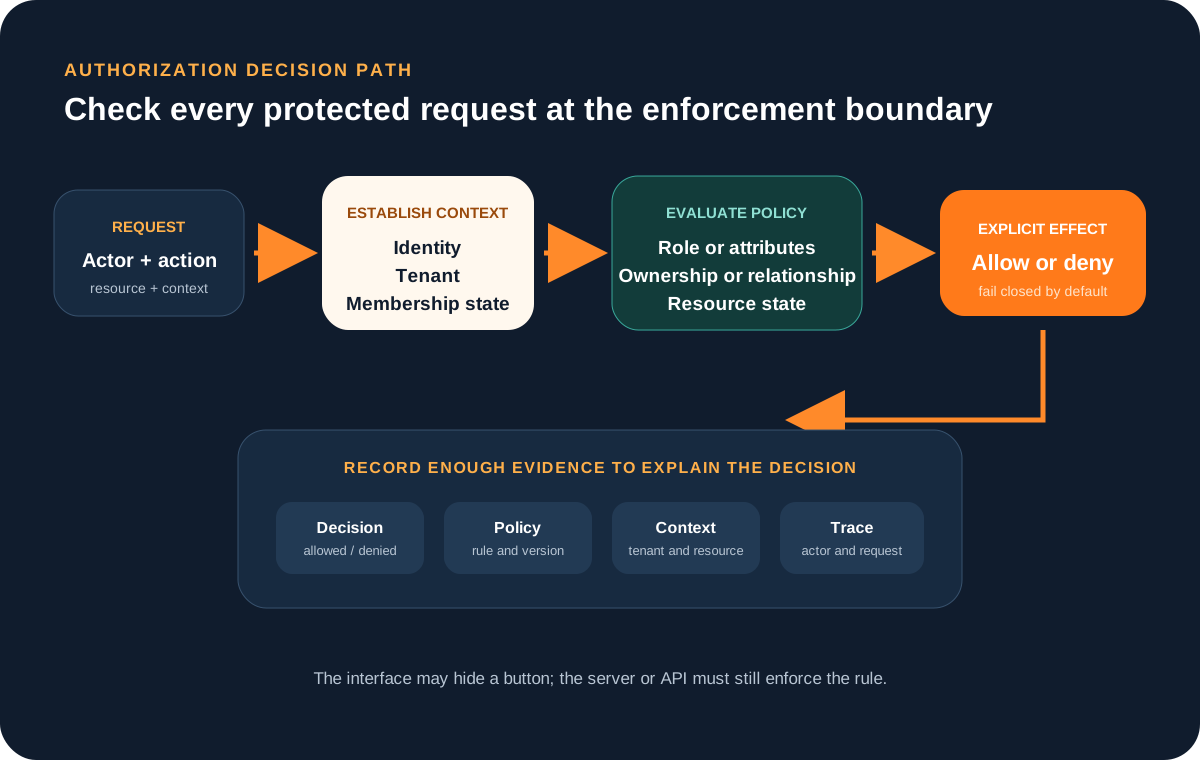
The OWASP Authorization Cheat Sheet recommends least privilege, deny by default, validation on every request, appropriate logging, and automated tests. Define safe denial behavior as a requirement: do not leak whether another tenant's object exists, do not partially perform a batch, and do not fall back to broader access when policy data is unavailable.
Decide whether policy remains close to application code or moves to a centralized decision service. Centralization can improve consistency and auditability for many APIs, but it adds dependency, latency, caching, rollout, and availability decisions. Select the boundary from complexity and operating needs, not from a fashionable architecture diagram.
Design the access lifecycle and support exceptions
Permissions are administered over time. Define who can invite a user, assign a base or custom role, approve elevated access, set expiry, review access, revoke membership, transfer ownership, and recover a locked organization. Specify what happens to sessions, API keys, scheduled work, owned records, and pending approvals after a change.
Treat internal support and impersonation as privileged product workflows. State who may initiate them, which tenants or resources are reachable, whether customer approval is required, what the user sees, how long access lasts, which actions are prohibited, and what audit record remains. A permanent universal support role is easy to implement and difficult to justify.
Log security-relevant decisions without copying secrets or sensitive content into the audit trail. Useful context can include actor, tenant, resource reference, action, effect, policy version, reason, request trace, and permission-change history. Define who can read the logs, how reviews happen, and what evidence a customer or operator can obtain.
Permissions are one part of the wider release boundary. Use the web application security requirements checklist to connect authorization with identity, APIs, data, secrets, dependencies, infrastructure, observability, and response evidence.
Write denied-path acceptance tests before implementation ends
For each important rule, write one allowed example and several denied examples. Test the same role in another tenant, an object with a guessed identifier, missing membership, revoked access, stale session, wrong ownership, disallowed state, expired delegation, and a new endpoint that has not been added to the policy inventory.
Add mutation and recovery cases: a role changes while a user is active; an organization owner leaves; an approval is already in flight; a bulk job contains one unauthorized record; a support session expires; policy storage is unavailable. Define whether the request is denied, rolled back, queued, or escalated, and which event proves the result.
Automated unit and integration tests are necessary, but product review still matters. Ask representative administrators to assign and revoke access, explain what each role can do, and recover from a mistake. If the permission model cannot be explained in the product, customers will compensate with overly broad roles and informal workarounds.
Finish with one permission release brief
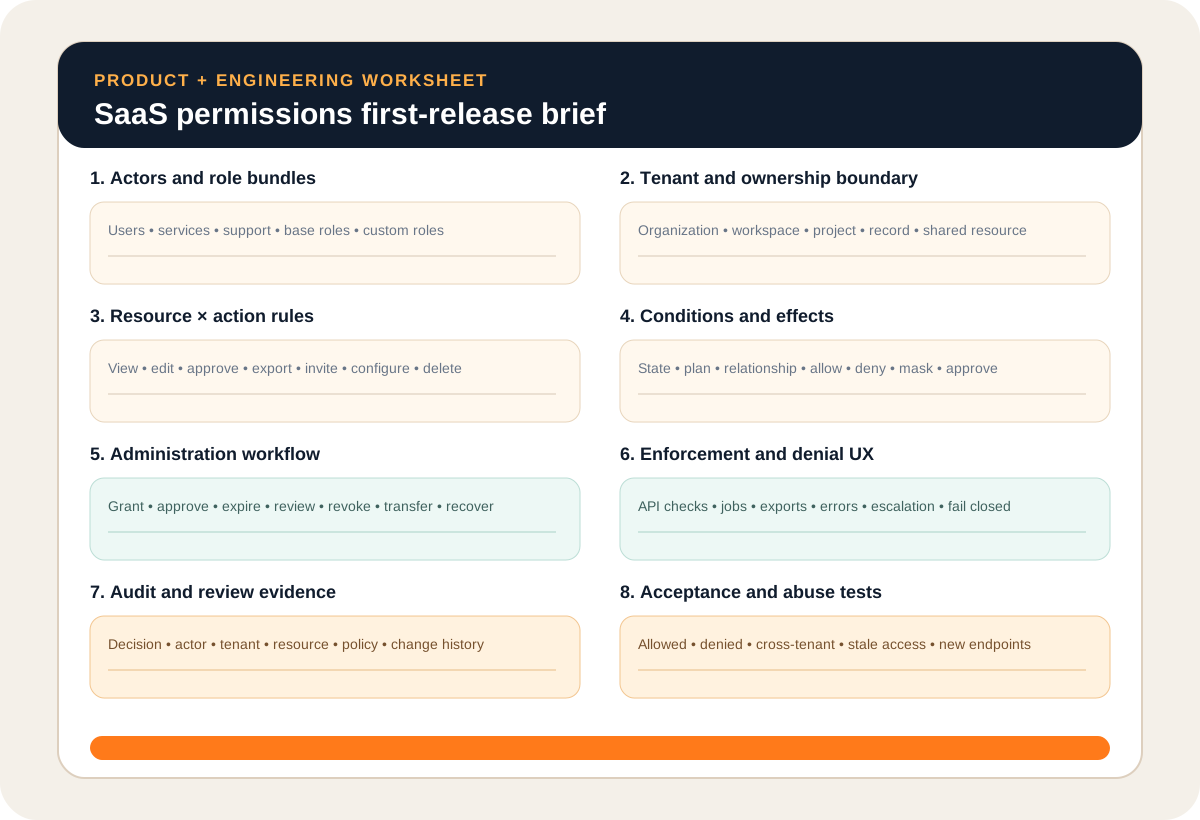
Keep the first release narrow enough to review. Record actors and base roles, tenant and ownership rules, protected resources and actions, contextual conditions, administrative lifecycle, denial behavior, enforcement points, audit events, and acceptance tests. Link every rule to an owner and a real workflow example.
Before approving development, ask three questions: can the policy distinguish two users with the same role in different contexts? Does every protected server path enforce the same rule? Can the team prove both the allowed and denied outcomes? If not, the permission model is still a label set rather than a build-ready authorization design.
SaaS permissions requirements FAQ
What are SaaS permissions requirements?
SaaS permissions requirements define which actors may perform which actions on which resources, within which tenant or ownership scope, under which conditions, and with which allow, deny, approval, masking, or audit effect. They also define how access is granted, reviewed, revoked, enforced, logged, and tested.
Is RBAC enough for a SaaS application?
RBAC is often a useful base when job functions are stable, but it may not express tenant membership, resource ownership, plan entitlements, approval state, geography, time, or relationships cleanly. Many products use roles for coarse access and attributes or relationships for contextual decisions rather than creating a new role for every exception.
What is the difference between authentication and authorization?
Authentication establishes who or what is making a request. Authorization decides whether that identified actor may perform the requested action on the specific resource in the current context. A successfully authenticated user can still be unauthorized for another tenant's data or a privileged action.
How should multi-tenant permissions be tested?
Test allowed and denied paths at the server or API boundary, including same-role users from different tenants, object identifiers that belong to another tenant, role changes, revoked membership, stale sessions, bulk operations, exports, background jobs, support impersonation, and newly added endpoints. Keep product-level acceptance examples alongside automated unit, integration, and security testing.
When should a SaaS product use ABAC or ReBAC instead of RBAC?
Consider attribute-based or relationship-based rules when access depends on dynamic context such as tenant membership, resource ownership, project membership, record state, subscription tier, time, location, or a relationship between the actor and resource. Use the simplest model that expresses real rules without role explosion, and test the combined policy explicitly.