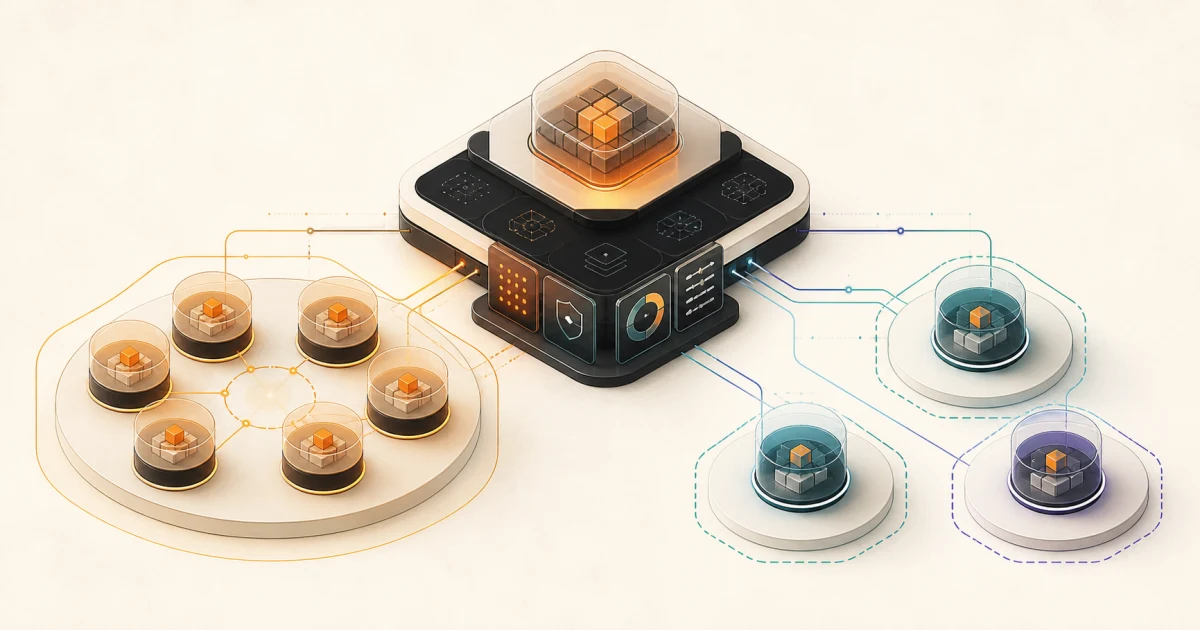
The short answer: isolate by requirement and layer
Choose pooled multi-tenancy when many customers can safely share resources and the product benefits from fast onboarding, centralized operations, and one release path. Choose dedicated resources when a verified customer, workload, recovery, geography, or contractual requirement needs stronger separation. Use a hybrid model when only certain data, compute, or customer tiers need that boundary.
Do not make “single-tenant or multi-tenant” one irreversible database question. Define the tenant, state the isolation promise, then decide separately for identity, application compute, data, files, queues, search, analytics, integrations, secrets, logs, backups, and operations. Shared and dedicated resources can coexist behind one SaaS product and control plane.
Pool
Share selected resources while enforcing tenant context at every boundary.
Silo
Give a tenant dedicated resources without creating a custom product fork.
Bridge
Combine pooled and siloed layers under shared onboarding and operations.
Compare silo, pool, and bridge as operating models
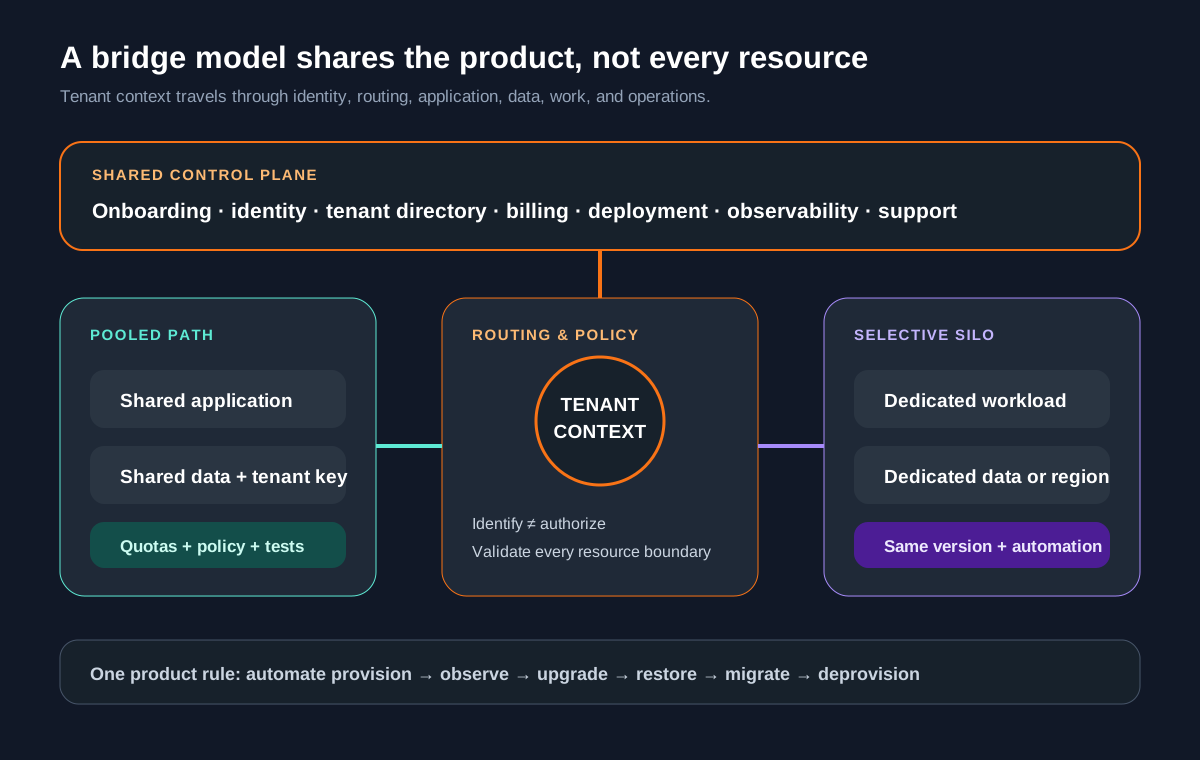
AWS’s SaaS Lens describes three useful patterns. A silo gives a tenant dedicated resources. A pool shares resources across tenants. A bridge mixes the two by layer or service. Crucially, a dedicated stack can remain SaaS when identity, onboarding, deployment, and operations are still managed as one product rather than as unrelated customer installations.
| Decision | Pooled | Siloed | Bridge |
|---|---|---|---|
| Resources | Shared with logical isolation | Dedicated per tenant | Chosen per layer or tier |
| Provisioning | Usually a record and policy change | Infrastructure deployment required | Route to a suitable stamp or pool |
| Release | One shared path | Coordinated across instances | One version, several footprints |
| Primary burden | Fine-grained isolation and fairness | Cost and fleet operations | Routing and policy complexity |
Product customization is a separate choice. Dedicated infrastructure does not require a private code fork, and pooled infrastructure can still support configuration. Preserve one product model unless a genuinely separate offering is intended; tenant-specific branches turn releases, testing, security fixes, and support into a growing fleet of exceptions.
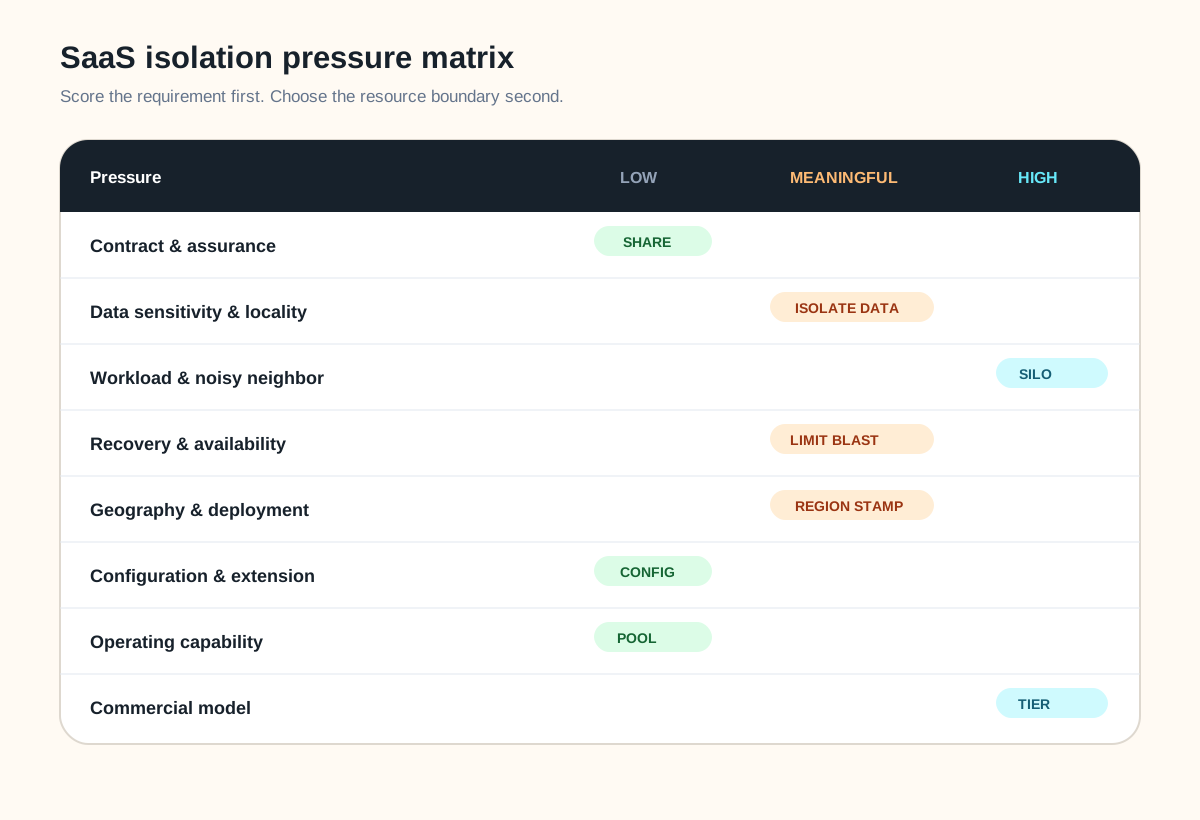
Measure eight kinds of isolation pressure
A customer request for “our own instance” is an input, not yet a requirement. Ask what risk or obligation it is meant to address, what evidence will prove the answer, and which layer needs the boundary. Score these pressures as low, meaningful, or high for the first credible customer set and expected tiers.
1. Contract and assurance
Record the exact security, audit, data-location, access, deletion, recovery, and evidence commitments. Do not assume a named industry or regulation automatically mandates one architecture; obtain qualified legal and security review for the actual obligations.
2. Data sensitivity and locality
Classify records, files, indexes, logs, backups, derived data, and support access. A dedicated database does not isolate data that is later copied into a shared search index, analytics store, file bucket, log stream, or operator export.
3. Workload and noisy-neighbor risk
Model typical and burst compute, storage, queue, search, export, and integration behavior. Decide which shared resources need quotas, scheduling, rate limits, workload classes, or dedicated capacity to protect service quality.
4. Recovery and availability
Specify blast radius, backup scope, restore granularity, recovery objectives, maintenance windows, and whether one tenant must be restored or upgraded independently. Test the promised recovery path; do not infer it from the database layout.
5. Geography and deployment
Identify regions, routing, latency, data movement, vendor availability, and operational access. Regional deployment stamps can group tenants without requiring a full stack per customer.
6. Configuration and extension
Separate safe configuration, customer-defined rules, plugins, integrations, and custom code. Running untrusted or customer-authored workloads can require a stronger execution boundary than ordinary tenant data.
7. Operating capability
Count provisioning, migrations, secrets, certificates, monitoring, incident response, backup, restore, upgrade, deprovisioning, and cost allocation per footprint. Isolation that cannot be operated consistently becomes a reliability risk.
8. Commercial model
Decide which tier funds dedicated resources and their operating burden, what the service commitment changes, and whether tenants can move between tiers. Do not make the base platform absorb an open-ended enterprise exception without a product rule.
Draw tenant context through every system boundary
Define what a tenant represents: a customer organization, account, workspace, household, department, or another business boundary. Define user membership, organization switching, invitations, role changes, offboarding, service identities, and support access separately. A user identity and a tenant are not interchangeable.
Microsoft’s multitenant request-mapping guidance makes the distinction explicit: the application must determine the tenant context and still validate that the request is authorized for that tenant. A subdomain, header, route, token claim, or selected workspace can help identify context, but none should grant access on its own.
Carry trustworthy tenant context into database queries, object storage, caches, search, background jobs, queues, webhooks, exports, analytics, observability, and administrator tools. AWS similarly notes that tenant isolation is separate from ordinary authentication and role authorization: an authenticated user can still cross a tenant boundary if resource access is not scoped.
If the platform exchanges tenant records with customer systems, use the integration ownership guide to define retries, reconciliation, credentials, and record ownership. If users also need a self-service workspace, the customer portal requirements checklist helps specify access and the internal exception path.
Test isolation and operate the fleet as one product
Include forbidden cross-tenant cases in automated tests. Cover guessed identifiers, copied URLs, direct API calls, stale cache entries, search results, file downloads, exports, background jobs, queued messages, analytics, webhooks, administrator actions, account switching, membership changes, restore, and deletion. Include concurrency and high-load cases that reveal noisy-neighbor behavior.
Infrastructure isolation does not replace product authorization. Use the SaaS permissions requirements checklist to define actors, resource actions, tenant context, role and attribute rules, access administration, audit evidence, and denied-path acceptance tests.
Once the operating model is chosen, use the SaaS tenant isolation requirements checklist to classify database, file, cache, search, queue, analytics, export, backup, and administrative paths and turn every boundary into positive and negative acceptance evidence.
For siloed or hybrid footprints, automate provisioning, configuration, migration, release, secrets, health checks, backup, restore, certificate renewal, observability, cost attribution, and deprovisioning. Maintain the same product version and policy unless a documented release strategy says otherwise. A manually maintained instance per customer is easy to start and hard to govern.
Make movement possible. Record triggers for promoting a tenant from pool to silo, returning it to a pool, splitting a hot workload, moving region, or changing the data partition. Define export, copy, verification, cutover, rollback, and deletion of the old footprint before the first urgent migration request.
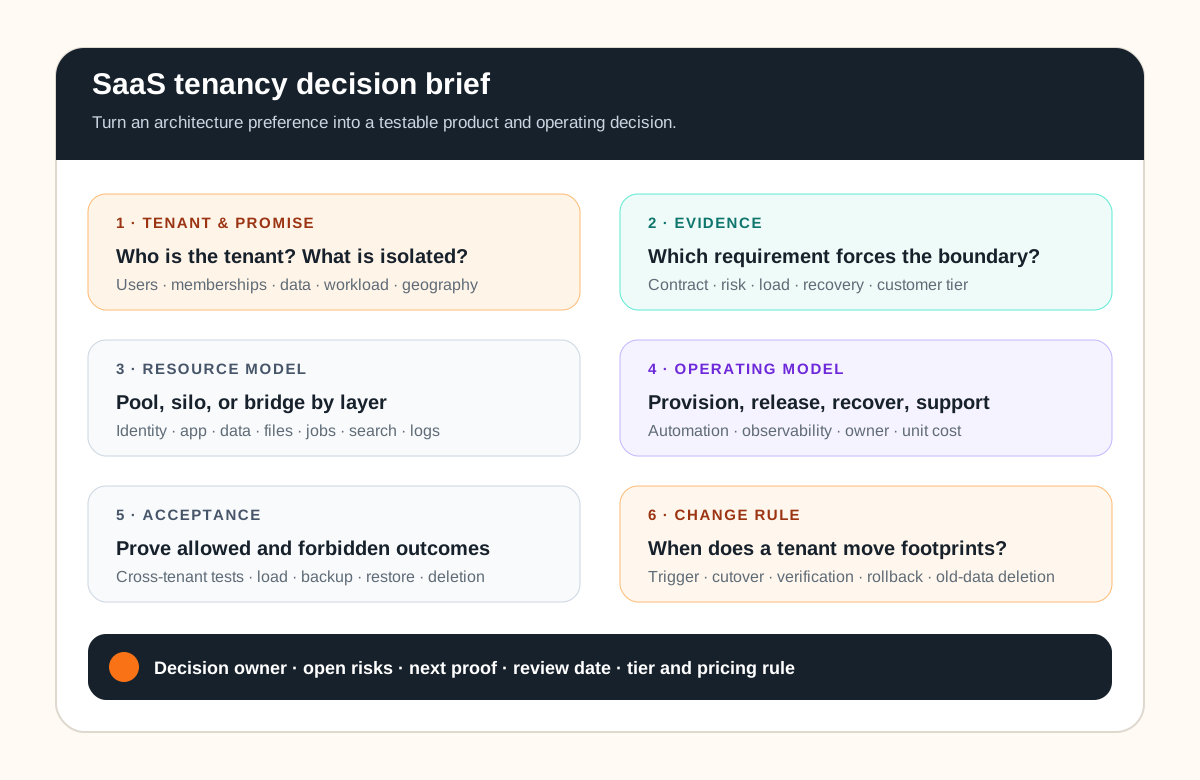
Complete the tenancy decision brief
Write the tenant definition, expected customer and membership model, isolation claims, regulated or contractual inputs, workload evidence, resource-by-resource sharing choice, provisioning and release model, operator access, backup and recovery boundary, forbidden tests, observability, pricing tier, migration triggers, unresolved risks, decision owner, and review date. Attach a small architecture spike when a risky control has not yet been proven.
The tenancy choice should support the smallest complete product release, not consume it. Use the MVP scope framework to protect the first learning loop. Leeonex’s SaaS platform development service is relevant when the customer model, application boundary, integrations, and operating architecture need to become one maintainable release plan.
When customer-specific presentation and behavior must remain on one maintained product path, the white-label SaaS product-core concept study maps brand, content, capability, integration, and delivery variation into a versioned configuration workflow with preview, approval, observation, and rollback.
The white-label SaaS requirements checklist turns that boundary into a buyer-ready brief covering branded domains, communications, tenant-safe configuration, releases, support, and offboarding.
When plan changes also control features, seats, or limits, the SaaS billing and entitlements concept study shows how to keep provider billing state, internal subscription state, and product access distinct while making retries, grace periods, operator exceptions, and reconciliation explicit.
Single-tenant vs multi-tenant SaaS FAQ
What is the difference between single-tenant and multi-tenant SaaS?
In a pooled multi-tenant model, multiple customers share some application or infrastructure resources while tenant context and enforced controls keep their data and actions separate. In a siloed model, a customer receives dedicated resources such as a database or full deployment. A SaaS product can combine both approaches by sharing the control plane and selected services while isolating particular data stores or workloads.
Is single-tenant SaaS more secure than multi-tenant SaaS?
Dedicated resources can create stronger infrastructure boundaries, but they do not make the whole system secure automatically. Identity, authorization, secrets, software supply chain, monitoring, patching, backup, and operational access still need controls. A pooled model can be secure when tenant context is established and enforced at every resource boundary and cross-tenant access is tested explicitly.
Should an early SaaS product start single-tenant or multi-tenant?
Start from the customer model and credible requirements, not a universal default. A pooled model can simplify onboarding and shared releases when many similar tenants are expected. A small number of demanding customers may justify automated silo deployments. Many teams benefit from a shared product and control plane with explicit tenant context, then introduce targeted isolation only when evidence or a commercial tier requires it.
Can a SaaS platform offer both pooled and dedicated tenants?
Yes. A hybrid or bridge model can place standard tenants in pooled resources and selected tenants in dedicated databases, workloads, regions, or full stacks. The product still needs one managed onboarding, identity, release, observability, support, and billing model so dedicated environments do not become unrelated custom installations.
What should be tested in a multi-tenant SaaS application?
Test tenant discovery, account switching, role changes, direct object and API access, background jobs, caches, search, files, exports, analytics, support tooling, webhooks, logs, backups, restore, deletion, rate and resource limits, noisy-neighbor behavior, and administrator actions. Include forbidden cross-tenant cases, not only successful workflows.