
The short answer: make assumptions and evidence comparable
A software development RFP should give every credible partner the same problem, user, workflow, constraint, and decision context. It should ask each partner to return a proposed release boundary, delivery approach, evidence, assumptions, exclusions, ownership, risks, and commercial structure in the same format. That is what makes proposals comparable.
Do not turn the RFP into a giant feature inventory or an architecture written before discovery. Be precise about the work and proof you need, then leave room for suppliers to question the solution. A useful response may recommend a smaller release, a risk spike, configuration instead of custom code, or no build yet.
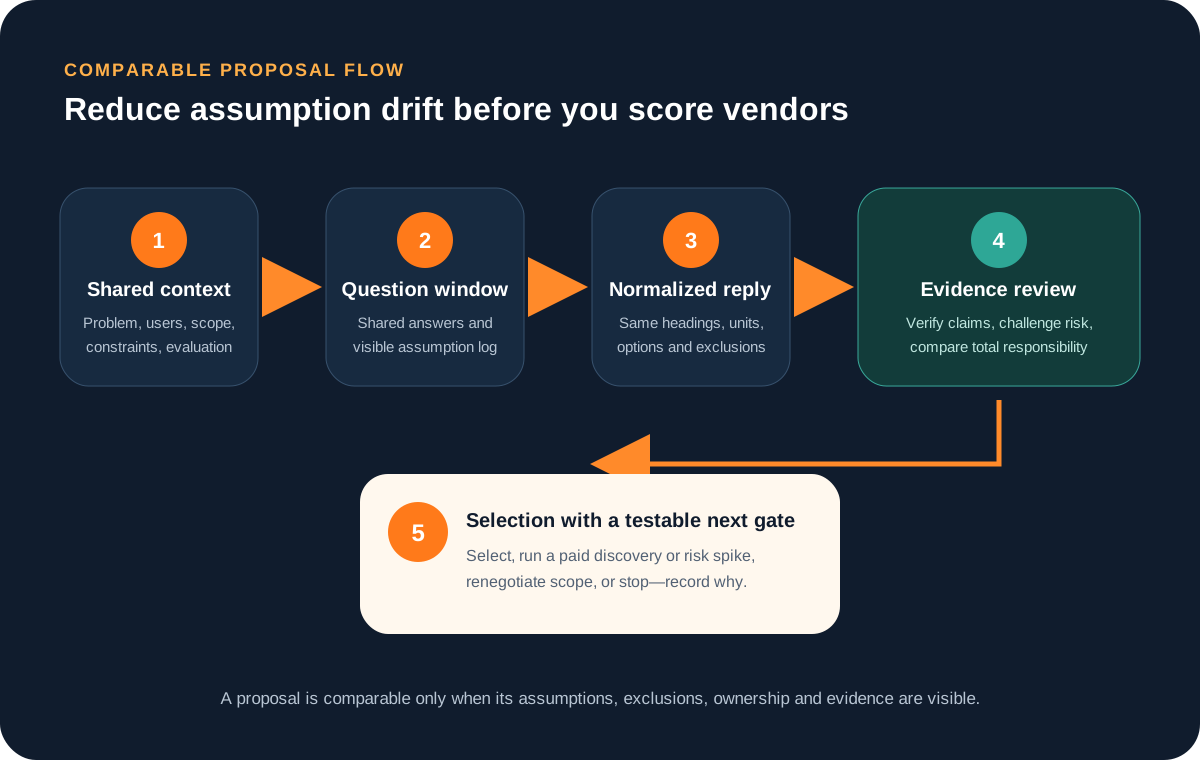
Shared context
One buyer brief and question log.
Comparable evidence
The same response fields and units.
Testable next gate
Select, discover, spike, resize, or stop.
Use an RFP when comparison needs structure
An RFP is useful when several stakeholders must compare suppliers, when governance requires a documented process, or when the build has enough integration, data, security, migration, or operating complexity that an informal quote would conceal important assumptions. It creates a shared record of what was asked, learned, offered, excluded, and selected.
A formal RFP is often excessive for one focused workflow and one decision-maker. In that case, keep a two-page buyer brief and run structured conversations. If the team still does not know whether the problem is worth solving or what the first useful flow is, complete a software discovery phase before asking vendors to commit to a build.
Separate qualification from proposal work. First verify service fit, availability, relevant technical context, communication access, and any non-negotiable procurement conditions. Ask only plausible partners to invest in a detailed response.
Build the RFP around eight evidence lanes
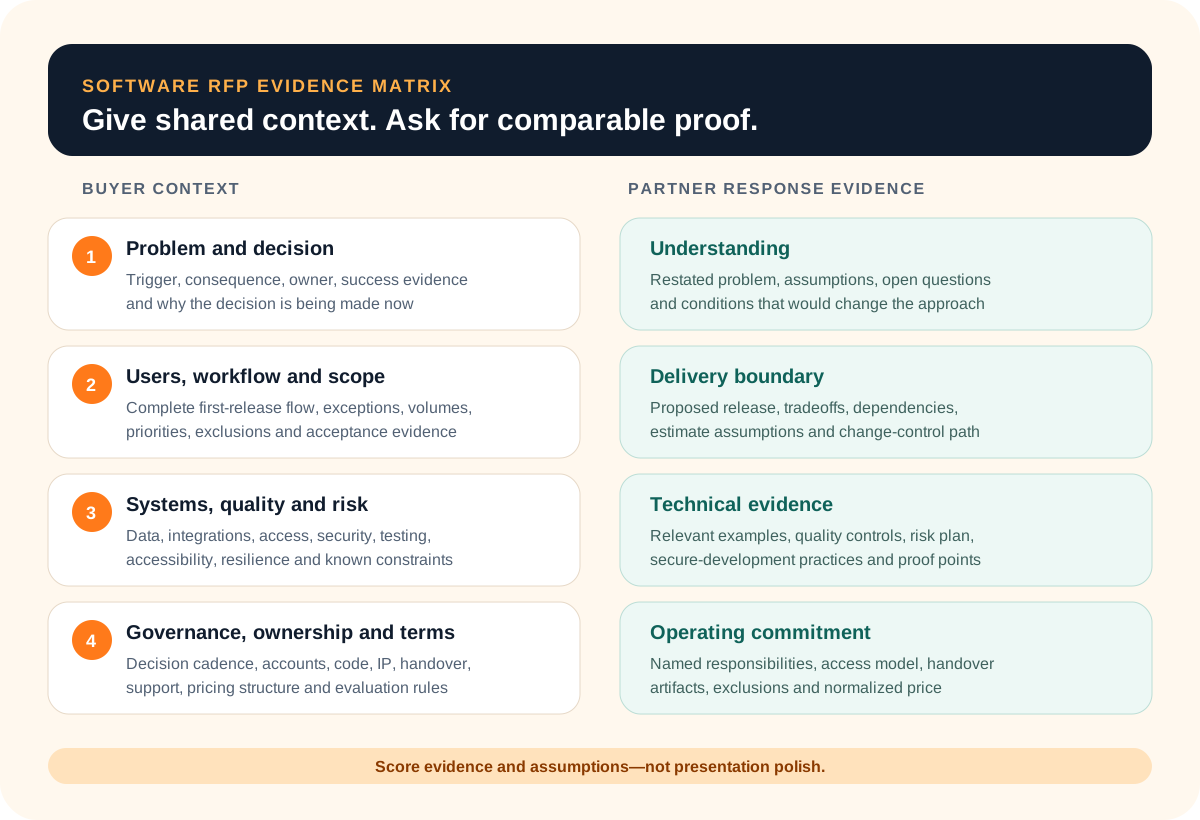
| Lane | Buyer provides | Partner returns |
|---|---|---|
| Problem | Trigger, consequence, owner, evidence of value | Restatement, assumptions, challenge |
| Users and work | Actors, current flow, exceptions, volumes | User and workflow interpretation |
| Release | Required outcomes, priorities, explicit non-goals | Proposed boundary and tradeoffs |
| Systems | Data, integrations, access, legacy, migration | Dependencies, approach, uncertainties |
| Quality | Security, accessibility, reliability, acceptance | Controls, test evidence, risk plan |
| Delivery | Decision cadence, stakeholders, target constraints | Team, plan, governance, change path |
| Ownership | Required account, code, data and support control | Responsibilities and handover artifacts |
| Commercial | Budget boundary and comparison rules | Normalized price, assumptions, exclusions |
Describe the decision and workflow before the feature list
Start with why this procurement exists. Name the business trigger, affected users, current workaround, consequence of leaving it unchanged, decision owner, and evidence that would count as a useful outcome. Then map the complete first-release workflow: entry, normal path, important exceptions, approvals, notifications, recovery, support, and exit.
Distinguish outcomes from candidate features. “An operator can resolve a rejected order without engineering help” gives a vendor room to propose a solution. “Build an event-driven workflow engine” prescribes architecture without explaining the work. Use the MVP scope checklist when a long backlog needs to become one complete learning loop.
State volumes and variations where they change design: number and type of users, peak requests, record size, retention, regions, languages, device or offline needs, external systems, and migration sources. Label unknowns. A vendor can price an uncertainty more honestly when it is visible than when it is buried inside “standard integration.”
Ask every partner to answer in the same decision-shaped format
Require a concise response under fixed headings: understanding, proposed release, solution outline, dependencies, delivery team, governance, quality controls, risks, assumptions, exclusions, buyer responsibilities, handover, support, timeline logic, and commercial breakdown. Permit alternatives, but require each option to use the same headings and units.
Ask the partner to separate known scope, provisional allowance, and unresolved discovery. If commercial certainty matters, compare the actual uncertainty before choosing a contract. The fixed-price versus time-and-materials guide explains why a single total can hide very different scope and change assumptions.
Include a shared clarification period. Publish material answers to every invited supplier, update the brief when the answer changes the requirement, and keep an assumption log. A vendor that asks focused questions may be reducing delivery risk; silence is not proof that the brief is complete.
Make quality, security, and operating ownership answerable
Replace vague requests for “best practices” with evidence questions. Ask how requirements become acceptance criteria, which checks run before release, how defects and vulnerabilities are handled, which environments and accounts the buyer controls, what is monitored, how incidents are escalated, and what artifacts make another team able to operate the system.
Use the software acceptance criteria checklist to require observable outcomes, representative conditions, retained evidence, issue disposition, and an authorized acceptance decision before proposals turn into delivery plans.
The NIST Secure Software Development Framework organizes secure development into preparing the organization, protecting software, producing well-secured releases, and responding to vulnerabilities. Use it as a source of risk-based questions, not a checkbox claim. CISA's Software Acquisition Guide similarly frames acquisition as an ongoing dialogue about development, supply-chain, deployment, and vulnerability-management practices.
Define ownership explicitly: source repositories, cloud and store accounts, domains, credentials, data, designs, third-party licences, documentation, deployment automation, intellectual property, backups, logs, and support knowledge. Review legal terms with qualified counsel where needed. Pair the contract with verifiable handover evidence using the software project handover checklist.
Score the response, then verify the claims that could change the decision
Set evaluation criteria and weights before proposals arrive. Typical lanes include problem understanding, release judgment, technical fit, delivery access, quality and security, ownership, risk honesty, support, and commercial fit. Assign named evaluators and define what weak, acceptable, and strong evidence looks like for important criteria.
Do not add incompatible totals. Normalize the offered release, buyer responsibilities, included environments, licences, support, contingency, assumptions, exclusions, and pricing period. A lower bid for a smaller responsibility is not automatically better value. Likewise, a polished case study is not proof that the proposed team can handle your specific constraint.
Verify the claims that carry the decision: inspect relevant public work or a safe demonstration, meet the people expected to deliver, test communication, review sample artifacts, contact approved references when available, and run a paid discovery or technical spike for a high-consequence unknown. Record why the selected path won and what the first review gate must prove.
Use this worksheet as the RFP front page
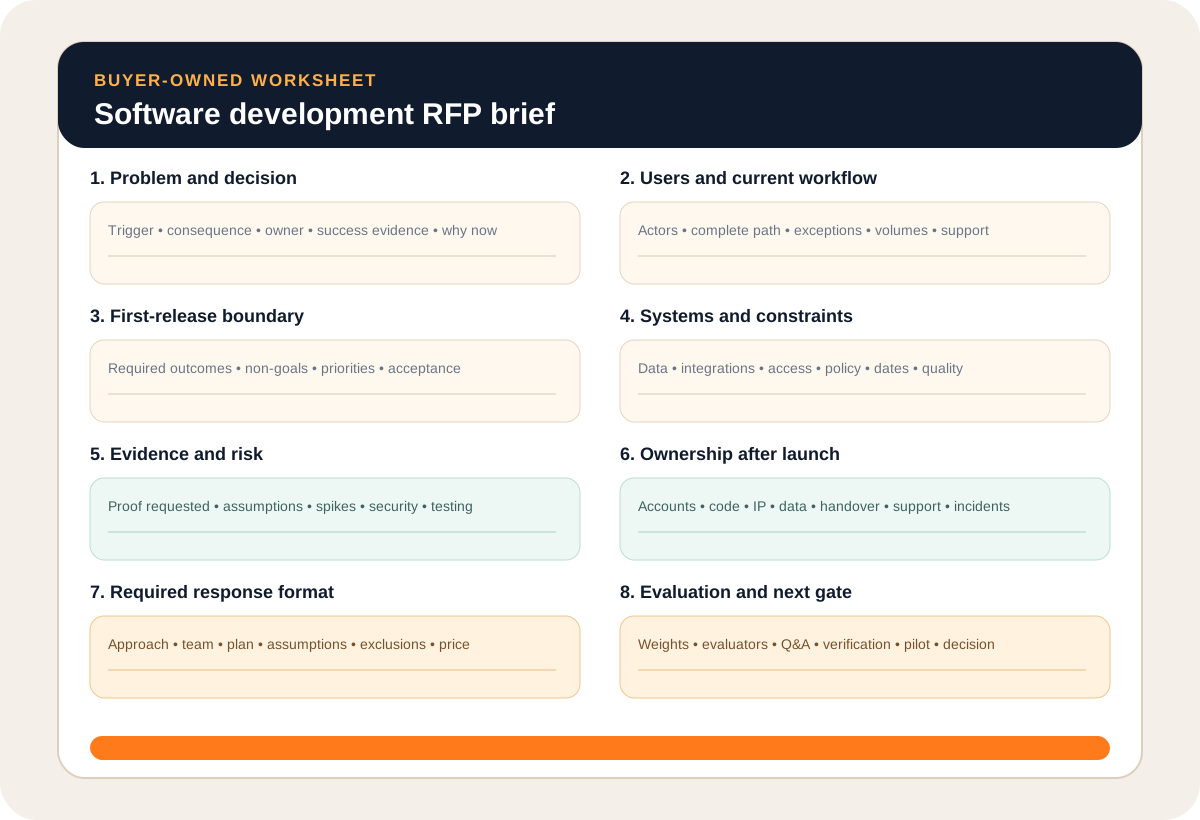
Fill each field in plain language and link to deeper evidence rather than pasting every document into the RFP. Mark confirmed facts, buyer preferences, hard constraints, and open questions separately. Include contact rules, question and response dates, required format, evaluation method, decision date, and the likely next gate.
Before release, ask: could two competent teams interpret the first release differently and both claim compliance? If yes, clarify the workflow or acceptance evidence. Could all vendors simply answer “yes”? If yes, ask for an artifact, example, owner, assumption, or demonstration that reveals how the promise would work.
Software development RFP FAQ
What should a software development RFP include?
A useful software development RFP includes the business problem and decision, target users and current workflow, first-release outcomes and non-goals, systems and data context, constraints and quality expectations, acceptance evidence, delivery and governance expectations, operational and intellectual-property ownership, commercial response format, procurement timetable, and weighted evaluation method.
How detailed should a custom software RFP be?
It should be detailed about the problem, constraints, evidence, and decision process, but cautious about prescribing an untested technical solution. A focused known workflow may need only a few pages. A regulated, integrated, or multi-party platform needs deeper security, data, procurement, and operating detail.
Should an RFP include a budget range?
Usually yes. A realistic range or commercial boundary helps vendors propose a proportionate solution and state tradeoffs. If procurement rules prevent disclosure, explain the expected response structure and how affordability will be evaluated so suppliers do not optimize against hidden constraints.
How many software development companies should receive the RFP?
There is no universal number. Invite only suppliers you could credibly select, give each the same information and question window, and keep the evaluation workload manageable. A short qualification stage can remove clear mismatches before asking several teams for expensive detailed proposals.
Is an RFP necessary for a small software project?
Not always. A concise buyer brief and structured discovery conversation may be enough when the scope is focused, the decision team is small, and formal procurement is unnecessary. Keep the same core fields—problem, users, constraints, release boundary, evidence, ownership, assumptions, and evaluation—even when the document is only one or two pages.