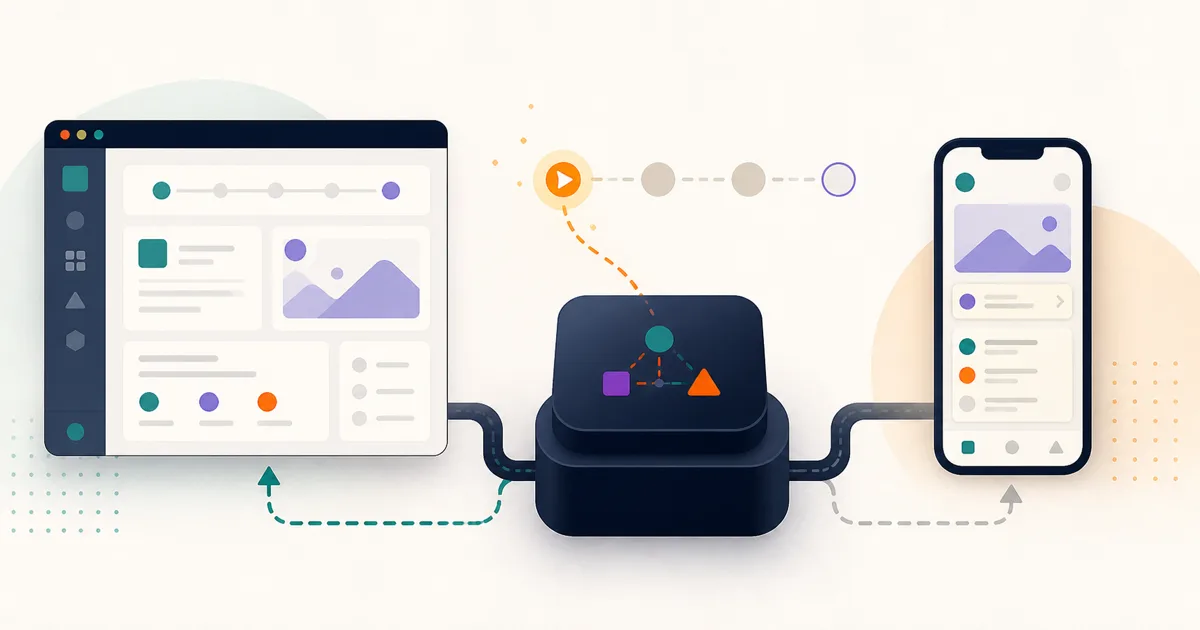
The short answer: build the surface the critical journey needs
Build a web app first when the core job works credibly in a browser, users benefit from link-based access or desktop input, and the first release needs broad reach with one primary client surface. Build a mobile app first when the product’s necessary advantage depends on device integration, reliable offline or background behavior, store distribution, or frequent on-the-go use. Consider a progressive web app when browser reach matters and installability or resilience helps—but verify every required capability and fallback on the target devices.
Do not ask which platform is generally faster, cheaper, or more engaging. Those answers change with scope. Ask where the named user performs the named job, what the product must access, how people discover and return to it, and which technical condition could make the experience non-credible. Then choose one primary release surface and define evidence for adding another.
Web first
Link access, desktop or mixed use, standard web capabilities.
Mobile first
Device-led job, strong offline need, or store-led distribution.
Staged
Shared foundation, one primary surface, explicit expansion gate.
Separate the four options before comparing them
“Website,” “web app,” “PWA,” and “mobile app” are often mixed in one conversation. A marketing site can explain and acquire while a web application handles signed-in work. A PWA is a web application enhanced for relevant platform behavior. An installed mobile app is distributed and operated through a mobile platform, whether its implementation is native or cross-platform.
| Surface | Access | Strong first-release job | Verify early |
|---|---|---|---|
| Responsive web app | URL in a browser | Forms, portals, dashboards, administration, collaboration | Responsive task flow, browser support, authentication |
| PWA | Browser, with supported installation | Web workflow needing resilience or app-like return path | Capability support, offline states, install experience |
| One-platform mobile app | Target platform distribution | Focused audience and device-dependent evidence | Store path, device matrix, second-platform assumption |
| Multi-platform mobile app | iOS and Android distribution | Mobile-first audience requiring both platforms | Sharing boundary, platform QA, release operations |
These surfaces can coexist, but every additional client adds design states, accessibility checks, authentication behavior, analytics, testing, release work, support paths, and upgrade ownership. “Both” is a scope decision, not a neutral answer.
Score one critical journey, not the whole product idea
Choose the first end-to-end job that must feel credible: inspect a site and attach evidence, approve an order at a desk, check in at a venue, review a team dashboard, or coordinate a field visit. Score that journey from 0 to 2 across the pressures below. Zero favors a browser-first test, one needs investigation, and two creates genuine mobile pressure.
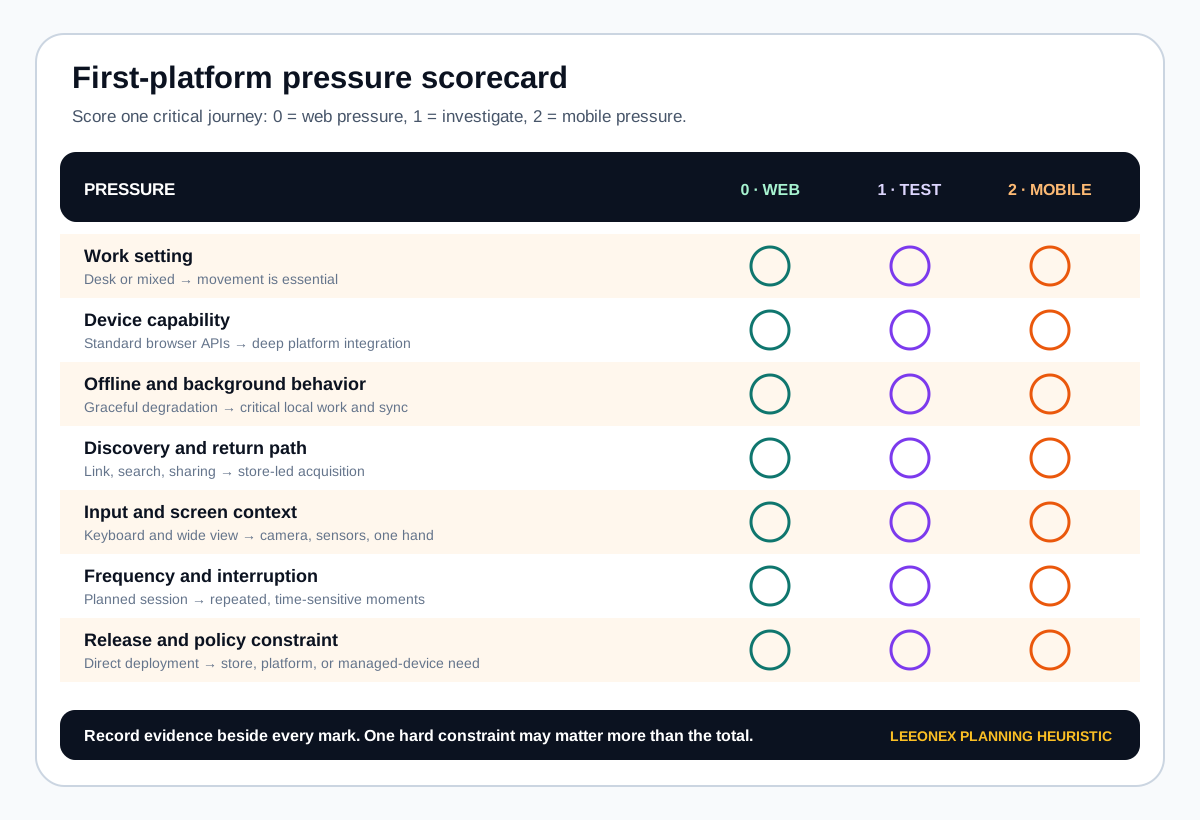
Do not let the total make the decision. A desk-based workflow with several soft mobile preferences can still belong on the web. One non-negotiable background, hardware, offline, or distribution requirement may justify a mobile-first route. Beside every score, record the target device, operating system, browser or store, adverse condition, and pass criterion.
The web is more capable than old comparison tables imply, but capability is not uniform. Google’s PWA capability guidance explicitly recommends checking feature support rather than expecting the same behavior on every platform. MDN’s progressive web app guide likewise calls for feature detection and acceptable fallbacks.
Choose a release sequence, not a permanent platform identity
The first platform should reduce the most important uncertainty while keeping the next decision open. Set an expansion gate: evidence from task completion, repeated use, target-device behavior, support load, or a customer requirement that justifies another surface. Avoid vague promises to “add mobile later” without saying what must first be learned.
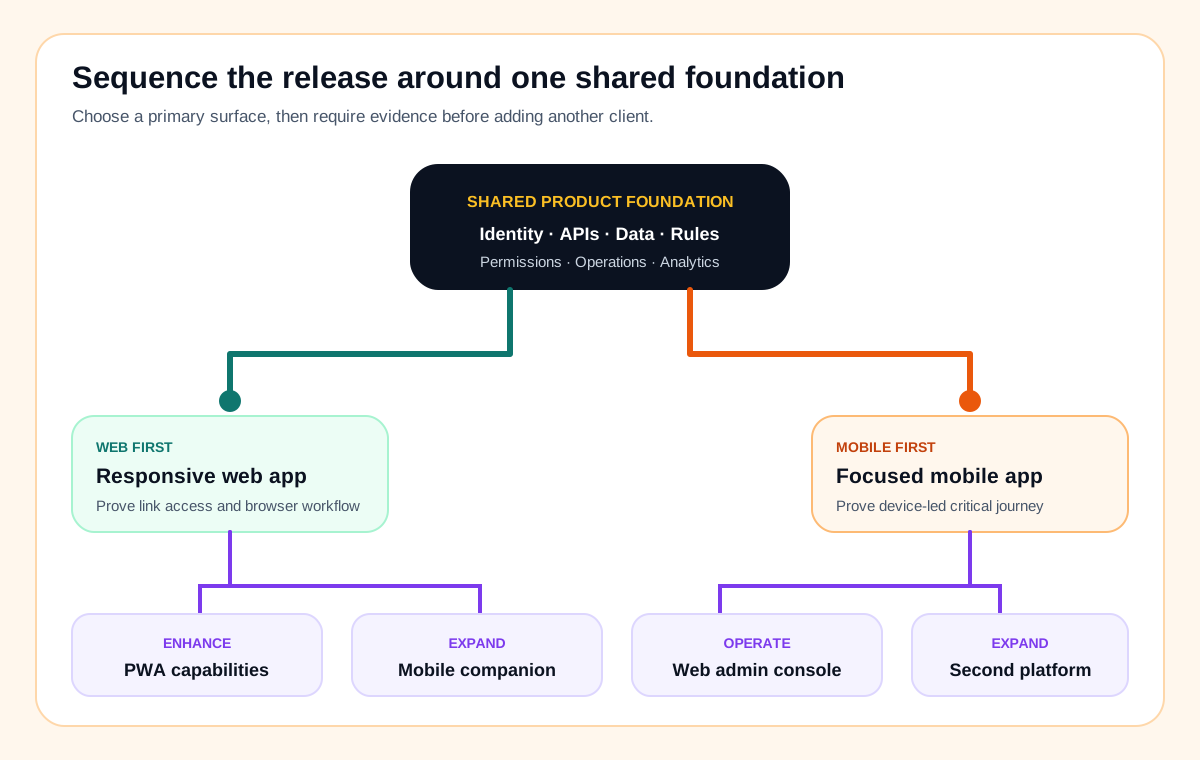
Four useful sequences
- Responsive web app, then PWA enhancements. Prove the browser workflow before investing in installation, offline states, or selected platform capabilities.
- Web app, then mobile companion. Keep complex setup and administration on the web while mobile handles a focused capture, approval, alert, or field journey.
- Mobile app, then web operations console. Start with the device-led user experience while giving the internal team only the operational tools required for launch.
- One mobile platform, then expand. Prove the device-dependent product in the strongest initial market, with the second platform treated as a new evidence-based decision.
If the product idea itself is not yet ready for production use, first compare a landing page, prototype, manual pilot, and MVP with the landing page or MVP decision guide. Platform scope should follow the evidence the next version must create.
Include distribution and operation in the product scope
A web release needs hosting, browser support, responsive and accessible behavior, observability, deployment, rollback, security updates, and a path for users to return. A mobile release adds signing, store records, privacy disclosures, platform configuration, device testing, release tracks, and update ownership. These are product operations, not polish after development.
Apple states that it reviews apps and app updates submitted through App Store Connect; its App Review overview also requires review information for products with special access or configuration. Model that workflow before release. For Android, target platform requirements and distribution rules also change over time, so verify current official guidance when defining the launch and maintenance plan.
Do not claim that one route is a fixed percentage cheaper or faster. Estimate the same critical journey across design, backend, client implementation, offline behavior, QA, security, distribution, analytics, support, and the next maintenance horizon. A narrow mobile workflow can be smaller than a complex web system; a two-store product can be more operationally demanding than one browser client.
Spike the requirement that could reverse the decision
Do not build half the application as a “prototype.” Test the smallest credible version of the hardest requirement on real target devices and networks: offline capture and sync, a background task, camera or Bluetooth behavior, a complex desktop interaction, large-file handling, accessibility with an assistive technology, or a required installation path.
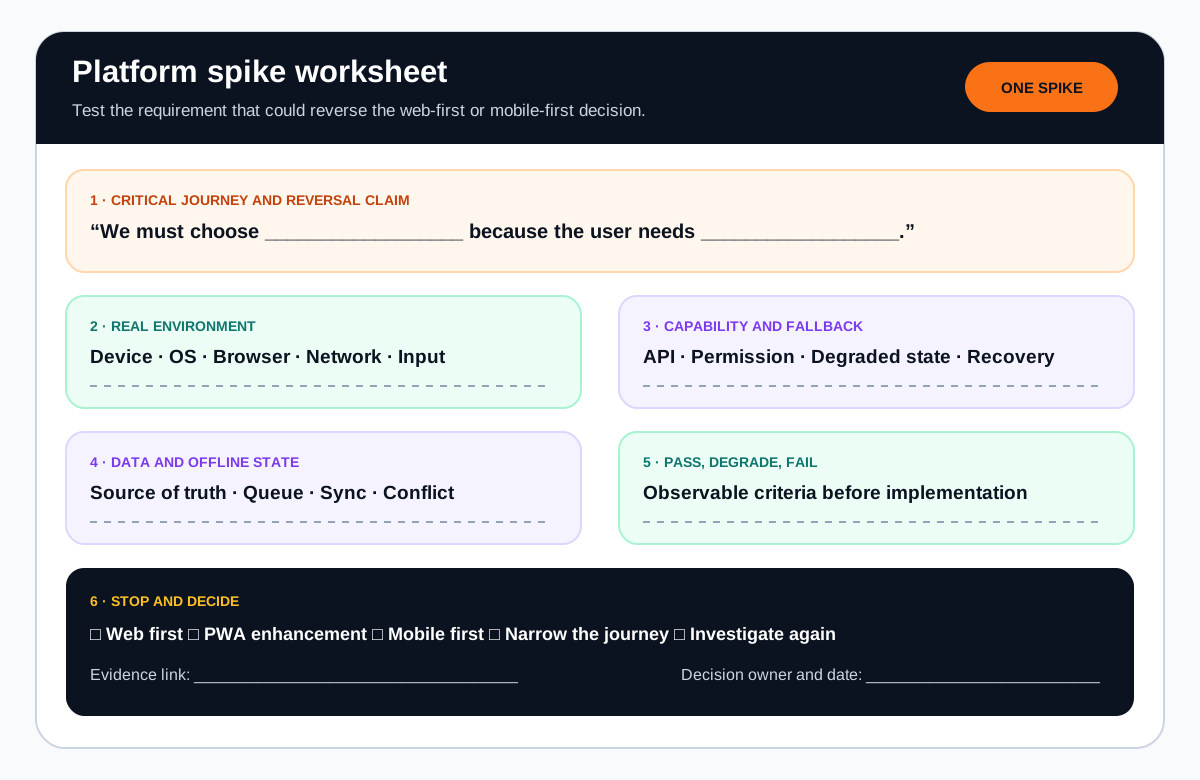
Freeze the environment and pass criteria before the test. Record supported, degraded, and failed states plus the fallback. End with a decision: continue web-first, add PWA behavior, choose mobile first, narrow the journey, or investigate a different architecture. Archive the evidence so the same claim is not debated from memory later.
Finish with a buildable first-platform brief
A useful brief names the primary user and context, one critical journey, acquisition and return path, target devices and environments, required capabilities, offline and degraded states, data and permission boundaries, distribution route, accessibility and quality criteria, shared backend needs, and the evidence required before adding another surface.
If mobile wins, the next question is how its iOS and Android layers should be built and shared. Use the native vs cross-platform app decision guide to map platform pressure and plan a targeted architecture spike. If web wins, Leeonex’s custom web application development route covers portals, platforms, and workflow applications; the mobile app development service covers focused mobile products and staged platform decisions.
Web app vs mobile app FAQ
Should most startups build a web app or mobile app first?
There is no universal default, but a web app is often a credible first candidate when users can complete the core job in a browser, discovery or sharing begins with a link, and the product needs fast learning across desktop and mobile. Choose mobile first when the critical journey depends on platform capabilities, offline or background behavior, store distribution, or repeated on-the-go use that a browser route cannot credibly provide.
Is a responsive web app the same as a progressive web app?
No. Responsive design adapts the interface to different screen sizes. A progressive web app is still a web app but adds relevant capabilities such as installability, service-worker behavior, and offline or resilient experiences. Capability support varies, so verify every required API and fallback on the target browsers and devices.
Can a web app use the camera, location, push notifications, or offline storage?
Modern web apps can use many device and platform capabilities, but support, permissions, background behavior, and installation details differ across browsers and operating systems. Do not decide from a generic feature checklist. Build a small test on the actual target devices and define an acceptable fallback.
When should a product launch web and mobile together?
Launch both only when the same first-release outcome genuinely requires both surfaces, the shared backend and operating model are ready, and the team can validate two client environments without weakening the core journey. Otherwise, define one primary surface and make the second a deliberate later decision or a thin companion.
If we choose mobile first, should it be native or cross-platform?
That is the next architecture decision. Compare the product’s device and performance pressure, experience differences, team capability, testing matrix, and expected sharing boundary. A mobile-first decision does not automatically require two native applications or guarantee that cross-platform is suitable.
A practical next step
Choose one credible first surface and protect the shared foundation.
Bring the user journey, usage environment, device requirements, acquisition path, and evidence you need from v1. Leeonex can map a web-first, PWA, mobile-first, or staged product scope.
Platform pressure first, real-device evidence where it matters, and no pressure to fund two product surfaces before the first one proves its job.