
The short answer: choose from product pressure, not preference
Choose cross-platform when iOS and Android need substantially the same core experience, the required device capabilities are supported, and one team benefits from sharing interface and application code. Choose native—or launch one platform first—when a critical product advantage depends on deep or new OS capabilities, materially different platform UX, demanding media or graphics, constrained background behaviour, or a requirement that fails a realistic cross-platform test.
Neither choice removes platform work. A cross-platform app still needs platform-specific permissions, builds, signing, store assets, release checks, and sometimes native modules. Two native apps can still share backend services, data contracts, product rules, design tokens, and test cases. The practical question is: which layers should this product share, and which layers should each platform own?
Cross-platform
Shared core flow, supported APIs, one team, both stores.
Native
Platform advantage, deep integration, or proven technical pressure.
Hybrid boundary
Shared where useful; native modules or screens where necessary.
Code sharing is not identical product behaviour
Modern frameworks deliberately support platform differences. React Native’s official platform-specific code guidance describes separate iOS and Android files when a component should differ. Its native platform documentation also explains how shared application code connects to native modules and components for capabilities the framework or its libraries do not expose directly.
That makes “one codebase” a spectrum, not a binary promise. Product teams should estimate and own the expected native edges rather than assume they are a failure of cross-platform development.
Use a platform-pressure matrix feature by feature
Score only requirements that are necessary for the first useful release. A possible augmented-reality roadmap item should not force today’s account and booking flow into a native build. At the same time, one critical background, camera, audio, health, Bluetooth, or graphics path can matter more than ten ordinary screens.
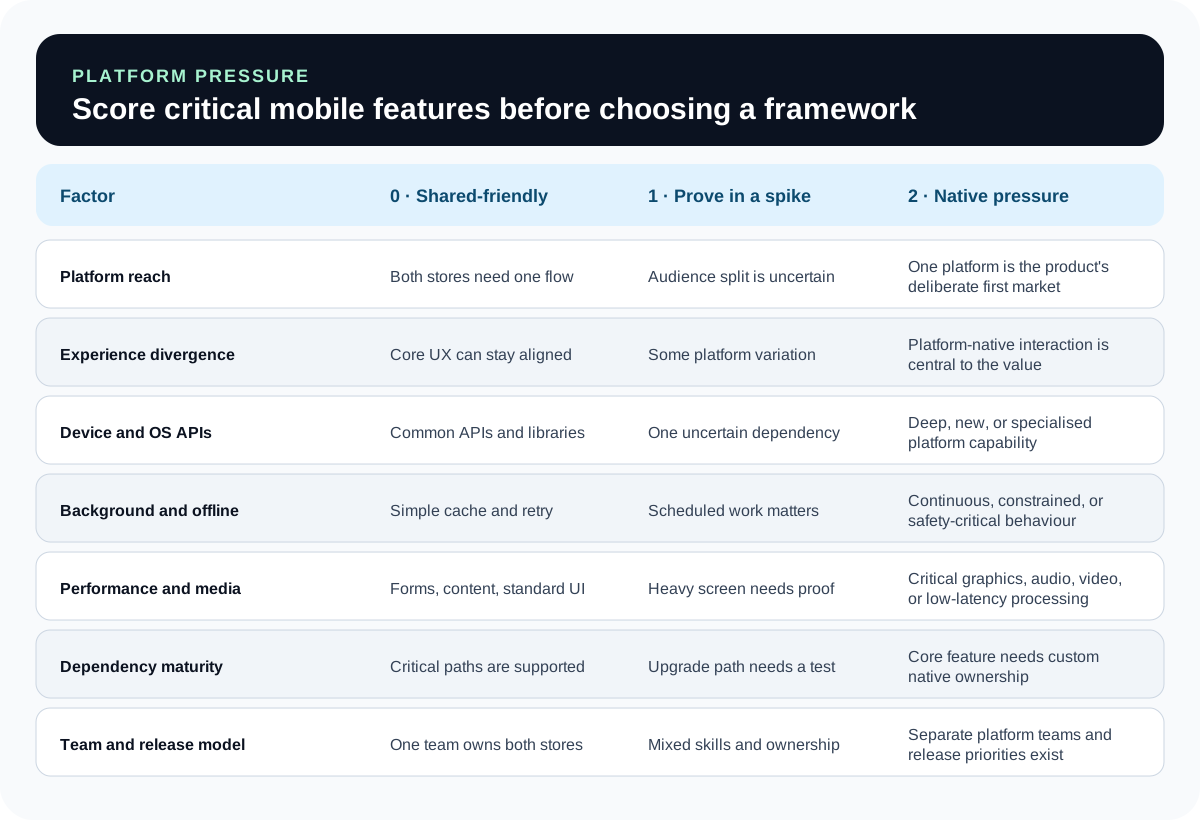
Interpret the score as a research plan
- 0–4: cross-platform is a credible default candidate. Confirm framework, library, accessibility, and release support.
- 5–8: build a targeted spike around every score of 1 or 2. A hybrid boundary or one-platform-first release may be clearer.
- 9–14: native or shared-logic/native-UI options deserve serious evaluation. Do not select them until the pressure is tied to first-release value.
The thresholds are a Leeonex planning heuristic, not an industry benchmark. Write the evidence beside each score: target device, OS version, API, library, user task, adverse condition, and pass criterion. A score without a testable reason becomes framework preference in a spreadsheet.
Compare the real architecture options
| Option | What it shares | Strong fit | Main ownership risk |
|---|---|---|---|
| One native platform | Backend and product contracts | Focused audience or platform-first evidence | Second platform is a separate future decision |
| Two native apps | Backend, specs, tokens, analytics | High platform pressure and independent teams | Feature parity and release coordination |
| Cross-platform UI and logic | Most interface and application code | Aligned flows and one multi-platform team | Framework, library, and native-edge maintenance |
| Shared logic, native UI | Domain, data, and networking layers | Shared rules with platform-led experiences | More complex build and team boundaries |
| Cross-platform with native edges | Core flow plus selected components | Mostly shared product with a few hard features | Unplanned native work accumulating invisibly |
Native can mean one platform first
A founder does not have to fund two independent applications to make a native choice. If target users strongly favour one platform or the product’s riskiest evidence lives there, a single-platform release can be the smallest credible test. The trade-off is explicit reach, not technical inferiority.
Leeonex’s native app development path is intended for platform-led requirements and focused store decisions. The cross-platform app development path suits products that benefit from a shared iOS and Android delivery surface while naming the native edges honestly.
Shared logic with native UI is a separate option
Some products share domain and data logic while retaining platform-native interfaces. Kotlin’s official native and cross-platform guide presents native UI, shared UI, and shared-logic approaches as distinct decisions. This can preserve platform experience while reducing duplicate business logic, but it creates its own build, debugging, and team-boundary work. Treat it as an architecture, not a compromise label.
Draw the sharing boundary before estimating
Start from the product foundation. Authentication, backend APIs, data contracts, business rules, analytics definitions, and support workflows often need to exist regardless of mobile framework. Then decide whether application state, navigation, and interface components should be shared. Finally, list the unavoidable platform edges.
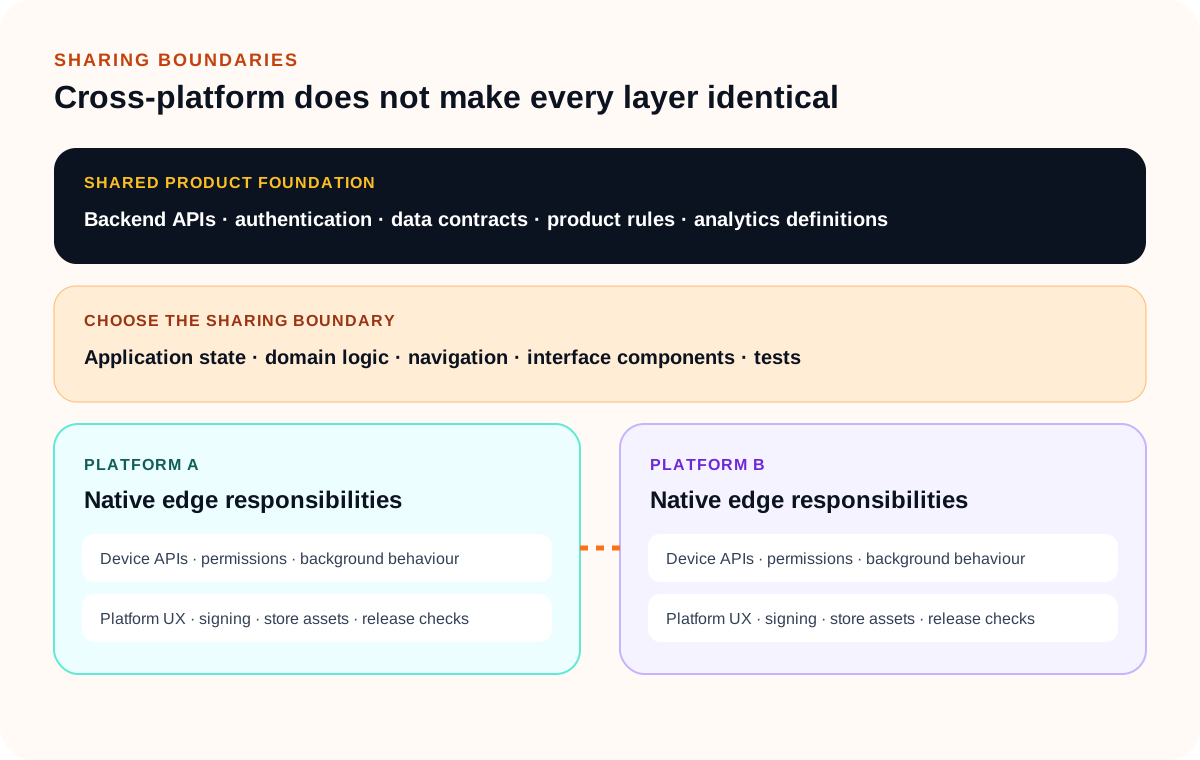
Estimate features by implementation path
For each first-release feature, record one of four paths: framework-supported, supported by a maintained dependency, small platform-specific implementation, or substantial native subsystem. Add the target devices, OS versions, permission behaviour, offline state, accessibility expectations, and test responsibility. Avoid a single “shared-code percentage”; a small native subsystem can carry more risk than many shared screens.
Before comparing implementation paths, use the mobile app requirements checklist to define the core journey, backend boundary, permissions, connectivity behavior, acceptance devices, release obligations, and owners. Those product decisions create the evidence this architecture comparison needs.
If offline completion is the product requirement—not just one test state—use the offline-first field inspection app concept study to map durable drafts, evidence capture, explicit sync states, safe retries, conflicts, and review before choosing how much mobile code to share.
If Bluetooth is the critical native edge, the Bluetooth companion app concept study shows how to narrow the decision to one device model, one platform, explicit connection states, a verified device action, and a recovery path before expanding platform coverage.
Also identify upgrade ownership. A dependency that works today still needs compatibility checks when the framework, build tooling, or mobile OS changes. Native implementation gives more direct control but transfers more code to your team. The useful comparison is total ownership of the critical path.
Prove the highest-pressure feature in a technical spike
A technical spike is a narrow, disposable or pre-production experiment. It should answer an architecture question, not quietly become the first half of the app. Choose the feature with the greatest combination of product importance and platform uncertainty.
A useful spike includes adverse conditions
- The real device capability and permission flow on representative iOS and Android hardware.
- Denied, interrupted, backgrounded, offline, slow-network, and retry states that affect the user’s job.
- The maintained-library route and the native-module route when both are plausible.
- Basic accessibility, responsiveness, and interaction quality for the critical screen.
- Build, automated-test, crash-diagnosis, and release implications for the team that will own it.
Background work deserves explicit testing because the operating systems control when and how it runs. Android describes WorkManager as the recommended library for persistent work and applies execution constraints; Apple provides several background-task strategies and may defer scheduled work based on system conditions. Review the official Android WorkManager documentation and Apple background-task guidance for the precise target behaviour. A framework cannot promise a scheduling guarantee the operating system does not provide.
Do not let the client framework hide the rest of the product
A mobile app usually depends on authentication, APIs, data storage, notifications, administration, analytics, support, and release operations. If those layers are missing, “native versus cross-platform” may not be the first architectural decision. Map the complete value loop and the evidence the first version must create. The landing page or MVP decision guide helps separate message, flow, delivery, and real-usage tests.
Leeonex’s mobile app development service begins with users, critical flows, store priority, and backend reality before recommending a platform path.
Both stores still require product-level QA
Shared code reduces some duplicate implementation, not the need to validate two operating environments. Test platform navigation conventions, permissions, keyboard and screen-reader behaviour, lifecycle transitions, notifications, deep links, offline and recovery states, supported devices, store configuration, and analytics. Release candidates should be evaluated on both platforms even when most source files are shared.
Compare total ownership, not a promised discount
Do not assume cross-platform is a fixed percentage cheaper or native always takes twice as long. Estimate the actual feature paths, team shape, platform-specific work, testing matrix, dependencies, build pipeline, store releases, monitoring, framework upgrades, and native-module ownership. Then compare options across the same first-release scope and maintenance horizon.
If this decision concerns an inherited or already-fragile application, platform selection is only one recovery question. The refactor-or-rewrite software rescue guide helps the team stabilize production, isolate the failing capability, and prove a safe migration slice before funding a broad rebuild.
Eight platform-choice mistakes to avoid
- Choosing from developer familiarity alone. Team skill matters, but the product pressure must remain visible.
- Using “performance” without a workload. Name the interaction, device, data, latency expectation, and measurement method.
- Counting screens instead of risk. One background or media subsystem can dominate twenty standard screens.
- Promising 100% shared code. Plan platform files, modules, configuration, signing, store assets, and QA.
- Treating native as automatically premium. Native code cannot repair unclear flows, weak APIs, or poor product decisions.
- Treating cross-platform as a shortcut around discovery. Shared implementation still needs a coherent product model.
- Testing only on simulators. Critical device, lifecycle, permission, performance, and background behaviour needs real hardware.
- Ignoring the maintenance owner. Framework upgrades, OS releases, dependency changes, crashes, and store reviews continue after launch.
Use this 45-minute architecture worksheet
Bring a product owner, mobile engineer or technical lead, backend owner, and the person responsible for release or support. Complete the worksheet for the first release, then select one spike rather than debating every future feature.
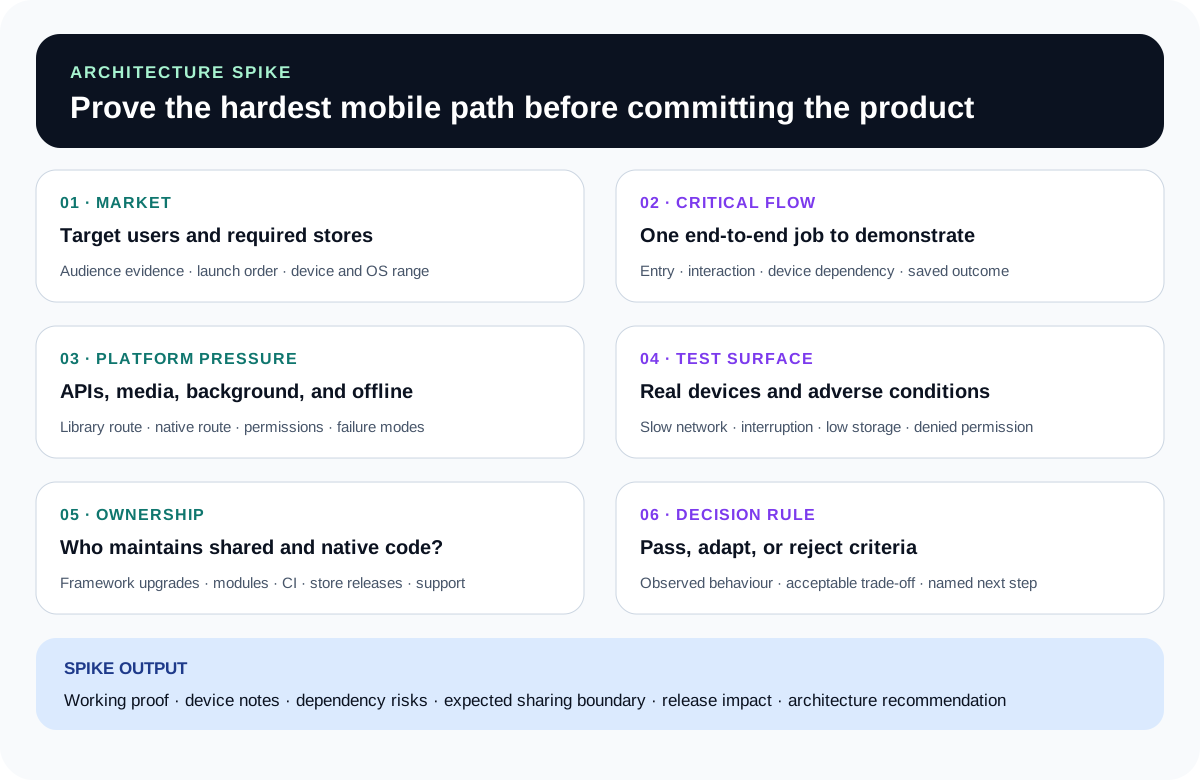
The output should be a working proof, device and OS notes, dependency risks, an expected sharing boundary, release impact, and a recommendation with rejected alternatives. If the spike does not test the highest-risk feature under realistic conditions, it cannot settle the architecture decision.
Frequently asked questions
Is cross-platform app development good enough for production?
Yes for many products, provided the chosen framework and libraries support the required device capabilities and the team tests both platforms as real products. Cross-platform code can still include platform-specific components and native modules; production suitability depends on the app's pressure points, not the label alone.
When should a startup choose native app development?
Native deserves strong consideration when one platform is the deliberate first market, the product depends on deep or newly released OS capabilities, the experience must diverge materially by platform, or a critical performance, background, media, graphics, or device requirement fails a realistic cross-platform spike.
Does cross-platform mean one codebase with no native code?
No. Shared code can cover much of the interface and application logic while platform-specific files, native modules, build settings, permissions, store assets, and release work remain. Plan the expected sharing boundary feature by feature instead of using a single percentage promise.
Can we start cross-platform and add native modules later?
Often, yes. Mature frameworks expose ways to connect platform-native APIs and views. But a native module adds implementation, testing, upgrade, and ownership work on each relevant platform. Identify likely modules during discovery and prove critical ones before committing to the architecture.
Should an MVP launch on one mobile platform first?
It can be the clearest path when the target users are concentrated on one platform or the product needs platform-specific evidence. Launching both stores is useful when reach across both is essential to the test. Choose from audience and evidence needs, not from a rule that every mobile MVP must support both immediately.