
The short answer: define one complete mobile journey and its operating boundary
A build-ready mobile app requirements document should connect the business outcome to one complete user journey, supported platforms, backend and data ownership, device capabilities, permissions, connectivity behavior, security, acceptance evidence, store release, and post-launch ownership. It should also state what the first release will not include.
Do not begin with a list of screens. Begin with a sentence such as “a field technician can receive an assigned visit, record evidence without reliable connectivity, and submit it for review.” That sentence exposes users, states, data, device access, offline behavior, backend work, operator needs, and a measurable definition of done.
Product
User, job, journey, states, exclusions, and evidence.
System
Backend, identity, data, integrations, and failure behavior.
Operation
Store accounts, support, telemetry, releases, and owners.
Use nine requirement layers instead of one feature backlog
A feature backlog says what somebody hopes to see. A requirement explains the decision, constraint, behavior, or evidence needed to deliver it. Work through the layers below for the core journey first. A later feature can remain a named exclusion without being forgotten.
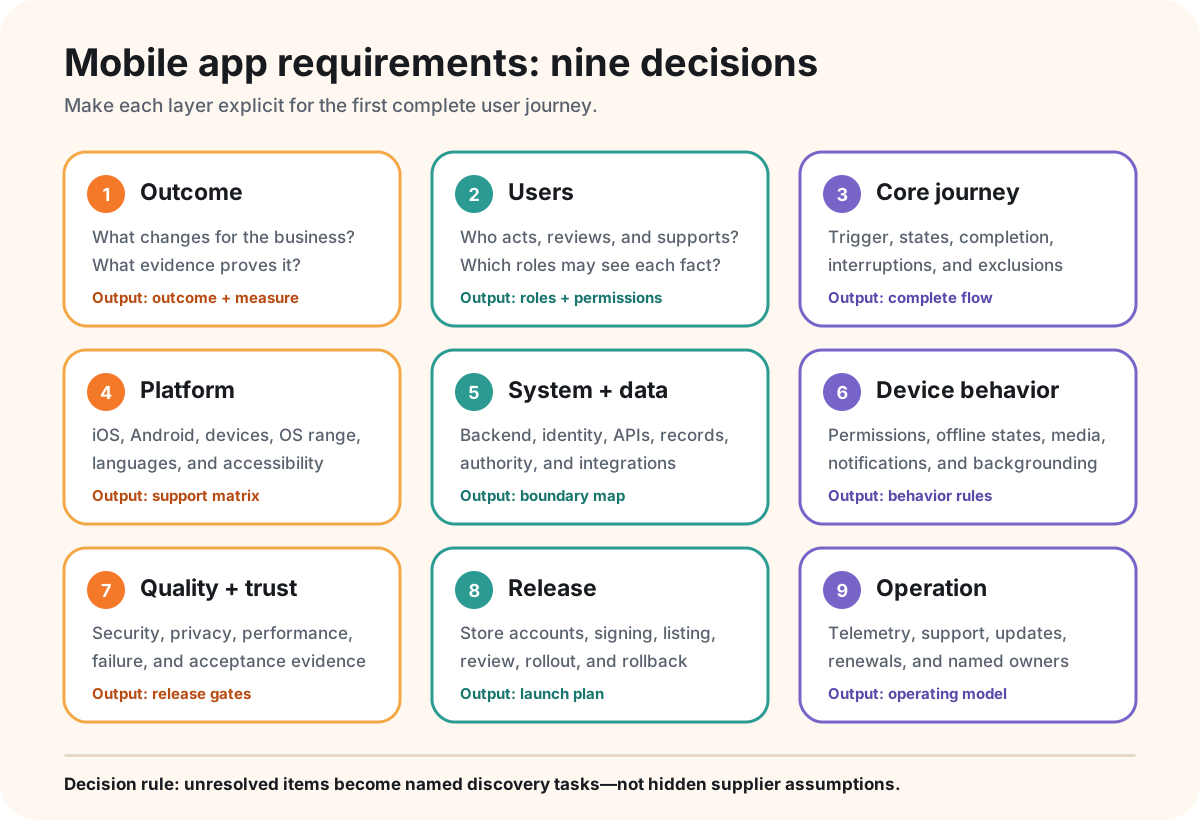
The matrix is not a demand for a large specification. One page of explicit choices is more useful than thirty pages of generic language. Write “photo required before completion; queue upload when offline; show pending state” instead of “support photo uploads.” The first statement changes design, storage, syncing, testing, and support.
Trace one core journey through states and exceptions
Describe the trigger, starting state, ordered user actions, system responses, completion state, and the evidence that proves success. Add the interruptions a phone makes likely: the user denies a permission, loses connectivity, leaves the app, changes devices, receives a call, retries a payment, or opens a stale notification.
| Decision | Weak note | Useful requirement |
|---|---|---|
| Outcome | Manage visits | Assigned visit reaches reviewed completion with evidence |
| Interruption | Works offline | Draft survives restart; pending sync is visible and safe to retry |
| Permission | Uses camera | Ask at capture; explain purpose; offer file upload when denied |
| Acceptance | Tested on phones | Named device and OS matrix passes the critical journey |
If the first unresolved choice is whether the product should be mobile at all, use the web-app-vs-mobile-app guide before producing this brief. If mobile is settled but the implementation approach is not, separate that decision with the native-vs-cross-platform framework. Product requirements should drive architecture, not be rewritten to defend an architecture chosen too early.
Scope the service around the app, not only the app client
Most useful mobile products depend on identity, APIs, a source of truth, notifications, uploads, third-party services, analytics, and an operator or support interface. State what already exists, what is usable, what must change, and which team owns each dependency. Include environments, sample data, credentials, rate limits, and known provider constraints.
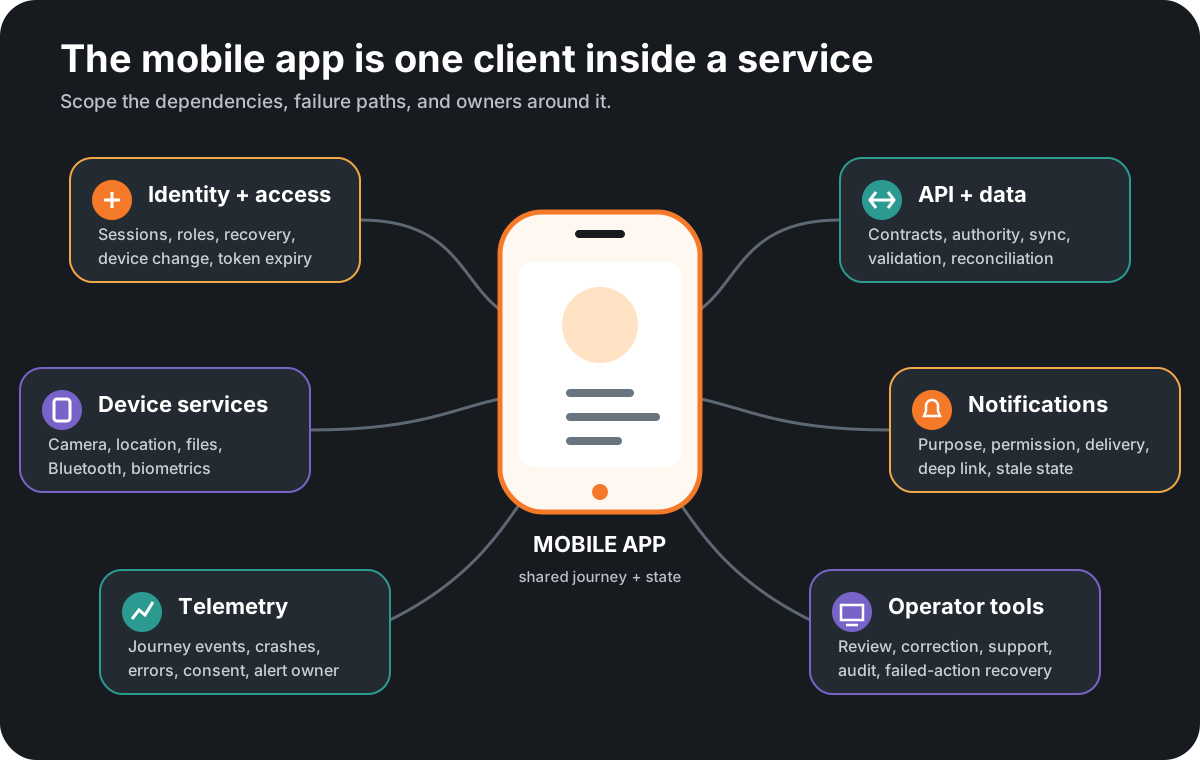
For each important record, name the authoritative system, stable identifier, permitted direction, freshness expectation, and conflict rule. If new endpoints, webhooks, or reconciliation jobs are required, use the API integration requirements checklist to define that boundary. Also include the smallest admin or support view needed to investigate failed actions without reading raw database rows.
Define product measurement as part of this boundary too. The mobile app analytics requirements checklist turns decision questions into event contracts, consent and identity rules, offline delivery behavior, and release evidence instead of treating an analytics SDK as a finished plan.
When the API, data, synchronization, background jobs, and operator tooling are still undefined, use the mobile app backend requirements checklist to turn one app journey into a versioned service contract with explicit failure and repair behavior.
Make device, permission, and connectivity behavior explicit
List the capabilities the core journey actually needs: camera, photos, location, Bluetooth, biometrics, notifications, background work, files, contacts, or health data. For each one, state when it is requested, why the user needs it, the minimum access level, behavior when denied, and whether the permission can be removed later without trapping the user.
Define online-only, cached-read, queued-write, and conflict behavior per action. Android's official offline-first architecture guidance separates reads, writes, synchronization, and conflict resolution because they carry different product consequences. “Offline mode” is too vague to estimate or accept.
If unreliable connectivity is part of the core journey, use the offline-first mobile app requirements checklist to define action classes, visible synchronization states, conflict rules, and transition tests before choosing the sync architecture.
- Name the minimum OS versions, device classes, orientations, screen sizes, languages, and accessibility settings to test.
- Decide what survives backgrounding, process termination, logout, token expiry, a device change, and an interrupted update.
- Set limits for media size, compression, upload state, local retention, mobile data use, and battery-sensitive work.
- Specify notification purpose, deep-link destination, duplicate behavior, expiry, and what users see when the target record changed.
If alerts are central to the journey, use the mobile push notification requirements guide to define permission, targeting, expiry, fallback, and the destination users reach after opening an alert.
Translate quality, security, and privacy into release evidence
Write acceptance checks for the critical journey, not “high performance” or “secure.” Include representative devices, network conditions, account roles, denied permissions, large or malformed inputs, interrupted sessions, error recovery, accessibility, and backend failures. Define which defects block release and who makes the final decision.
Use the mobile app accessibility requirements checklist to turn that broad accessibility line into journey scope, platform behavior, access-method testing, release evidence, and maintained ownership instead of relying on a final automated scan.
Current Apple App Review Guidelines require teams to plan for privacy disclosures, data use, permissions, account behavior, and review access. Android's core app quality guidance likewise treats stability, permissions, privacy, and device behavior as testable quality concerns. Review the current rules for the exact app category and launch markets; store policy is a product input, not a final submission chore.
For a security baseline, map sensitive data and mobile attack surfaces against the OWASP Mobile Application Security Verification Standard. Its control groups cover storage, cryptography, authentication, network communication, platform interaction, code, resilience, and privacy. Choose controls according to the product's data, threats, and obligations; a checklist does not replace a qualified security or legal review.
When sign-up, passkeys, biometrics, session expiry, sensitive actions, or lost-device recovery are in scope, use the mobile app authentication requirements checklist to define the complete identity lifecycle and its acceptance evidence.
Assign store, telemetry, support, and update ownership
Record the organization-owned developer accounts, signing and release access, bundle identifiers, package names, app listing content, privacy links, age or content declarations, review credentials, staged rollout approach, rollback or kill-switch options, and responsibility for responding to store feedback. Do not leave the client's distribution identity inside an individual developer's account.
Decide which events prove the core journey works without collecting unnecessary personal data. Define crash and error visibility, alert owners, support intake, diagnostic context, release notes, OS compatibility reviews, dependency updates, certificate renewal, and the time-sensitive services the team must maintain. “Launch complete” should mean somebody can support the product the next morning.
Complete a one-page brief before requesting comparable quotes
Use one brief per materially different user journey. Attach sketches, existing API documentation, sample records, brand assets, policies, and reference products only where they clarify behavior. Mark every unresolved item as an assumption, owner, and discovery task rather than allowing each supplier to price a different interpretation.
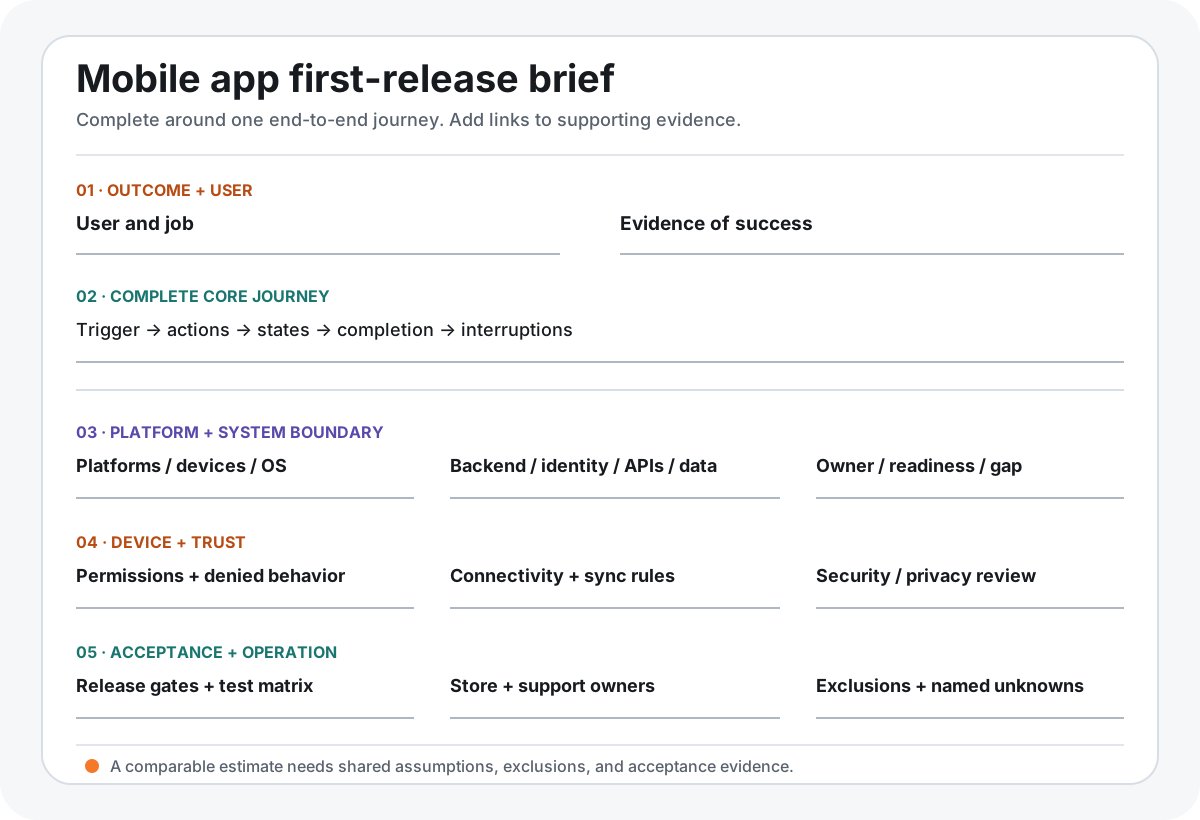
A supplier should be able to restate the core journey, identify the riskiest unknowns, show which backend or operational work is included, and explain the evidence that permits release. If the brief still describes a broad vision rather than a complete first outcome, narrow it before committing to development.
When the first mobile journey reserves scarce appointment capacity across both stores, the cross-platform booking integrity concept study shows how to separate search, expiring holds, idempotent confirmation, interrupted-result lookup, rescheduling, and support evidence before expanding into loyalty or waitlists.
For a product that is already live, continue with the mobile app maintenance checklist to define crash triage, OS and dependency work, store obligations, release evidence, access, and support ownership. For a new product, the requirements brief is the natural starting point for a mobile app scoping conversation.
Mobile app requirements FAQ
What should a mobile app requirements document include?
Include the business outcome, target users, one complete core journey, supported platforms and devices, account model, backend and data ownership, integrations, device capabilities, permissions, connectivity and offline behavior, accessibility, security and privacy, analytics, acceptance evidence, store release needs, support ownership, and a clearly excluded backlog.
Do I need separate requirements for iOS and Android?
Keep one shared product brief, then add platform-specific decisions where behavior, permissions, devices, design conventions, purchases, background work, or store policies differ. Do not duplicate the whole document unless the products genuinely have different users or workflows.
Should the backend be included in the mobile app scope?
Yes. State whether the backend already exists, which APIs are usable, where each fact is authoritative, how identity and permissions work, what the admin or support team needs, and which backend changes are part of the release. A polished client cannot compensate for an undefined service boundary.
How detailed should mobile app requirements be before getting an estimate?
The brief should be detailed enough to trace the core journey through screens, data, permissions, failure states, acceptance checks, and launch responsibilities. It does not need pixel-perfect designs or every future feature. Mark unresolved decisions as assumptions or discovery tasks so estimates remain comparable.
When is a mobile app brief ready for development?
It is ready when the team agrees on the first-release outcome, complete core journey, platforms, system boundary, sensitive data and permissions, connectivity behavior, acceptance devices and evidence, store owner, support owner, and exclusions—and the remaining unknowns have named owners and time-boxed validation tasks.