
The short answer: onboard to a demonstrated delivery capability
External development team onboarding is complete when the team can explain the product and system boundary, work through client-owned and reversible access, make a reviewable change, verify it in the real delivery path, and follow the release, diagnosis, recovery, and escalation rules without relying on one person's memory.
Do not measure onboarding only by accounts created, meetings attended, or days elapsed. Define capability gates and prove them with one deliberately chosen first change. This turns onboarding into delivery evidence while the blast radius is still small.
Controlled access
Owned, scoped, reviewed, removable.
Shared context
Outcome, users, boundaries, decisions.
Safe contribution
Build, review, release, observe, learn.
Build one control plane for the engagement
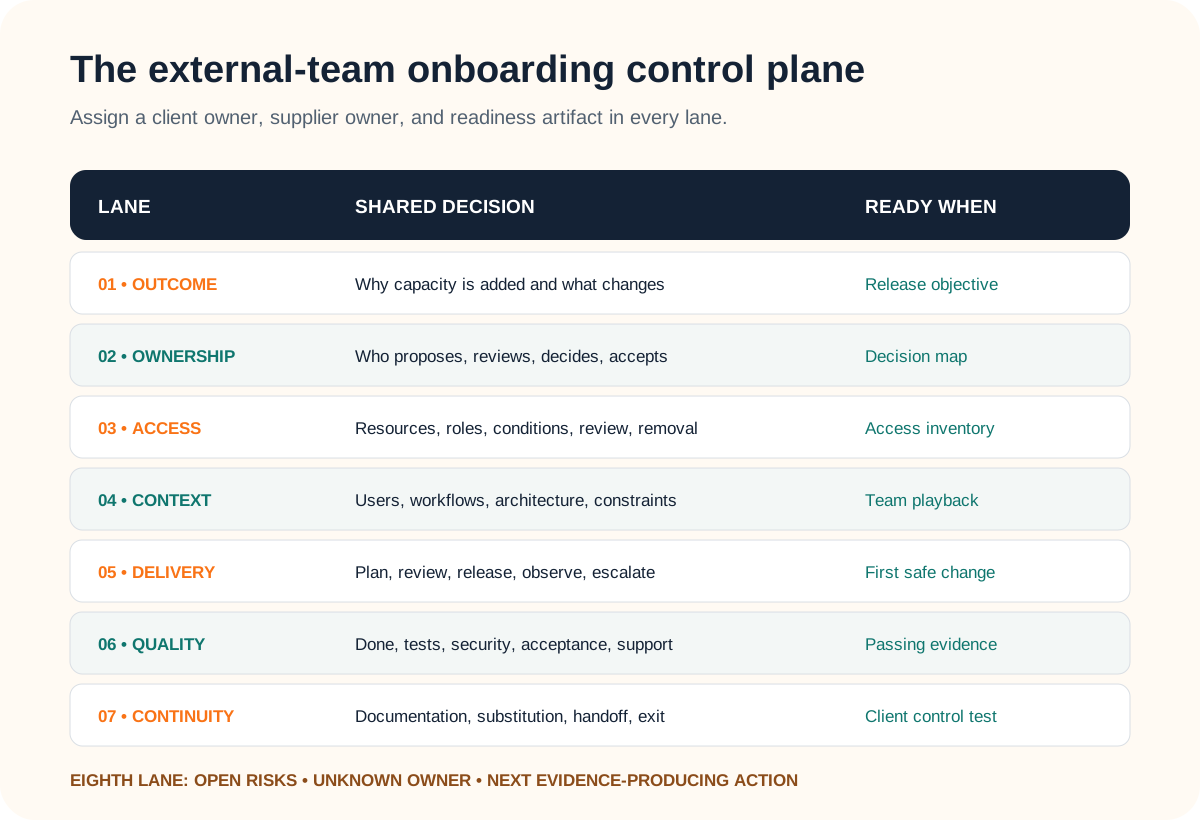
| Lane | Decision to record | Readiness evidence |
|---|---|---|
| Outcome | Why capacity is being added and what changes | One measurable release objective |
| Ownership | Who prioritizes, decides, reviews, and accepts | Decision and escalation map |
| Access | Which systems, roles, conditions, and expiry | Approved access inventory |
| Product | Users, workflows, constraints, non-goals | Team can explain the current boundary |
| Architecture | Services, data, integrations, environments, risks | System walkthrough and local build |
| Delivery | Planning, review, release, incidents, communication | Observed rehearsal or first change |
| Quality | Done, tests, security, accessibility, acceptance | Passing checks and reviewed evidence |
| Continuity | Documentation, substitution, handoff, removal | Client-controlled artifacts and exit test |
Assign a client owner and supplier owner to each lane. Shared responsibility is useful only when the decision path is named: who proposes, who reviews, who decides, and who operates the result. The staff augmentation versus project outsourcing guide helps settle those decision rights before onboarding begins.
Design access as a lifecycle, not a day-one favor
Inventory the repositories, ticketing, documentation, communication, design files, cloud accounts, environments, monitoring, analytics, support tools, data, and secrets the team may need. Classify each resource by consequence, name its client owner, choose the minimum initial role, and record who approves changes.
Microsoft's external-access planning guidance recommends documenting resource groups, risk profiles, owners, sign-in conditions, review cadence, and removal policies. Translate that principle to the actual identity provider and tools in use; do not assume every external developer needs production data or administrative access to begin.
Prefer organization-owned repositories and accounts to resources controlled by an individual or supplier. GitHub's organization guidance recommends team-based roles, limited administrative ownership, and organization-owned repositories. Record join, change, review, and leave events; test removal before it is urgent.
Access should expand through evidence. A developer may first need read access, a local test environment, and a non-production deployment path. Production diagnostics, customer data, secret management, or release approval can follow only when the role requires them and the relevant controls are ready.
Transfer product decisions, not only architecture diagrams
Give the team a concise product narrative: target users, their complete workflow, important exceptions, current business objective, evidence of value, constraints, non-goals, and the decisions already made. Pair documents with live walkthroughs where the team can challenge ambiguity and capture what the document missed.
The system map should connect user actions to interfaces, services, data stores, integrations, background work, environments, observability, and ownership. Mark fragile areas, known debt, support workarounds, data sensitivity, and boundaries that must not change without review. Link architecture decisions to their reason and revisit trigger rather than presenting them as permanent rules.
Confirm understanding with a playback: the external team explains the workflow, system path, risks, and first-release objective back to product and engineering owners. Misunderstandings found here are cheaper than the same discovery inside a pull request.
Make the normal delivery path visible
Document where work enters, how it becomes ready, who clarifies requirements, how technical decisions are recorded, which branches and environments exist, what review is required, which automated checks run, who accepts the result, and how a release is approved, observed, rolled back, and supported.
Define done as evidence, not activity. For a typical change that may include acceptance examples, reviewed code, relevant unit and integration tests, security and accessibility checks, migrations, monitoring, support notes, and updated documentation. Tailor the list to consequence; a copy change and a billing migration should not pass through identical gates.
Establish communication expectations around blockers, decisions, risks, time zones, response windows, demos, and escalation. Avoid turning status meetings into the only source of truth. Decisions, acceptance, and unresolved risk should remain visible in the client-controlled delivery system.
Choose a first change that teaches the real system safely
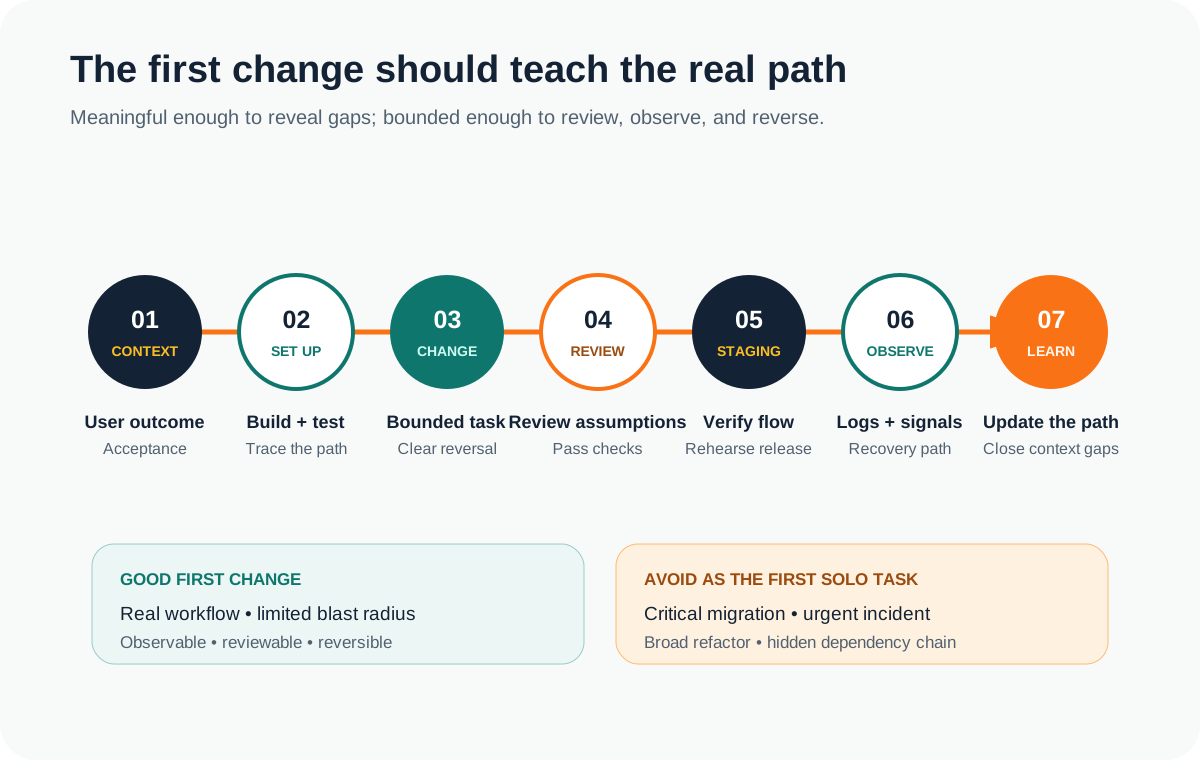
Score candidate tasks on four questions. Does the change teach a meaningful product path? Is its blast radius limited and reversal clear? Can the team observe whether it worked? Does it touch enough of the normal delivery path without depending on several unknown systems? Pick the smallest task that produces useful learning across all four.
Avoid housekeeping that never reaches review or staging; it can create false confidence. Also avoid an urgent incident, broad refactor, database migration, permission redesign, or critical third-party integration as the first independent task unless the client and supplier leads deliberately pair on it.
- Explain the user outcome and acceptance evidence.
- Set up, build, test, and trace the relevant path locally.
- Propose the change and expose assumptions in review.
- Verify it in the agreed non-production environment.
- Release or rehearse release, observe, and confirm recovery.
- Update the onboarding path with what was missing.
Use capability gates instead of a fixed onboarding calendar
A calendar can organize work, but readiness should be demonstrated. A team may complete a narrow first contribution quickly and still need paired access for a sensitive environment. Another team may need longer because the codebase, data, or release path has hidden dependencies. Make that uncertainty visible rather than promising universal “full productivity” by a particular week.
Context gate
Explain users, outcome, scope, and risks.
Build gate
Set up and run the relevant system and tests.
Review gate
Submit a change that meets review standards.
Release gate
Use staging and the approved release path.
Operate gate
Find logs, interpret signals, and escalate.
Continuity gate
Leave client-owned knowledge and access.
Review the onboarding after the first change and again when the team's responsibility expands. Track missing context, blocked access, review rework, environment drift, unresolved ownership, and questions that depend on one person. These are system gaps to repair, not evidence that people should ask fewer questions.
Design continuity and exit from the start
Keep source, infrastructure definitions, documentation, design artifacts, release records, and operational runbooks in agreed client-controlled locations. Define how team changes, absence, substitution, and knowledge concentration are handled. No production process should depend permanently on one supplier account, local machine, private conversation, or undocumented manual step.
GitHub's ongoing security guidance recommends continuing to audit organization membership, outside collaborators, repository permissions, team assignments, and authorized applications as people and projects change. Apply the same recurring review to the wider toolchain, secrets, cloud, support systems, and customer data—not only source control.
The exit test is simple: can the client identify what exists, who owns it, how to build and release it, how to diagnose and recover it, and how to remove former access? The embedded developer continuity concept applies that test to one staff augmentation lane and a bounded first production-shaped slice. Use the software project handover checklist when a supplier or internal team is transferring operational custody rather than only adding capacity.
Turn the checklist into an onboarding brief
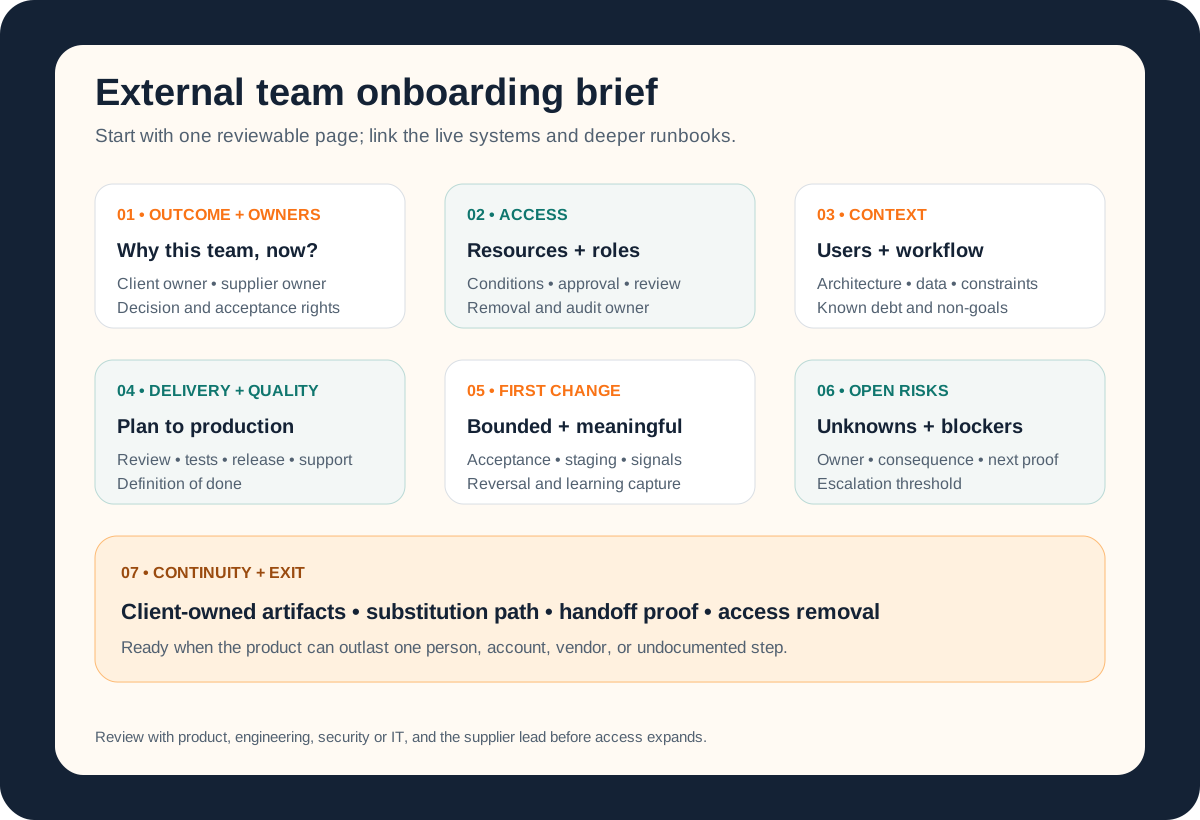
Keep the brief to one reviewable starting page: business outcome, client and supplier owners, decision rights, access inventory, product and architecture links, delivery and quality rules, first change, readiness evidence, open risks, and continuity plan. Link detailed runbooks and policies rather than duplicating them.
Review the brief with product, engineering, security or IT, and the supplier lead before access is granted. Mark unknowns and assign the next evidence-producing action. Onboarding should narrow uncertainty, not hide it behind a polished kickoff deck.
External development team onboarding FAQ
What should external developer onboarding include?
External developer onboarding should include the business outcome, decision owners, product and user context, system map, repositories and environments, least-privilege access, development setup, coding and review rules, acceptance criteria, release and incident paths, communication and escalation, first safe change, documentation expectations, and access-removal or handoff plan.
How long does it take to onboard an external development team?
There is no universal duration. Readiness should be judged by demonstrated capabilities rather than elapsed days: the team can explain the product boundary, build and test the relevant system, submit a reviewable change, use staging, interpret monitoring, follow the release and rollback path, and identify who decides when uncertainty appears.
What is a good first task for an outsourced developer?
Choose a real, bounded change that touches the normal workflow but has limited blast radius. It should require product context, local setup, tests, code review, staging, and observable acceptance. Avoid both meaningless chores that teach nothing and critical migrations or urgent incidents that are hard to reverse.
Who should own onboarding an external software team?
Name one internal onboarding owner who coordinates access, context, stakeholders, and acceptance. Product, engineering, security or IT, and the supplier lead still own their specific decisions. A single coordinator prevents gaps, but should not become the only person who can explain the product or approve every technical choice.
How should external developer access be managed?
Use organization-owned accounts and repositories, group or role-based access, multifactor authentication where appropriate, the minimum permissions and environments needed for current work, named resource owners, review dates, auditable changes, and a tested removal process. Tailor controls to risk and obtain security or legal review where required.