The short answer: define stock truth before features
Inventory software needs a reliable explanation of what the item is, where it is, which state it is in, how its quantity changed, who or what caused the change, and how the result is reconciled. Define those rules for one complete operating loop before comparing features or estimating a custom system.
“Real-time inventory,” “barcode support,” and “custom reports” are not testable requirements by themselves. Real time relative to which source? Which identifier does a scan resolve? Which stock states count as available? Which decision should the report support? A useful checklist replaces category labels with actions, state transitions, evidence, owners, and acceptance cases.
Identity
Stable item, unit, lot, serial, and location rules
Movement
Every stock change has a cause and state transition
Reconciliation
Balances can be explained and differences owned
Define eight inventory requirement lanes
Use recent receipts, transfers, orders, returns, counts, and corrections as evidence. Choose one product family and a small set of representative locations; a universal list for every possible warehouse model becomes too large to verify or price.
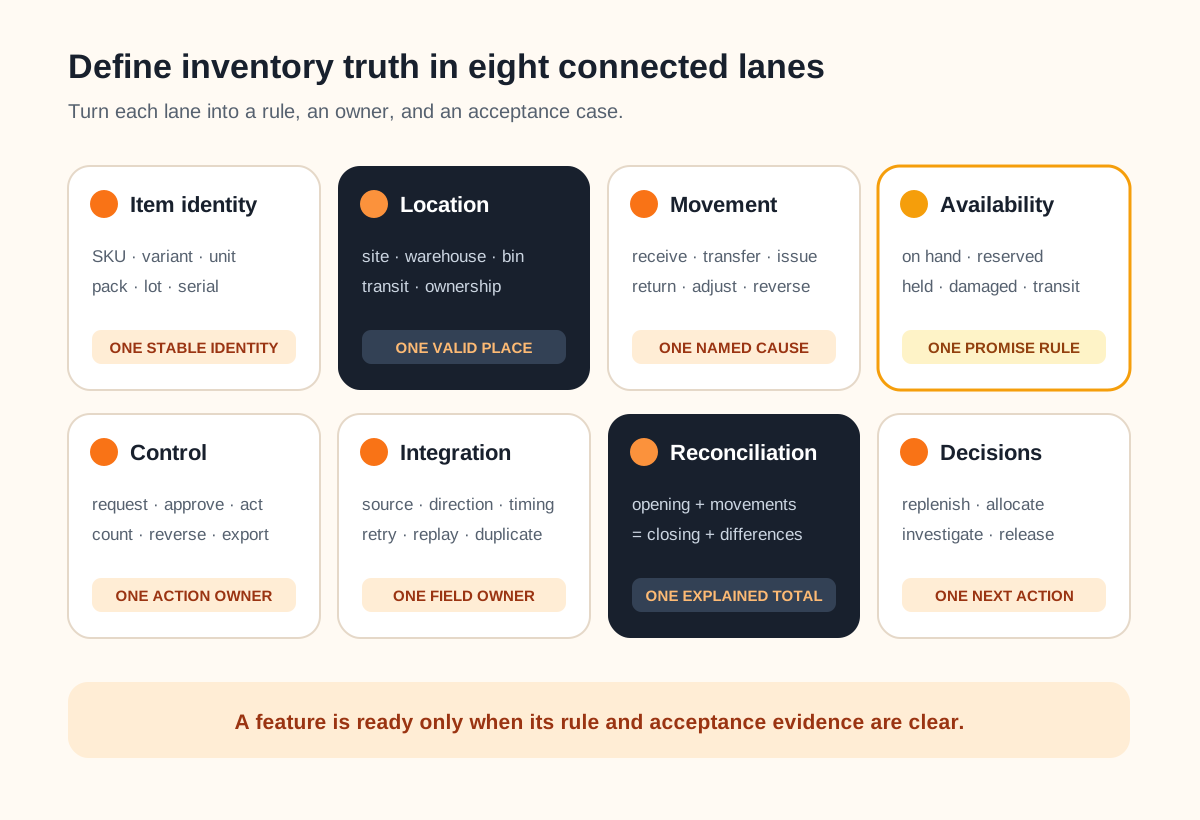
| Lane | Decision to make | Acceptance evidence |
|---|---|---|
| Item identity | SKU, variant, unit, pack, lot, serial, and status rules | One item resolves consistently across source records |
| Location | Site, warehouse, zone, bin, transit, and ownership model | A quantity belongs to one valid place and state |
| Movement | Permitted receipt, transfer, issue, return, and adjustment | Every balance change has a valid movement record |
| Availability | On hand, reserved, available, damaged, held, and in transit | The intended channel promises only eligible stock |
| Control | Who may request, approve, execute, reverse, and count | Allowed and denied actions match the role matrix |
| Integration | Source ownership, timing, retries, and duplicate behavior | A failed message is visible, replayable, and reconciled |
| Reconciliation | Expected totals, tolerances, frequency, and difference owner | Opening plus movements explains closing stock |
| Decision support | Which replenishment, allocation, or exception decision follows | A named owner can act from the output |
Make identity and units explicit
Decide whether an identifier represents a sellable product, a pack, a physical instance, a lot, or a location. Record unit conversions and rounding rules rather than assuming “case” and “each” are interchangeable. The GS1 barcode guidance distinguishes identifiers for trade items, locations, logistic units, assets, and other entities. A business does not need to adopt every GS1 standard to learn the design lesson: identify the thing before encoding or scanning it.
Lot, batch, serial, expiry, catch-weight, consignment, and regulated traceability can change the data model and operating controls materially. Include them only from verified business and legal requirements, with subject-matter review where necessary. Do not add a “compliance-ready” label without a named standard, jurisdiction, scope, and evidence plan.
Model a movement ledger and reconciliation loop
A durable design treats a quantity change as a business event, not a silent overwrite. Each event should preserve the item, source and destination where relevant, quantity and unit, before-and-after state, reason, actor or system, time, and supporting reference. Reversals should point to the original movement rather than erase it.
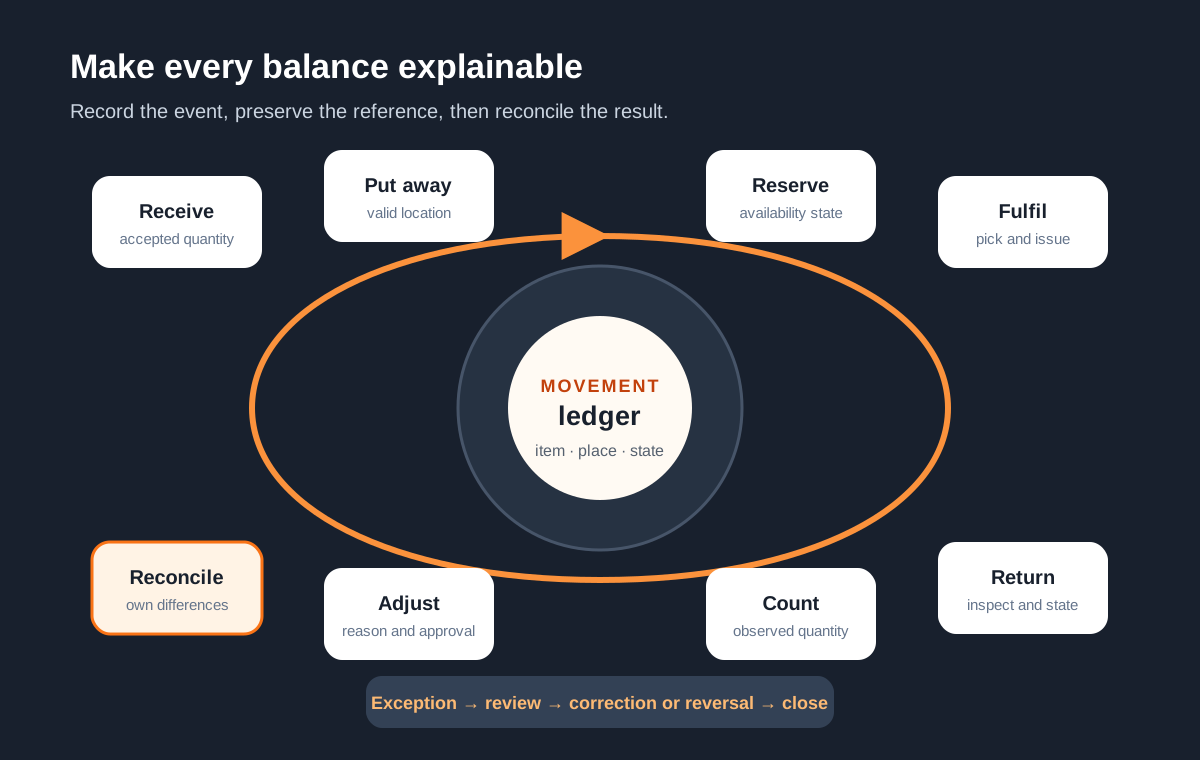
GS1's traceability overview describes critical tracking events and the key data elements that explain them across a traceable object's lifecycle. The same event-and-data discipline is useful even for a smaller internal system: decide which operational events matter and which facts must travel with them.
Specify exceptions before automation
- Partial, excess, damaged, or rejected receipts.
- Reservations that expire, split, substitute, or cancel.
- Transfers received with a different quantity or condition.
- Returns that require inspection before becoming available.
- Counts that conflict with open picks or offline activity.
- Duplicate scans, messages, or retries from another system.
- Negative-stock requests and the permitted override path.
For each case, decide whether the system blocks, warns, queues review, accepts with a reason, or creates a compensating movement. Name the owner and the evidence needed to close it. This is where an apparently simple stock app becomes either an operable product or a new spreadsheet of unresolved exceptions.
Choose standard SaaS, an extension, or custom software
A requirements checklist should support a route decision, not assume a custom build. Ask each candidate product to demonstrate the same representative movements and exceptions with realistic sample records. Mark each requirement supported, configurable, extended, external, or absent, and attach evidence rather than a sales answer.
| Path | Best fit | Main ownership test |
|---|---|---|
| Buy and configure | The operation can adopt standard inventory workflows | Can configuration handle real exceptions without workarounds? |
| Extend or integrate | A product owns stock truth but a focused workflow is missing | Which system owns each field, rule, failure, and release? |
| Build custom | Distinctive rules or orchestration are durable and central | Can the business own security, support, change, and continuity? |
Custom software is most defensible when the operation's distinctive allocation, approval, traceability, field, customer, or multi-system behavior creates lasting value. If the real problem is undisciplined item data or an unstable warehouse process, software will encode the confusion. Repair the process and ownership first.
If the work currently lives in spreadsheets, start with the spreadsheet-to-internal-tool decision guide to test workflow pressure and ownership. If the boundary is ready, Leeonex's custom web application development is aligned with focused operational workflows, data rules, permissions, and integrations.
Assign integration truth and rehearse the rollout
Inventory often sits between purchasing, orders, point of sale, ecommerce, warehouse tools, shipping, accounting, and reporting. Draw each connection with direction and field ownership. Define stable identifiers, timing, duplicate handling, retry limits, failure visibility, replay, and reconciliation. “Two-way sync” is not a complete requirement.
The iPaaS versus custom integration guide helps place retries, replay, reconciliation, and operator tools on the correct ownership boundary. Use the dashboard data readiness checklist when the disputed requirement is a metric rather than a stock-changing workflow.
Prove a controlled cutover
- Clean and map a representative item, location, and opening balance set; retain source-to-target references.
- Run complete movements for each role and integration, including denied and failed cases.
- Reconcile opening balances plus movements to closing balances by item, location, state, and any required lot or serial.
- Rehearse duplicate messages, reversal, rollback, support, and the decision to pause the release.
- Define the write boundary and cutover time so two systems do not silently become competing sources of truth.
Launch acceptance should include operational evidence, not only HTTP success or screen checks. A receiving operator, fulfiller, approver, support owner, and reconciliation owner should each complete their real task and explain what happens when the data disagrees.
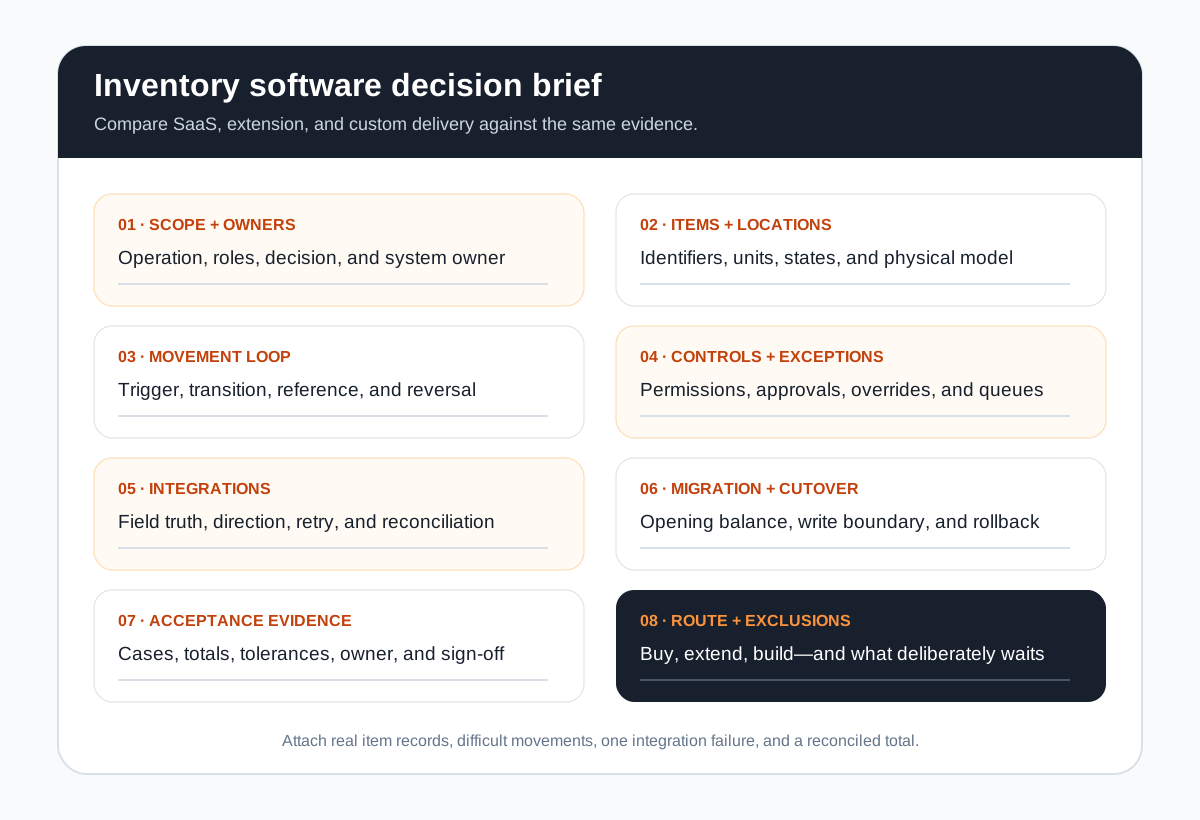
Use a one-page inventory software decision brief
Complete this brief before requesting estimates or product demos. Attach a small set of real, redacted source records and difficult transactions. For every must-have, describe the observable failure if it is absent. Keep future locations, channels, automation, and advanced planning in a separate horizon unless they change today's data model.
Estimation boundary
items + locations + movements + roles + exceptions + integrations + reconciliation + release evidence
A useful first engagement may end with a configured-product recommendation, an integration spike, a data cleanup plan, or a narrow custom release brief. That is a better outcome than committing to a build before the operation can explain its own stock truth.
Inventory management software requirements FAQ
What are the core requirements for inventory management software?
Core requirements are stable item and location identities, controlled stock movements, explicit availability states, role-based actions, exception handling, integration ownership, reconciliation, and reports tied to operational decisions. Add lot, serial, batch, expiry, bin, unit-conversion, costing, offline, or scanning requirements only when the real workflow needs them.
Should inventory software allow users to edit stock on hand directly?
For controlled operations, a balance should normally change through a named movement or adjustment that records the item, location, quantity, direction, reason, actor, time, and supporting reference. Direct silent edits make reconciliation and investigation difficult. The exact control level should match the consequence and operating model.
When should a business buy inventory SaaS instead of building custom software?
Buy or configure a standard product when receiving, storage, transfer, fulfilment, counting, and reporting can follow established patterns and integrations are supported. Consider an extension or custom system when distinctive allocation rules, multi-system orchestration, role boundaries, field workflows, or customer-facing experiences are central to the operation and cannot be handled safely through configuration.
What integrations should an inventory system include?
Include only systems that create or depend on inventory truth, such as purchasing, orders, point of sale, ecommerce, warehouse tools, shipping, accounting, or reporting. For each integration, define the source of each field, identifiers, direction, timing, duplicate handling, failure visibility, replay, reconciliation, and who resolves mismatches.
How do you test an inventory management system before launch?
Test representative items, locations, roles, and complete movement journeys, including partial receipts, reservations, cancellations, transfers, returns, damaged stock, counts, adjustments, duplicate messages, integration failures, and permission denials. Reconcile opening balances, movements, closing balances, and external totals, then prove rollback and support procedures with named owners.