The short answer: specify the control path, not just SAML
A useful SaaS SSO requirements document defines how one customer organization establishes trust, how its users reach the right tenant, how identities become accounts and sessions, how product permissions are applied, how access is removed, and how failures are recovered and audited. SAML or OIDC is only the federation layer inside that larger control path.
Start with the enterprise connection that is actually blocking a deal or rollout. Name the customer identity provider, tenant, expected protocol, user population, administrator, permission model, provisioning method, and go-live evidence. A generic goal such as “support enterprise SSO” hides the decisions that create most security and support risk.
Route
User and tenant discovery
Control
Trust, session, and permissions
Operate
Lifecycle, evidence, and recovery
Define what SSO will and will not own
Federation authenticates a person using a separate identity provider. It does not automatically create a correct product account, choose a SaaS tenant, grant permissions, synchronize a directory, or remove an active product session when employment ends. Keep these concerns explicit so a successful protocol test is not mistaken for a safe product release.
| Concern | Question to resolve | Typical owner |
|---|---|---|
| Federation | Which IdP can assert this identity, for which tenant? | Customer IT + product security |
| Provisioning | When is an account created, updated, suspended, or removed? | Customer IT + SaaS admin |
| Authorization | Which product actions can this account perform? | Product owner + tenant admin |
| Recovery | Who can restore access without bypassing customer policy? | Support + security owner |
This separation also prevents overlap with your broader SaaS permissions requirements. SSO can carry a group or role claim, but the product still needs a tenant-safe rule for interpreting it and a fallback when it is missing, renamed, or unexpectedly broad.
Write an identity control contract across six surfaces
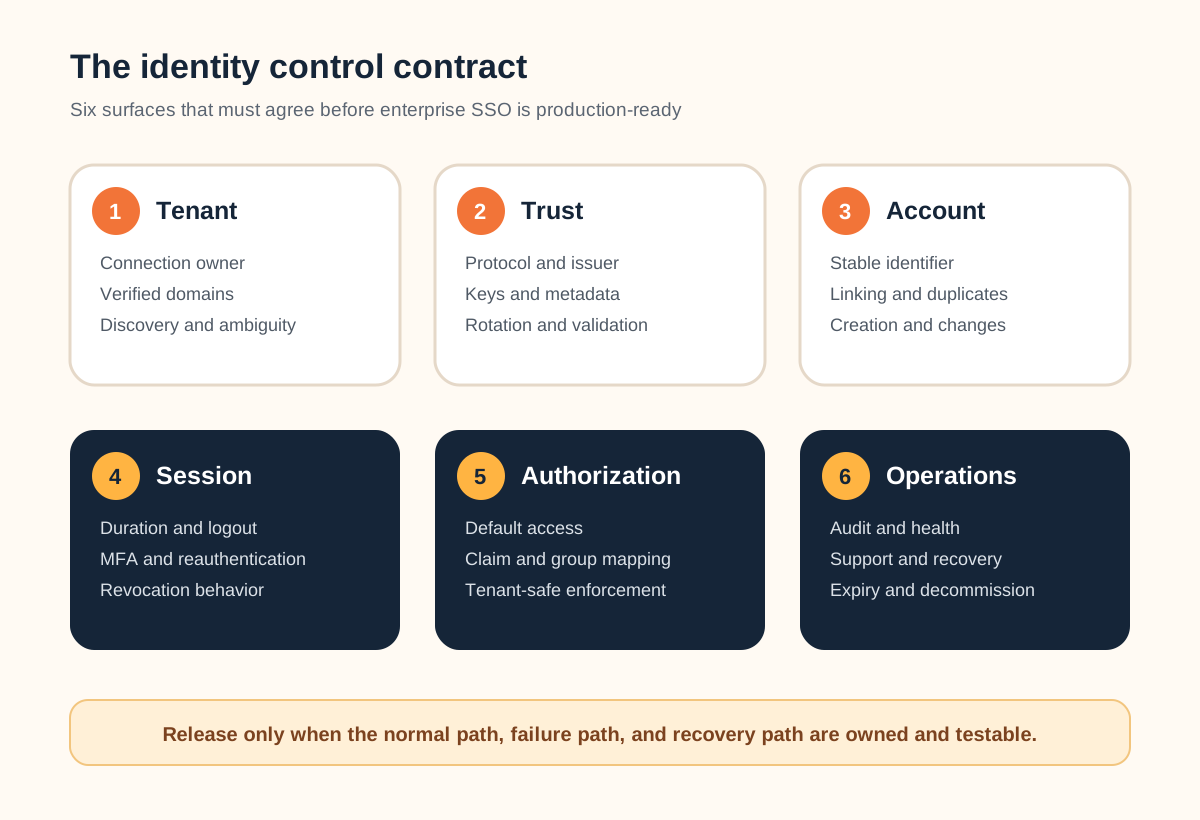
- Tenant: connection ownership, verified domains, discovery rules, multiple domains, and what happens when a person belongs to more than one tenant.
- Trust: protocol, issuer, entity or client identifier, endpoints, signing keys or certificates, metadata refresh, rotation, and allowed clock difference.
- Account: stable identifier, email changes, account linking, duplicate handling, just-in-time creation, and whether personal login may coexist.
- Session: session duration, IdP and product logout, reauthentication for costly actions, MFA expectations, and behavior after a policy change.
- Authorization: default access, claim or group mapping, tenant-admin control, least-privilege fallback, and permission-change timing.
- Operations: connection setup, test mode, audit events, health signals, certificate expiry, support access, incident response, and decommissioning.
Choose OIDC, SAML, and SCIM from customer evidence
Microsoft's current SSO planning guidance for software vendors recommends OIDC as the default for most modern SaaS products and retaining SAML for customer or legacy requirements. That is a useful starting point, not a substitute for checking the target customer's IdP, procurement requirement, and integration profile.
OIDC is an identity layer over OAuth 2.0. The OpenID Connect Core specification defines how a client verifies an authenticated user and receives claims. SAML uses signed XML assertions and remains common in enterprise identity systems. In either case, use a maintained, conformant library or managed identity platform; protocol parsing and token validation are poor places for bespoke shortcuts.
SCIM is separate. RFC 7644 defines a protocol for managing identities such as users and groups. Add it when automated onboarding, attribute updates, suspension, or group synchronization is part of the customer requirement. Do not claim “automatic offboarding” if the product only blocks the next federated sign-in while existing sessions or manually created accounts remain active.
Design the lifecycle, failure path, and recovery path
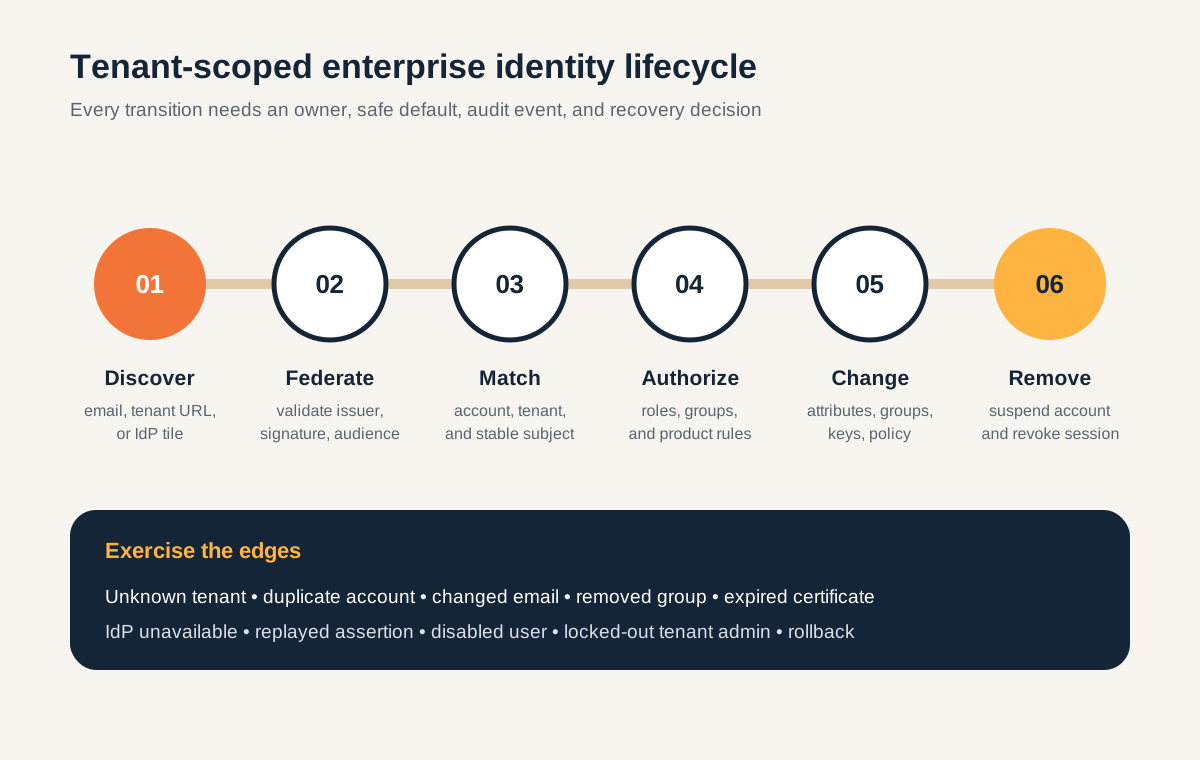
Specify the first visit before the happy-path return visit. Will users enter an email, use a tenant-specific URL, begin from an IdP tile, or choose among connections? Define how a verified domain maps to a tenant and what the product does when no match, multiple matches, an unverified domain, or an existing personal account is found. Never rely on an email domain alone as proof of tenant membership.
Then test change and failure: an email is renamed, a group is removed, a certificate expires, a signing key rotates, the IdP is unavailable, the assertion is replayed, the account is suspended, or an administrator misconfigures a claim. NIST's federation and assertions guidance treats the relationship among identity provider, relying party, assertions, and disclosed attributes as a trust system. Record only the attributes the product needs and define their allowed use.
Recovery must not become a shadow login. The OWASP Authentication Cheat Sheet recommends reauthentication after high-risk events and separates authentication from session management. Decide who can disable a connection, how tenant admins regain control, what support can see, which actions require dual approval, and how active sessions are revoked.
Require evidence for normal, negative, and operational cases
Acceptance should show more than one successful login. Use a customer-like test tenant and capture the input, expected result, visible result, audit event, and owner for each scenario.
- SP-initiated and IdP-initiated paths where each is promised, including deep links and the post-login destination.
- Correct tenant routing for known, unknown, ambiguous, and disabled connections without exposing tenant information.
- Account creation and linking with immutable identifiers, changed email addresses, duplicates, and an already authenticated user.
- Invalid issuer, audience, signature, redirect, state, nonce, expired assertion, clock difference, and replay attempts.
- Role or group changes, removal from the directory, suspension, session revocation, and the promised propagation delay.
- Key or certificate rotation, connection health, administrator notification, support diagnosis, and a rehearsed rollback.
Authentication, permission changes, connection administration, recovery, and failures should produce reviewable events. Use the SaaS audit log requirements checklist to define actor, tenant, action, target, time, outcome, and relevant context without logging tokens or sensitive assertion contents.
Use a one-connection requirements brief
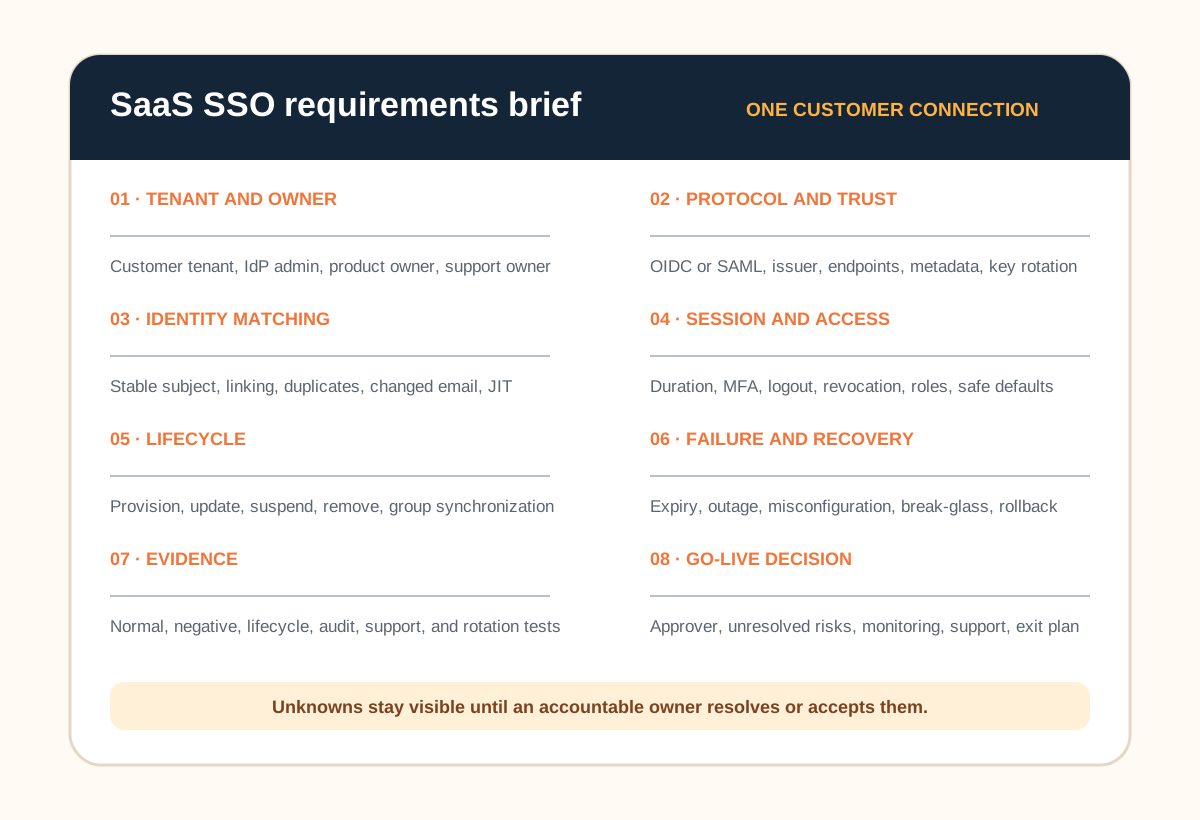
Complete the brief with customer IT, the SaaS product owner, a security reviewer, support, and engineering. Attach example metadata or discovery documents, attribute names, tenant rules, session policy, lifecycle expectations, negative tests, recovery owners, and launch evidence. Mark unknowns instead of turning assumptions into requirements.
If the account, tenant, or authorization model cannot support the connection safely, scope that foundation before adding more connectors. Leeonex's MVP and SaaS development service can help shape an incremental product boundary, while the web application security requirements guide covers the wider authentication, authorization, data, and operational controls around the feature.
Frequently asked questions
What should a SaaS SSO requirements document include?
It should define the customer tenant and identity provider, supported protocol and trust metadata, login discovery, account matching, attribute mapping, session and MFA policy, authorization boundary, provisioning and deprovisioning, failure and recovery behavior, audit events, ownership, and test evidence.
Should a SaaS product support SAML or OIDC for SSO?
For a modern SaaS product, OIDC is often the simpler default, while SAML remains necessary when target customers or existing identity infrastructure require it. Choose from verified customer requirements rather than implementing both automatically, and use a conformant library or managed identity service instead of writing protocol handling from scratch.
Is SCIM part of SSO?
No. SSO authenticates a user through an identity provider. SCIM is a separate provisioning protocol used to create, update, suspend, and group accounts. A product can support federation without automated provisioning, but enterprise offboarding may remain manual unless another lifecycle mechanism is defined.
Does SSO replace SaaS roles and permissions?
No. SSO answers who authenticated and which identity provider asserted it. The SaaS product must still decide which tenant the person belongs to and what they may do. Imported groups or claims should map through an explicit, tenant-scoped authorization policy.
Should a SaaS team build or buy enterprise SSO?
A managed identity provider can reduce protocol and connection-management work, but the product team still owns tenant routing, account linking, authorization, support, auditability, data handling, and vendor-failure behavior. Compare options against the complete control contract, not only connector count or implementation speed.