
The short answer: scope the exchange, not the category
A marketplace MVP needs the smallest dependable path for one demand segment and one supply segment to complete one valuable exchange. Define who participates, what starts the exchange, how matching works, what each side commits to, how fulfilment is confirmed, which exceptions an operator handles, and what evidence will change the next release.
It does not automatically need public listings, real-time chat, ratings, recommendations, mobile apps, or automated payouts. Those are possible mechanisms, not universal requirements. A concierge workflow with thin participant views can be a better MVP when the team still needs to learn what good supply looks like, why buyers accept a match, and where trust breaks.
Exchange
One outcome from request to confirmation
Operations
Named manual work and exception owners
Evidence
Signals that support build, change, or stop
Define eight marketplace requirement lanes
Most search results produce a familiar feature inventory: profiles, listings, search, messaging, payments, reviews, and an admin panel. The list is not wrong, but it hides the decisions that determine whether those features are needed. Use these eight lanes to describe behavior and responsibility before naming screens.
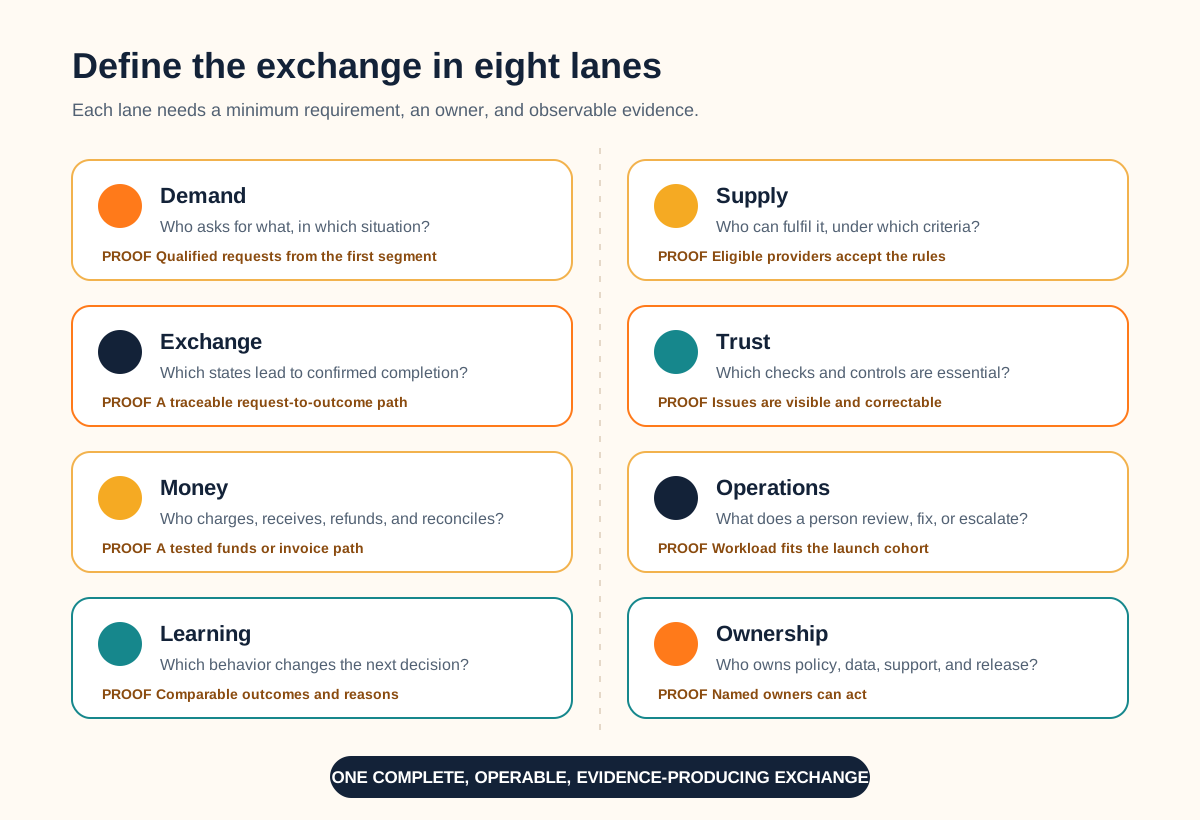
| Lane | Decision to make | Minimum useful evidence |
|---|---|---|
| Demand | Who asks for what, in which situation? | Qualified requests from the chosen segment |
| Supply | Who can fulfil it, under which criteria? | Available providers who accept the rules |
| Exchange | What states move both sides to completion? | A traceable request-to-outcome path |
| Trust | Which checks, disclosures, and controls are essential? | Issues detected and resolved without hidden harm |
| Money | Who charges, receives, refunds, disputes, and reconciles? | A tested funds or invoice path |
| Operations | What does a human review, correct, or escalate? | A supportable workload and clear queue |
| Learning | Which behavior changes the product decision? | Comparable exchange outcomes and reasons |
| Ownership | Who owns policy, data, support, and release decisions? | Named owners with access and response paths |
Treat legal, tax, identity, insurance, employment, and regulated service questions as jurisdiction- and model-specific review items. This checklist cannot decide them. It should make the unknown owner and required advice visible before a product team quietly encodes an unsupported assumption.
Map one exchange from trigger to learning
Write the same case from three views: customer, provider, and operator. Start before either participant touches the product. What creates urgency? What information qualifies the request? What makes a provider eligible and available? What counts as a commitment rather than casual interest?
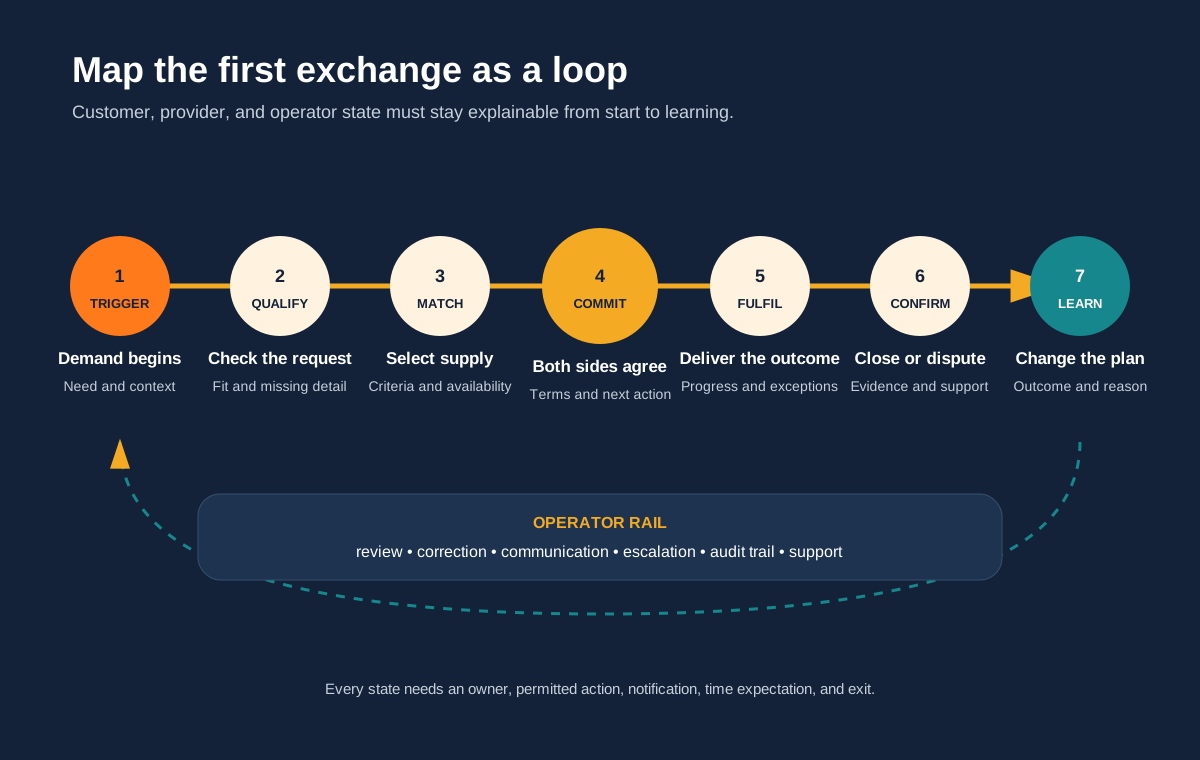
Give the exchange explicit states such as submitted, needs detail, ready to match, offered, accepted, in progress, completed, disputed, cancelled, and closed. Your names will differ, but each state should have an owner, permitted actions, notifications, time expectations, and an exit. Otherwise the interface looks simple while support work disappears into email.
The Leeonex managed service marketplace concept study shows one transparent option: an operator qualifies a request and shortlists approved providers before either side receives a full self-serve dashboard. It is an educational concept, not client proof or a claim that this model fits every marketplace.
If the wider backlog still controls the conversation, first use the general MVP scope checklist to lock one user outcome, trust baseline, operating mechanism, and learning signal. This article adds the multi-party exchange details that a single-user product does not have.
Choose what to build, buy, or run manually
A manual step is not a failure when it is deliberate, visible, and supportable for the launch cohort. It is dangerous when the business calls a process automated while an unowned spreadsheet, inbox, or founder quietly keeps it alive.
- Build the state and interaction that expresses the marketplace’s specific value or gives the team necessary evidence.
- Buy commodity capability when a provider fits the model and its limits, responsibilities, and exit path are acceptable.
- Run manually changing judgment, low-volume exceptions, provider approval, or matching while every case remains observable.
- Defer convenience and scale mechanisms until a named signal shows that they block completion, trust, learning, or viable operations.
For each manual step, record the input, owner, expected volume, service window, tool, decision rule, audit trail, escalation, and threshold for automation. This converts “we will do it by hand” into an operating design that can actually be tested.
Treat payments and trust as operating-model decisions
If money moves through the platform, define who the customer is paying, when the provider earns funds, which party handles fees, refunds, disputes, failed payouts, negative balances, reconciliation, and support. Do not reduce this to “integrate a payment gateway.”
Stripe’s Connect documentation separates connected-account onboarding, account management, payments, payouts, and platform tools. Its marketplace integration tasks also require choices about funds movement, losses from refunds or disputes, participant access, and platform charging. These are provider-specific examples of the decisions a marketplace brief must expose; they are not a recommendation of one vendor or legal advice.
Trust also needs a proportionate first-release mechanism. Name identity and eligibility checks, listing or request moderation, consent, privacy, role boundaries, issue reporting, evidence retention, suspension, and appeal or correction paths where relevant. The SaaS permissions guide helps turn participant and operator actions into tenant-safe authorization rules, while the web application security checklist covers wider control and release evidence.
Complete this marketplace MVP release brief
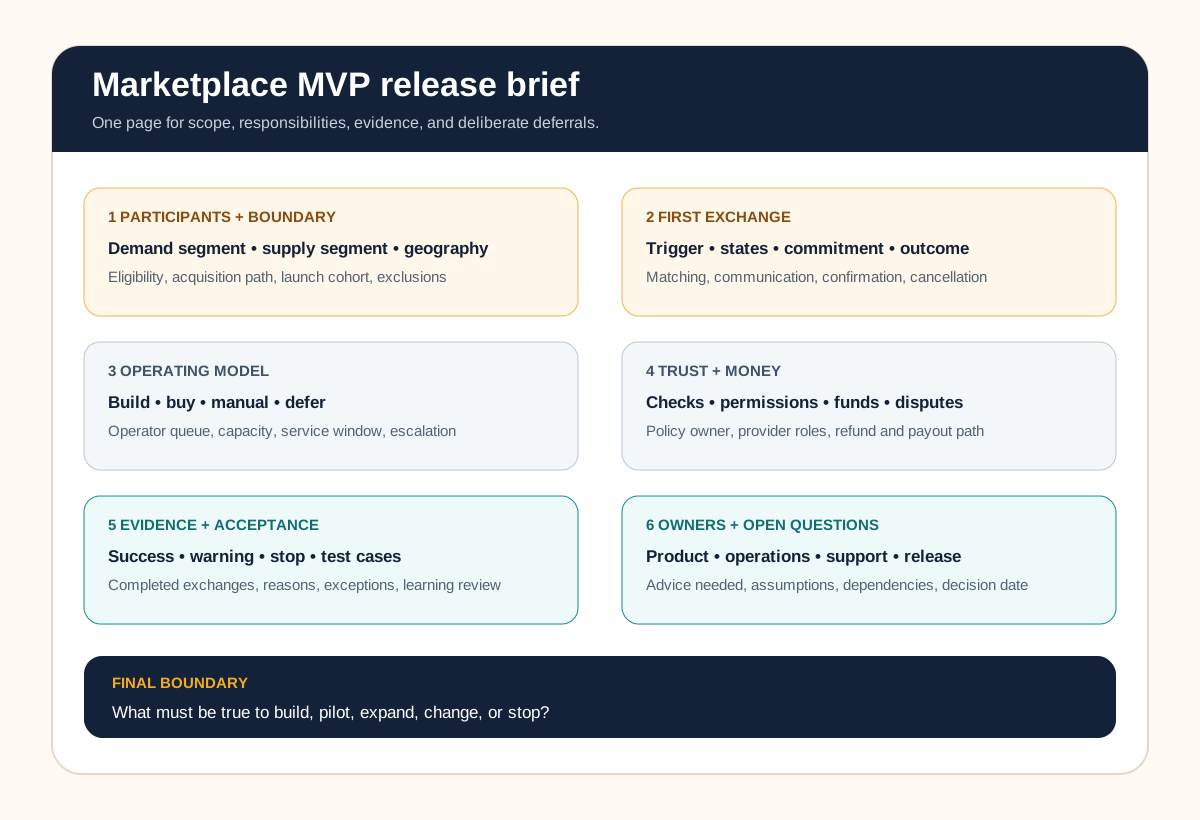
Write one page naming the first geography or operating boundary, demand and supply segments, exchange trigger and outcome, participant states, matching rule, manual work, trust baseline, communication, payment or invoicing model, exceptions, data, integrations, launch cohort, evidence, acceptance cases, exclusions, and owners. Attach policy or technical detail only where it changes scope.
Then test the brief against three uncomfortable cases: no suitable provider is available, one side changes or cancels the agreement, and fulfilment is disputed. If the team cannot explain what the product and operator do next, the happy path is not yet a complete release.
Release test
Can the team complete, explain, support, and learn from every exchange in the first cohort without hiding a critical responsibility?
Leeonex’s MVP development service is a natural next step when this exchange is clear enough to estimate. If supply, demand, or matching judgment is still unproven, a concierge pilot or focused discovery phase may be the more useful first investment.
Marketplace MVP FAQ
What should a marketplace MVP include?
A marketplace MVP should include the minimum capabilities for one defined customer segment and one defined provider segment to complete one exchange. That normally means constrained onboarding, a request or listing, discovery or operator matching, commitment, fulfilment confirmation, exception handling, basic trust controls, operator visibility, and measurement. Payments belong only when moving money is part of the hypothesis and the responsibilities are understood.
Does a marketplace MVP need automated matching?
Not necessarily. Manual or rules-assisted matching can be the better first mechanism when the criteria are still changing, volume is controlled, and an operator can handle every case. Automate when repeated decisions are well understood, the inputs are reliable, and manual work has become a measurable constraint rather than simply looking unscalable in a future scenario.
Does a marketplace MVP need payments and payouts?
Only if the first release must test an in-product transaction or the marketplace must control funds to deliver its value. Payment providers for platforms still require decisions about onboarding, charge type, fees, refunds, disputes, payouts, negative balances, and support. A lead-generation or managed-service marketplace may validate its core exchange before automating money movement.
Should a marketplace MVP have reviews and ratings?
Reviews are useful only when enough completed exchanges exist to make them credible and when they improve a real trust decision. An early controlled marketplace can instead use provider approval, clear service criteria, operator review, completion confirmation, and a private issue log. Add public reputation features when the evidence and moderation process can support them.
How do you estimate marketplace MVP development?
Estimate a named exchange and operating model, not the word marketplace. Define participant roles, states, data, matching mechanism, communication, payment boundary, permissions, exception paths, integrations, admin work, quality requirements, launch cohort, and acceptance evidence. Unknown payment, compliance, identity, or operational responsibilities should remain explicit assumptions or discovery tasks.